
A 5kWh hybrid home energy storage system is a practical choice for keeping essential household loads running and making better use of solar power, but it should not be confused with a whole-home backup solution for extended outages. In most homes, a 5kWh system is best suited for lights, Wi-Fi, refrigeration, device charging, and a few selected small appliances. Its real performance depends not only on the battery's rated capacity, but also on usable energy, inverter power, solar input, and the specific loads you want to support.
Why Choose a 5kWh Hybrid Battery System?
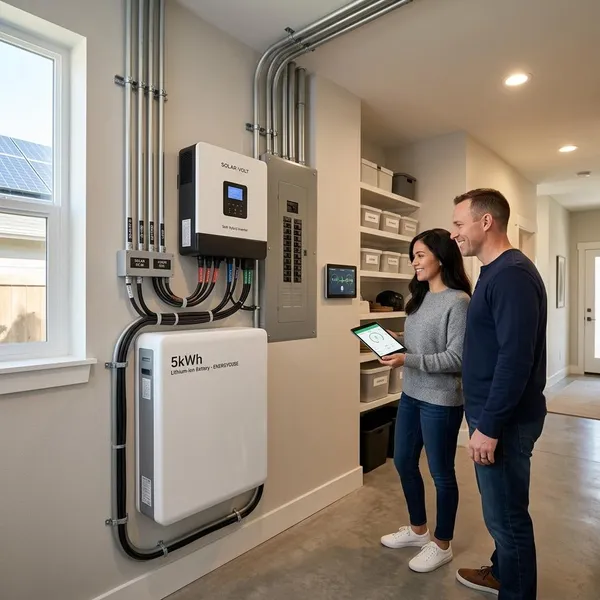
A 5kWh hybrid battery system makes sense when you want a smaller, more controlled energy setup. It can store solar power, provide backup during outages, and reduce some grid use without the cost or space needs of a larger whole-home battery.
It provides backup power for essential loads
The best use for this battery size is an essentials backup plan. That usually means a refrigerator, Wi-Fi router, LED lights, phone charging, a laptop, and a few small outlets rather than ovens, dryers, heaters, or central air.
For a household that mainly worries about short blackouts, this can be enough to stay comfortable and connected. For a home in an area with frequent multi-day outages, it should be seen as a starting point, not a complete resilience plan.
It stores solar energy for nighttime use
Solar pairing is where a hybrid system becomes more useful day to day. Extra solar power produced in the afternoon can charge the battery, then that stored energy can cover evening lights, entertainment, internet, or other modest loads after sunset.
It reduces reliance on grid electricity
Grid reliance can drop when the battery charges from solar or lower-cost electricity and discharges when grid power is more expensive. This works best in homes with time-of-use rates, low solar export credits, or a clear evening demand pattern.
- Best case: solar charges the battery during the day and the home uses it during peak evening hours.
- Weaker case: electricity rates are flat and outages are rare, so the value is mostly convenience and backup.
Is a 5kWh Battery Enough for Your Home?
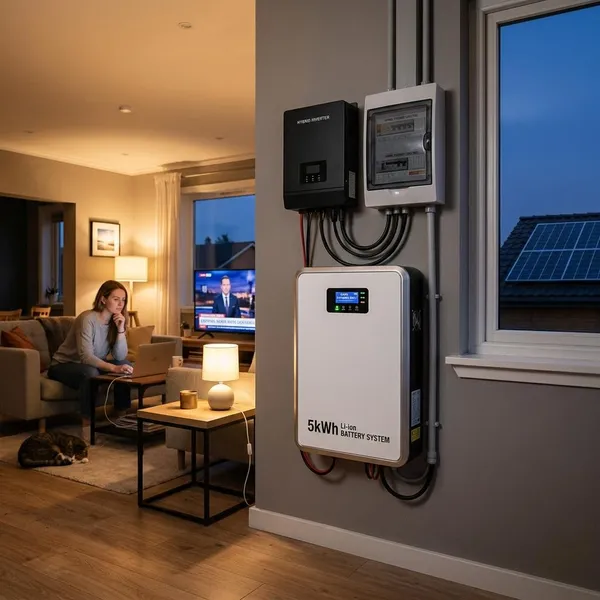
A 5kWh battery is enough if your expectations are narrow and your loads are modest. It is not enough if you want to run heating, cooling, cooking, laundry, and normal household demand without changing habits.
Check two things before anything else: how much usable energy the battery provides, and how much power the inverter can deliver at one time. Capacity affects runtime; inverter output affects what can run at all.
It fits homes with lower daily energy needs
This size is a better match for homes that already use energy carefully. A small household with LED lighting, efficient appliances, and no plan to back up electric heating may get real value from 5kWh. A large household with high evening use will usually drain it quickly.
It supports essential loads during outages
For outage planning, list the devices you genuinely need and leave comfort loads off the first version of the plan. A good essentials list might include:
- Refrigerator or freezer
- Wi-Fi router and modem
- Several LED lights
- Phone and laptop charging
- Small fan, medical device, or security equipment if required
If one of those loads is critical for health or safety, confirm the required runtime with an installer rather than relying on a rough estimate.
It may not handle large appliances for long
Large appliances are the common disappointment point. Electric ovens, space heaters, kettles, dryers, water heaters, and central air conditioners can consume a large share of the battery very quickly, and some may exceed the inverter's startup or continuous output limit.
What Can a 5kWh Home Battery Power?
A 5kWh home battery can power many everyday devices, but runtime changes sharply with load size. As a rough guide, a steady 500W load would use about 0.5kWh per hour before losses, while a 2,000W load would use energy four times faster.
Real runtime is usually lower than the simple math because of inverter losses, battery reserve settings, temperature, and the battery's usable capacity. Still, rough estimates help you avoid unrealistic expectations.
It runs lights and small household devices
Lights, routers, phones, tablets, laptops, and small electronics are the easiest wins. They use relatively little power but make an outage much easier to live through, especially at night or when someone needs to work from home.
It supports appliances based on runtime needs
Think in scenarios rather than a single promise. A short evening outage might include a refrigerator, router, several LED lights, phone chargers, and a TV for a few hours. A lighter overnight setup might skip the TV and focus on one fan, internet, charging, and basic lighting.
| Load type | Practical fit for 5kWh | What to watch |
|---|---|---|
| LED lights, router, chargers | Strong fit | Usually low draw, good backup value |
| Refrigerator or freezer | Often workable | Check startup surge and cycling behavior |
| Fans, TV, laptop | Usually manageable | Runtime depends on how many run together |
| Heating, cooling, cooking loads | Limited fit | Can drain the battery fast or overload the inverter |
It has limits with high-power equipment
High-power equipment is where the system needs the most caution. A small window air conditioner may be possible with the right inverter and modest runtime expectations, while a central air system is often unrealistic for a single 5kWh battery. Pumps, compressors, and motor-driven tools also need a surge check, not just a wattage check.
What Should You Check Before Buying a 5kWh System?
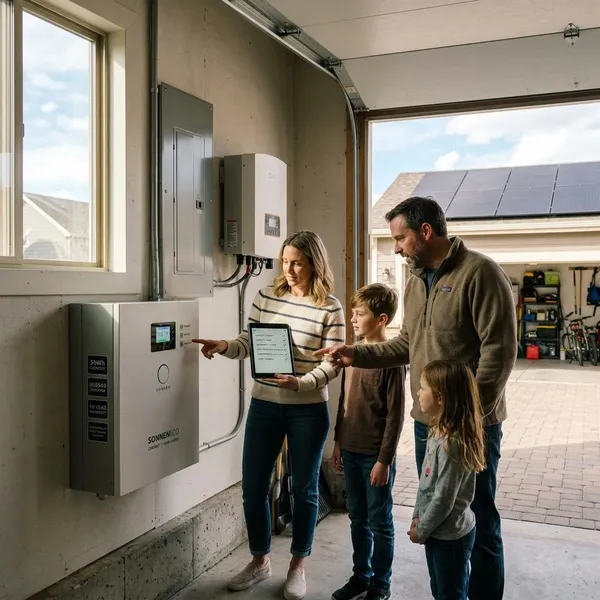
Before comparing prices, compare the details that change real performance. Two systems sold as 5kWh batteries can behave very differently once reserve limits, inverter size, warranty terms, and installation design are included.
Use this priority order: usable capacity first, inverter output second, then chemistry, efficiency, warranty, and expansion. That keeps the buying decision focused on what you will actually notice at home.
Usable capacity shows available backup energy
The nominal 5kWh figure is not always the amount you can use. Some energy may be reserved to protect the battery or maintain stable operation, so ask for the usable capacity and the minimum reserve setting. That number is the better basis for runtime planning.
Inverter output shows supported devices
Inverter output tells you what can run at the same time. Check both continuous output and surge output, then compare those figures with your refrigerator, pump, air conditioner, or other priority loads. This is often the difference between a battery that sounds adequate and one that actually works during an outage.
Battery chemistry affects safety and lifespan
Battery chemistry affects heat behavior, cycle life, and long-term confidence. Lithium iron phosphate, often called LFP or LiFePO4, is commonly used in residential storage because it is known for stable performance and long cycle potential, but the full system design and certifications still matter.
How Do You Install and Maintain a 5kWh System?
Installation is not just mounting a battery on a wall. A safe setup needs compatible equipment, correct wiring, protection devices, backup circuit planning, commissioning, and compliance with local electrical rules.
Modern lithium systems usually need little hands-on maintenance, but they do need monitoring. The aim is to catch charging problems, unusual discharge patterns, temperature warnings, or communication faults before you rely on the battery in a blackout.
Choose a safe installation location
Choose a clean, dry, serviceable location that fits the manufacturer's clearance and temperature requirements. Garages, utility rooms, and protected exterior walls are common, but avoid flood-prone corners, direct weather exposure, tight cupboards, and places where the battery could be hit or blocked.
Follow proper safety and setup requirements
A qualified installer is usually the safest choice, especially when solar, grid connection, backup transfer, or code inspection is involved. The practical setup should cover load selection, inverter compatibility, wiring protection, system settings, and a backup test before the battery is considered ready.
- Choose which circuits need backup.
- Confirm battery, inverter, solar, and grid compatibility.
- Install required protection and isolation equipment.
- Commission charging, discharging, and backup settings.
- Test the system with realistic loads.
Monitor system performance over time
Use the app or monitoring portal to check whether the battery reaches charge as expected and discharges at the right time. If it empties too early every evening, your load plan may be too ambitious. If it rarely charges fully, look for shading, small solar capacity, settings, or seasonal production changes.
How Much Does a 5kWh Hybrid System Cost?
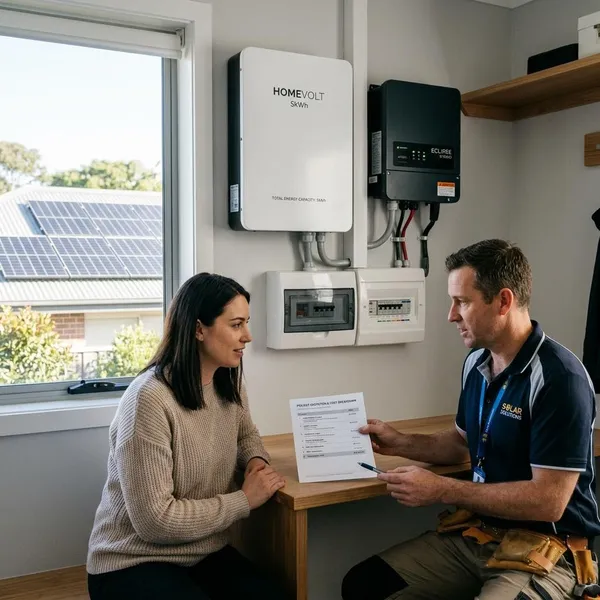
The cost of a 5kWh hybrid system depends on far more than the battery pack. Inverter type, backup panel work, permits, labor, wiring distance, wall mounting, monitoring, and solar integration can all change the final installed price.
Instead of judging by the cheapest battery listing, compare full installed quotes. A lower equipment price can become less attractive if the warranty is weak, the inverter is undersized, or the installation excludes important backup components.
Equipment and installation affect total cost
Equipment quality and site complexity are the two biggest cost drivers. A home with a compatible solar inverter and simple wiring path may be straightforward. A home needing panel upgrades, long cable runs, or a new backup subpanel will cost more even with the same battery.
Ask each installer to separate battery, inverter, electrical work, permits, monitoring, and commissioning in the quote. That makes it easier to see whether you are comparing similar systems or just similar headline prices.
Solar savings affect long-term value
Solar savings are strongest when the battery stores energy that would otherwise be exported cheaply and uses it when grid electricity is expensive. If your utility already gives generous export credit, the financial case may be less dramatic.
Backup needs affect return on investment
Return on investment is not only a bill calculation. For someone with frequent outages, keeping food cold, phones charged, and internet running may be the main value. For someone with a stable grid and high evening rates, daily load shifting may matter more. If neither problem is serious, a 5kWh system may be nice to have rather than urgent.

Conclusion
A 5kWh system is a good fit when you want selective backup, smarter solar use, and a manageable first battery setup. It is not the right choice for long whole-home outages or heavy appliances unless the system is expanded and carefully designed. Start with your essential loads, check usable capacity and inverter output, then decide whether 5kWh matches the way your home actually uses power.