
Title:How a Soft Brush for Solar Panel Cleaning Helps
Meta Description:Find out how to choose a soft brush for solar panel cleaning, from bristle type to pole design, for safer DIY results. Compare options.
Meta Description:Find out how to choose a soft brush for solar panel cleaning, from bristle type to pole design, for safer DIY results.
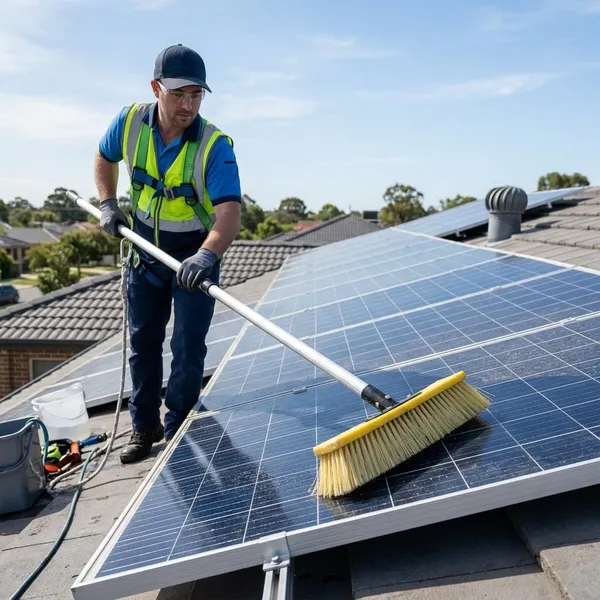
If plain water leaves pollen, bird droppings, or dried mud behind, a soft brush for solar panel cleaning can be useful—but only when your panel maker allows brush cleaning and you can work safely. The safest choice is a clean, non-abrasive brush used with plenty of water and very light pressure, not a stiff scrubber or a high-force shortcut.
When Is a Soft Brush Suitable for Solar Panels?
A soft brush makes sense only after three checks: the manufacturer allows it, rinsing alone has not worked, and the panels are safe to reach without stepping onto them. If any of those checks fail, it is better to stop than risk panel damage, a warranty issue, or a fall.
Your panel maker permits brush cleaning
Start with the care instructions from the panel maker or installer. Some panels allow soft-bristle cleaning, while others may recommend water only, specific tools, or professional service. If the manual warns against brushes, that guidance matters more than general cleaning advice online.
Dirt remains after rinsing
Use a brush only when a gentle rinse leaves visible residue behind. Light dust may wash away without touching the panel, but sticky pollen, bird droppings, dried mud, and sap-like buildup may need mild agitation while the glass stays wet.
For a small ground-mounted array after a pollen-heavy week, a soft brush can be a reasonable DIY tool. For one or two dusty roof panels that look better after rinsing, brushing may add risk without much benefit.
Panels are intact and safely within reach
Do not brush panels that look cracked, loose, delaminated, or unusually stained around the edges. Those signs call for inspection, not cleaning pressure.
Reach matters just as much as panel condition. A low, ground-mounted system is a very different job from a steep second-story roof. If cleaning means leaning from a ladder, walking on tiles, or stretching a pole beyond good control, hire a professional instead.
What to Look for in a Solar Panel Cleaning Brush
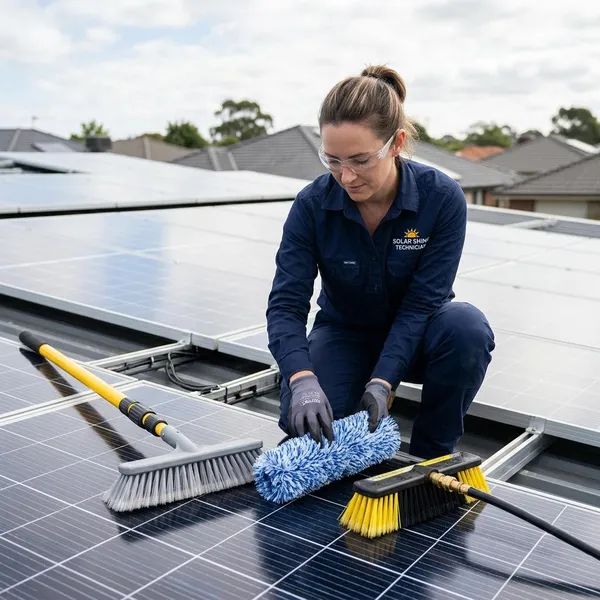
The right brush is not simply "soft." It should reduce friction, keep hard parts away from the glass, and let you control the tool without overreaching. A brush that feels safe in your hand is usually more useful than one with the longest pole or the most accessories.
Soft, non-abrasive bristles
The bristles should bend easily and feel closer to a vehicle wash brush than a deck brush. Before using it on panels, run your fingers through the bristles and check for grit, hardened dirt, loose staples, or rough spots.
- Good sign: flexible bristles that spread under light pressure.
- Warning sign: stiff bristles that scrape or snap back sharply.
- Before each use: rinse the brush head, even if it looked clean in storage.
A brush head without exposed hard edges
The brush head should not have metal parts, sharp plastic corners, or raised hard edges that can hit the panel if the pole tilts. Rounded edges are especially helpful when working near the frame, clamps, or panel borders.
A lightweight pole with manageable reach
A longer pole is useful only if you can control it. When the pole flexes too much or feels heavy at full extension, it becomes easier to bump the frame, press unevenly, or drag the brush sideways.
For occasional cleaning on low panels, a shorter lightweight pole may be enough. For regular cleaning on a larger array, choose a pole that reaches comfortably from a stable position rather than one that barely reaches when fully stretched.
Water-fed or manual operation
A water-fed brush can make cleaning easier because water flows while you brush, helping carry grit away from the glass. A manual brush can also work well, but you need a separate rinse before, during, and after brushing.
If your panels often get light dust, a simple manual setup may be fine. If they collect pollen, bird mess, or roadside film more often, water-fed cleaning can help you avoid dry passes and repeated scrubbing.
How to Clean Solar Panels With a Soft Brush
The safest method is slow, wet, and gentle. Think of the brush as a way to loosen residue, not a tool for scraping stubborn buildup off the glass.
Check the cleaning instructions and panel condition
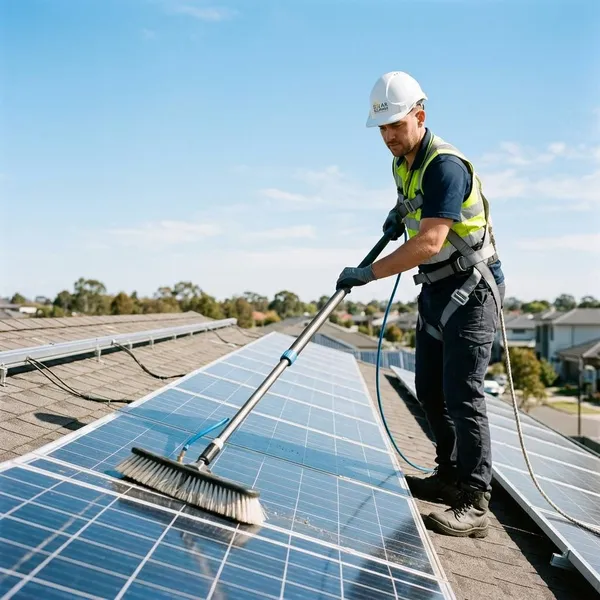
Before you touch the panels, check the manufacturer's cleaning guidance and look over the system from a safe spot. Do not clean if you see cracked glass, loose wiring, damaged seals, unstable mounting, or anything that suggests the panel needs inspection first.
- Check the tool: clean bristles, no hard edges, no trapped grit.
- Check the site: stable ground, safe hose path, no risky ladder angle.
- Check yourself: if you need to rush, stretch, or climb awkwardly, stop.
Choose a time when the panels are cool
Early morning or later in the day is usually easier than cleaning panels heated by direct sun. Cooler glass gives water more time to work and lowers the chance of fast drying that leaves mineral spots.
On a hot summer day, waiting for shade is not just more comfortable—it also keeps you from trying to scrub dried-on residue while water evaporates under the brush.
Rinse away loose grit
Rinse first, before the brush touches the glass. This is the step that removes loose sand, dust, and roof debris that could otherwise be dragged across the surface.
Brush gently with water and light pressure
Keep the surface wet and use smooth, controlled strokes. Start high and let the water move loosened dirt downward instead of brushing dirty water back over cleaned areas.
- Wet the panel surface thoroughly.
- Place the brush lightly on the glass.
- Move in steady passes, not tight circles.
- Re-wet dry areas instead of pressing harder.
- Stop if residue does not lift with light contact.
Stubborn spots do not automatically need more force. Bird droppings or sap may need time, more water, or an approved method from the manufacturer rather than repeated scrubbing.
Rinse thoroughly and check for residue
Finish with a thorough rinse so loosened dirt and any cleaning residue leave the surface. When the panels dry, check from the ground if possible; a few water marks are different from sticky buildup that remains in the same place.
If the same patch stays visible after a gentle second pass, treat it as a warning sign. For oily film, mineral staining, or heavy bird mess, professional cleaning may be safer than trying stronger pressure or chemicals.
What to Avoid When Brushing Solar Panels
Most brushing problems come from using the right-looking tool in the wrong way. Dirty bristles, dry contact, heavy pressure, harsh products, and unsafe roof access can turn a simple cleaning job into damage or injury.
Dirty bristles and abrasive pads
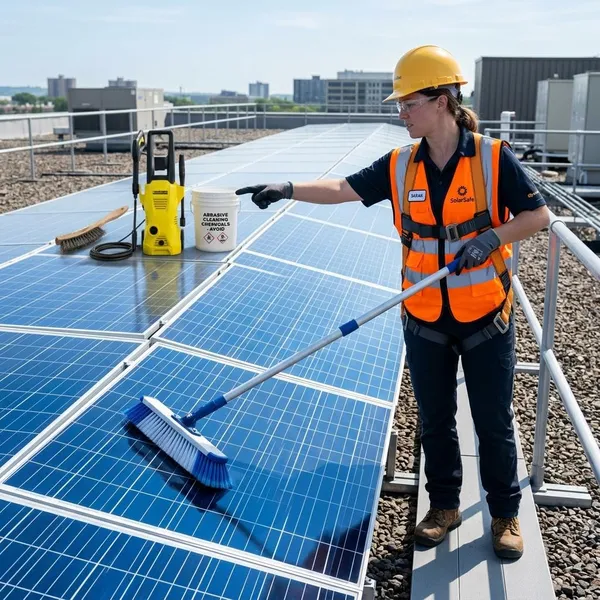
Do not use a brush that has been used on concrete, masonry, siding, or heavily dirty surfaces unless it has been cleaned carefully. Grit trapped in soft bristles can scratch like sandpaper once it is dragged across glass.
Avoid scouring pads, steel wool, stiff deck brushes, rough sponges, and anything designed to scrape. If a tool feels aggressive in your hand, it does not belong on a solar panel.
Heavy pressure and repeated scrubbing
More pressure is rarely the safer answer. It can grind particles into the glass, strain the frame area, and make the pole harder to control.
A useful rule is simple: if the brush needs force to work, pause and reassess. For light seasonal dirt, gentle passes should be enough. For baked-on droppings or sticky tree residue, repeated scrubbing may do more harm than waiting for an approved cleaning method or calling someone with the right equipment.
Unapproved chemicals or powered brushes
Use clean water unless the panel maker allows a specific cleaner. Some soaps, degreasers, glass treatments, and household chemicals can leave films, affect coatings, or create more rinsing work than the dirt itself.
Powered brushes also need caution. A rotating head may look efficient, but speed, pressure, and the wrong attachment can remove your control. For most home situations, a hand-controlled soft brush is the safer choice.
Standing or leaning on panels
Never stand, kneel, sit, or lean your weight on solar panels. They are not a work platform, and damage may not be obvious immediately.
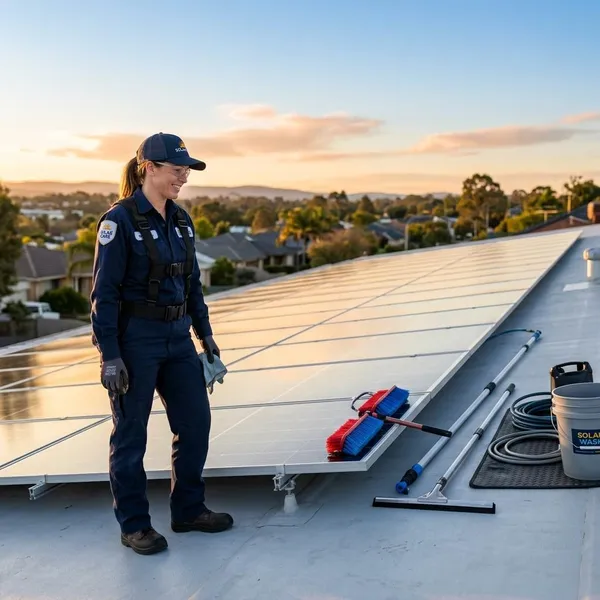
Also keep ladders, hoses, and tools off the panel surface. If the only way to reach a section is to step onto the array or stretch from an unstable position, the job has moved out of safe DIY territory.
Conclusion
A soft brush is worth using when rinsing alone does not remove the dirt, the manufacturer permits brush cleaning, and you can work from a safe, controlled position. Choose the gentlest tool that does the job, keep everything wet, and stop before "a little more scrubbing" becomes the thing that causes damage.