
Choosing a backup generator for a geothermal heat pump comes down to the system's real electrical demand, not the size of the home or broad efficiency claims. The key numbers are the heat pump's running load, compressor startup surge, whether auxiliary electric heat will be disabled during generator operation, and which additional household circuits need power during an outage.
How Does a Geothermal Heat Pump Use Electricity?
A geothermal heat pump is efficient because it moves heat instead of making heat directly. During an outage, that efficiency does not remove the need for electricity. The generator still has to support the compressor, blower, loop pumps, controls, and sometimes backup electric heat.
The tricky part is that these loads do not all behave the same way. Some draw steady power while the system runs, while others need a short but demanding burst when they start.
Run heating and cooling equipment
The compressor is usually the main load, but the system also needs the indoor blower and ground-loop circulation pumps. If the generator can run the compressor but struggles with the blower or pumps at the same time, the house still will not heat or cool properly.
Controls matter too, even though they use far less power. Thermostats, relays, zoning boards, and safety controls need stable voltage. A generator that sags badly when the compressor starts can cause lockouts or nuisance shutdowns.
Use extra power for auxiliary heat
Auxiliary heat is often the load that changes the whole generator plan. Electric heat strips can draw more power than the heat pump equipment itself, so allowing them to run may push you from a manageable selected-load setup into a much larger standby-generator design.
- Short outage in mild weather: locking out auxiliary heat may be perfectly reasonable if the heat pump can maintain enough comfort.
- Long winter outage: backup heat becomes a bigger question, especially in an all-electric home.
- Undersized generator: letting heat strips energize can overload the generator quickly.
How Do You Size a Generator for a Geothermal Heat Pump?
Size the generator by working from the heat pump outward. First confirm the HVAC load, then add startup demand, then decide which household circuits are truly essential. This order prevents a common mistake: buying a generator that can run a refrigerator and lights but cannot reliably start the heat pump.
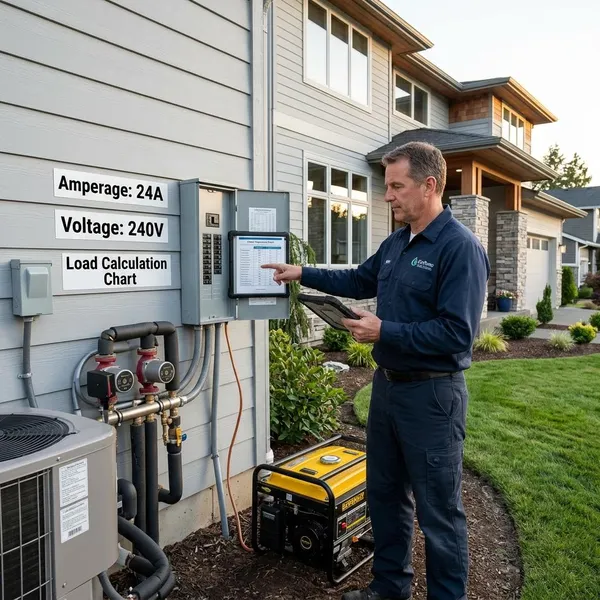
- Collect the heat pump data. Use the nameplate, installation manual, or service paperwork for voltage, amperage, compressor data, blower load, loop pump load, and electric heat package size.
- Separate running load from starting load. The generator must handle both normal operation and the compressor's startup surge.
- Decide what happens to auxiliary heat. Locking out strip heat can greatly reduce the required generator capacity.
- Add essential home circuits. Include only what you actually need during an outage, such as refrigeration, lights, internet, a sump pump, or a well pump.
- Confirm the transfer setup. A licensed electrician should verify the transfer switch, interlock, grounding, and load-management plan.
Check your heat pump power needs
Start at the unit, not with a generic online chart. Look for the electrical nameplate on the indoor unit and any separate labels for auxiliary heat, loop pumps, or air handlers. The most useful documents are often the installation manual, commissioning sheet, or service records.
Do not use breaker size as a shortcut for actual power demand. Breakers protect wiring and equipment; they do not tell you exactly what the system draws while running or what it needs at startup.
Calculate running and startup loads
Running load tells you what the generator must carry after the heat pump is already on. Startup load tells you whether the generator can get the compressor moving without a voltage drop that causes the system to trip or lock out.
A practical check is to ask your HVAC contractor for the unit's starting current information and whether the system has any built-in inrush reduction. If that information is not available from paperwork, field measurement may be safer than relying on a rough estimate.
Add other essential home circuits
Think about how you would actually live through a 12-hour or two-day outage. Heating or cooling may be the largest concern, but a home with well water, a sump pump, or refrigerated medication has different priorities than a home that only needs lights and Wi-Fi.
- Usually essential: refrigerator, freezer, basic lights, internet equipment, phone charging.
- Situation-dependent: well pump, sump pump, garage door opener, medical equipment.
- Usually delayed: electric oven, clothes dryer, water heater, EV charging, large workshop tools.
Which Backup Generator Options Work Best?
The best option depends on how much backup you want and how much manual work you are willing to accept. Portable generators can be useful for temporary selected loads, standby generators are usually better for automatic geothermal backup, and batteries are strongest for quiet short-term support of smaller circuits.
For geothermal systems, the main question is not just "How many watts?" It is whether the backup source can handle compressor startup, avoid overload when other loads cycle on, and keep the system supplied through approved transfer equipment.
Portable generators for temporary backup
A portable generator can work if the geothermal system's starting and running loads fit within the generator's real capacity and auxiliary heat is kept off. It should be connected only through approved transfer equipment, never by unsafe backfeeding.
- Best fit: short outages, limited circuits, someone home to manage fuel and loads.
- Poor fit: frequent overnight outages, severe winter weather, whole-home expectations.
Standby generators for automatic backup
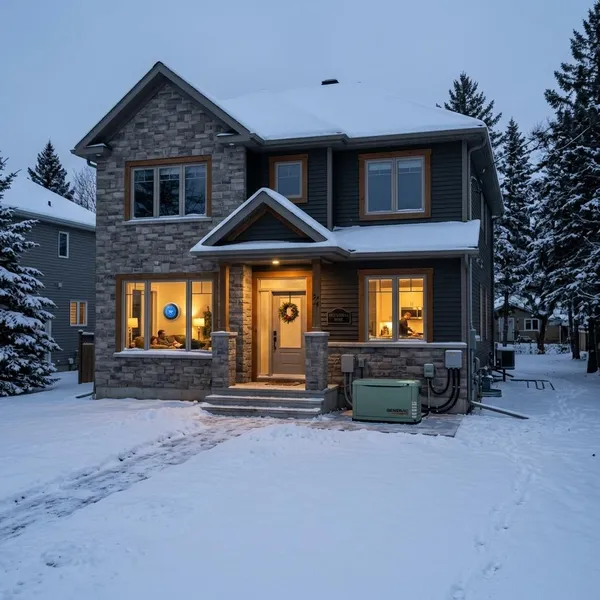
Standby generators are usually the strongest match for geothermal heat pump backup because they start automatically and can be designed around fixed transfer equipment, managed loads, and larger motor-starting demands.
The upfront cost is higher, but the value is clear when the power fails while you are away, asleep, or dealing with storm conditions. For homes that depend on electric HVAC, that convenience can become a reliability issue rather than a luxury.
Battery systems for selected loads
Battery systems are excellent for quiet, instant backup of smaller loads such as internet equipment, lighting, electronics, and some refrigeration. They are less often the simple answer for running a geothermal compressor for long periods unless the battery and inverter system is designed for that level of demand.
A layered setup can make sense: batteries cover small critical loads immediately, while a generator handles longer outages and larger HVAC loads.
Should You Choose a Portable or Standby Generator?
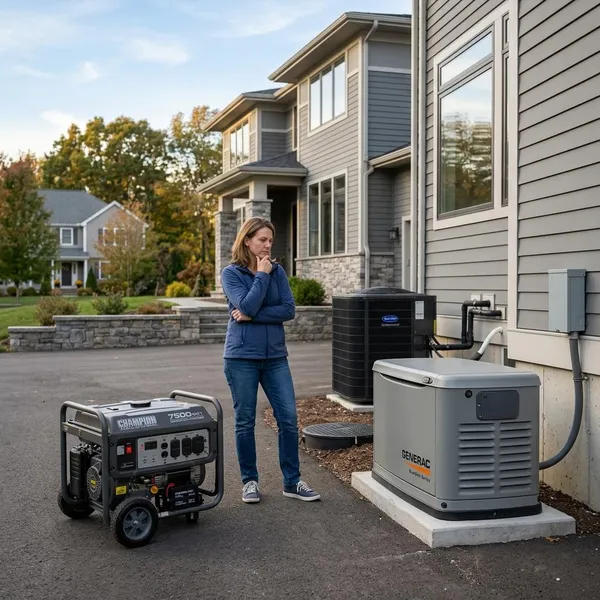
Choose a portable generator if outages are rare, short, and you are comfortable managing power manually. Choose a standby generator if the geothermal system is central to keeping the home livable, especially during winter, long outages, or times when no one may be home to start equipment.
The decision is less about which generator is "better" in general and more about what kind of outage you are planning for.
Compare power capacity
Standby systems are generally easier to size for compressor startup and multiple household loads because they are installed as part of a planned backup system. Portable generators vary widely, and advertised peak wattage may not reflect how well the unit handles a heat pump starting under load.
Compare convenience and fuel use
Portable units require outdoor placement, manual starting, safe refueling, and active load management. That may be acceptable for a daytime outage but much less appealing during freezing rain at 2 a.m.
Standby units commonly run on natural gas or propane and start automatically. They still use fuel, especially when HVAC loads are active, but they remove most of the hands-on work that makes portable backup stressful during longer outages.
Choose based on outage needs
A good test is to picture the outage you are actually worried about. If it is a two-hour summer blackout, a portable selected-load plan may be enough. If it is a two-day winter outage in a home with well water and electric heat, a standby system with load management is usually the safer long-term choice.
How Can You Reduce Generator Power Requirements?
You can often reduce generator size by changing what is allowed to run during an outage. The biggest savings usually come from controlling auxiliary heat, staggering household loads, and improving compressor startup behavior where the equipment allows it.
This is not about making the home uncomfortable for no reason. It is about avoiding a much larger generator just to support loads that could wait until utility power returns.
Limit auxiliary heat use
Locking out electric auxiliary heat is often the first move to consider. If the heat strips are allowed to energize, they can dominate the load calculation and make a modest generator unrealistic.
This should be set up before an outage, not improvised during one. Have the thermostat and controls checked so the system does not call for heat the generator cannot supply.
Manage household power loads
Load management gives the generator breathing room. Instead of running every appliance normally, you decide which loads matter now and which can wait.
- Run one major load at a time when possible.
- Delay electric cooking, laundry, and EV charging during backup operation.
- Use load shedding on standby systems when large circuits compete with the heat pump.
- Watch pump loads if you have a well pump or sump pump that starts suddenly.
Improve startup performance
If the generator can handle running load but struggles when the compressor starts, startup performance may be the bottleneck. Some systems can use soft-start equipment or control settings that reduce inrush current, but compatibility needs to be confirmed with the heat pump manufacturer or installer.
This is worth asking about before oversizing the generator. In some homes, reducing startup stress is the difference between a practical selected-load setup and a much more expensive whole-home system.
Conclusion:
The right choice is the smallest backup setup that can reliably start the geothermal system, run the loads you genuinely need, and avoid calling for auxiliary heat unless the generator is designed for it. If outages are rare and comfort demands are modest, a managed portable setup may be enough; if the home depends on geothermal heat through long or winter outages, a standby generator reviewed by an HVAC contractor and electrician is usually the more dependable path.