
A backup generator is safest when you treat it as temporary outdoor power, not as a shortcut around your home's electrical system. Start with three checks: place it well away from the house, connect it without backfeeding, and only run loads the generator can actually handle. If any of those pieces are unclear during an outage, keep the setup simple with a few essential appliances rather than improvising.
What should you know before using a backup generator?
The first decision is what you really need powered. For a short summer outage, that may be only a refrigerator, a fan, phone chargers, and maybe a sump pump. For a winter outage, heat-related equipment, lighting, and medical devices may move to the top of the list.
Do not start by plugging things in at random. Make a small priority list, check the generator's running and starting watt capacity, and decide whether you are using extension cords, a transfer switch, or an approved interlock setup.
- Most important: keep exhaust outdoors and away from openings.
- Next: prevent backfeeding with the right connection method.
- Then: manage watts so motors and appliances do not overload the unit.
- Optional but smart: test the full setup before storm season.
Generators need proper fuel and maintenance checks
Fuel problems are one of the easiest ways to turn a useful generator into dead weight. Confirm the fuel type your model uses, check the oil level, and look over the air filter, cords, outlets, and visible wiring before starting. If the generator has been sitting for months, old gasoline, a weak battery, or low oil protection can stop it from starting at all.
For occasional use, store fuel in approved containers and rotate it instead of assuming last season's gas is still fine. For longer outage planning, keep spare oil, the manual, and the correct cord setup near the generator so you are not hunting for parts in the dark.
Generators require safe outdoor operation
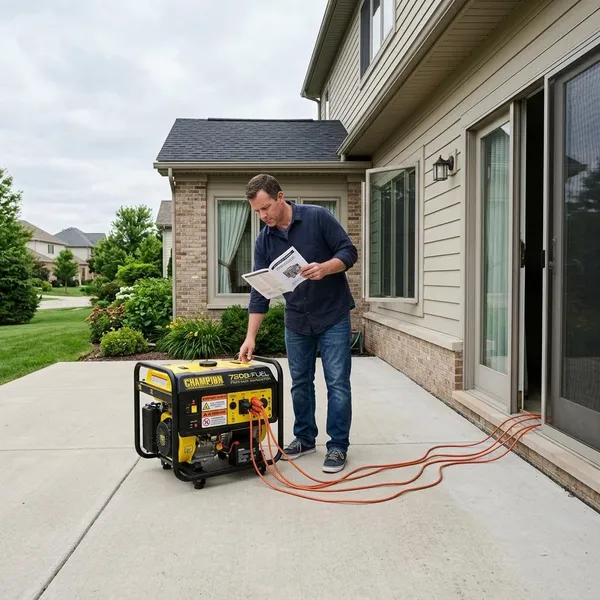
Run the generator outside only, on a dry and level surface, with the exhaust pointed away from doors, windows, vents, garages, and neighboring homes. A common safety rule is to keep it at least 20 feet from the house unless the manufacturer gives different instructions.
- Do not run it in a garage, even with the door open.
- Do not place it on a covered porch with poor airflow.
- Do not cover it with a tarp that traps heat or exhaust.
- Use working carbon monoxide alarms inside the home.
Generators need correct electrical connections
The connection method matters as much as the generator itself. Extension cords can power individual appliances, while a transfer switch or approved interlock kit can feed selected home circuits when installed correctly. What you should not do is plug the generator into a wall outlet, because that can backfeed power into utility lines and create a serious shock hazard.
If your goal is simply to keep a fridge and a sump pump running for a few hours, heavy-duty outdoor-rated cords may be enough. If you want to power fixed circuits such as a furnace blower, kitchen circuit, or well pump, plan on a proper inlet and switching setup installed to local requirements.
How do you start and run a portable backup generator?
A portable generator should be started with no load, allowed to settle, and then loaded gradually. That order protects the engine, reduces voltage dips, and makes it easier to notice a problem before important appliances are connected.
- Move it outside to the planned safe location.
- Check oil, fuel, cords, controls, and breakers.
- Start the engine with appliances disconnected or switched off.
- Let it run briefly until it sounds steady.
- Add the most important loads one at a time.
Move the generator to a safe outdoor area
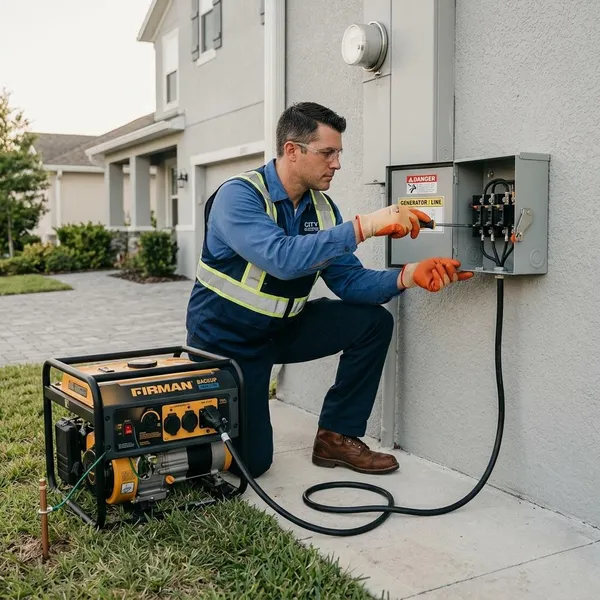
Set the generator where it will stay stable, dry, and ventilated for the whole run. This step comes before fuel checks or cord routing because placement mistakes are the most dangerous generator mistakes. If rain is likely, use only a generator shelter or cover designed for airflow and heat clearance.
Check settings and start the generator correctly
Before starting, make sure connected loads are off. Open the fuel valve if your model has one, set the choke as the manual recommends, check that the engine switch is on, and use the pull cord or electric start.
If it does not start after a few tries, stop and check the simple causes first: closed fuel valve, stale fuel, low oil, weak battery, wrong choke position, or a tripped control. Repeated cranking can flood the engine and make a small problem more frustrating.
Let the generator stabilize before adding loads
Give the generator a short warm-up before connecting appliances. A refrigerator, freezer, sump pump, or furnace blower can draw a higher surge when it starts than it uses while running, so adding those loads one at a time is safer than switching everything on together.
A practical order is to connect the item that protects the home first, such as a sump pump during heavy rain, then food storage, then comfort items and chargers. If the engine bogs down or a breaker trips, remove a load before trying again.
How do you connect a generator to your home safely?
The safest connection depends on whether you are powering loose appliances or household circuits. Cords are simple and temporary. Transfer switches and interlock kits are more organized, but they need correct installation and load management.
| Setup | Best for | Main caution |
|---|---|---|
| Outdoor-rated extension cords | A few plug-in appliances | Cords must match the load and stay out of water |
| Transfer switch | Preselected home circuits | Usually needs professional installation |
| Approved interlock kit | Flexible circuit choice | Must be compatible with the electrical panel |
Extension cords work for individual appliances
Extension cords make sense when you only need a few items and can reach them safely. Use heavy-duty outdoor-rated cords, keep them as short as practical, uncoil them fully, and check for damaged insulation or loose ends before use.
This is the simplest low-commitment setup for renters or homeowners who only expect occasional outages. It becomes awkward when the essential loads are spread across the house or when equipment is hardwired rather than plugged into a normal outlet.
Transfer switches provide safer home connections
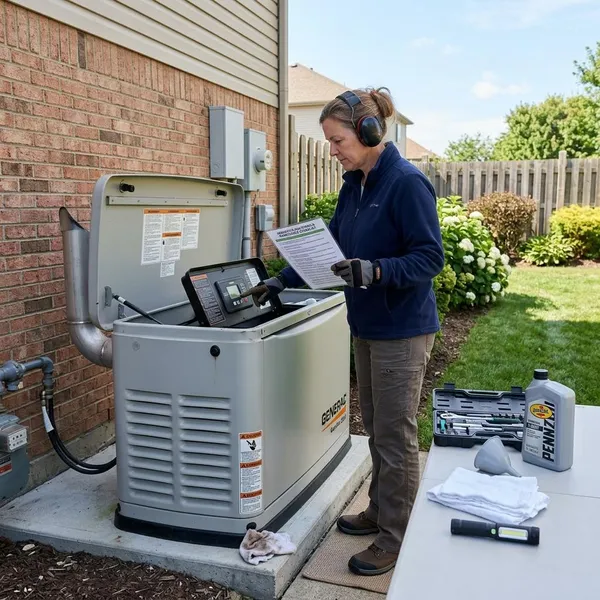
A transfer switch lets a generator power selected circuits while keeping utility power isolated. That makes it a safer and cleaner option for homes where outage routines are predictable, such as keeping the refrigerator circuit, a few lights, and a furnace blower available.
Interlock kits control power flow safely
An approved interlock kit prevents the main breaker and generator breaker from being on at the same time. It can offer more flexibility than a small transfer switch because you choose which circuits to use, but the total load still has to stay within the generator's capacity.
How do you shut down and maintain a backup generator?
Shutdown should happen in the reverse order of startup: remove loads first, let the generator run briefly with little or no load if your manual recommends it, then turn it off. Refueling and storage come only after the engine has cooled.
Maintenance is what makes the difference between "it worked once" and "it is ready next time." A generator used only during emergencies still needs test runs, fuel care, oil checks, and dry storage.
Remove electrical loads before shutdown
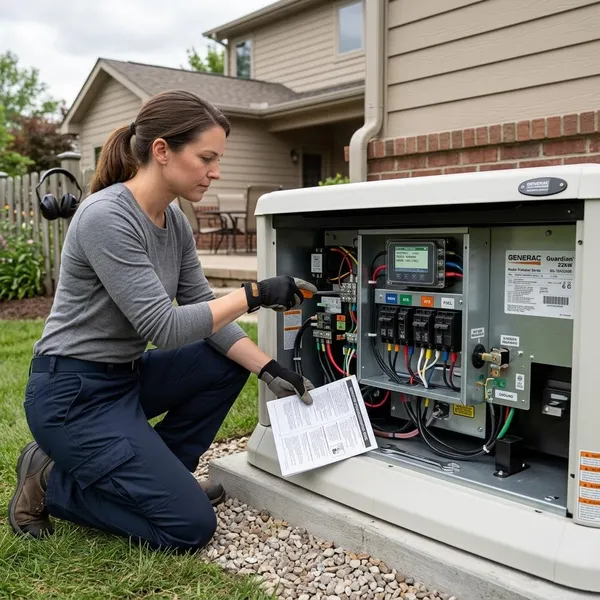
Unplug appliances or switch off the selected circuits before stopping the engine. This keeps appliances from seeing unstable power as the generator slows down and also prevents the next startup from happening under load.
Refuel only after the generator cools down
Shut the generator off and let hot engine and exhaust parts cool before adding fuel. Gasoline vapors can ignite easily, and rushed refueling during bad weather or at night is a common avoidable risk.
- Keep fuel containers capped and away from the running unit.
- Use a funnel or spill-resistant can when possible.
- Wipe up spills before restarting.
- Plan refill times before the tank is nearly empty.
How do you fix common generator problems?
Most basic generator problems fall into three groups: the engine will not start, the engine runs but nothing receives power, or the generator overloads under demand. Work through those groups in order instead of changing several things at once.
Turn the unit off before touching cords, outlets, or external parts, and avoid troubleshooting in standing water. Sparks, burning smells, damaged wiring, or repeated breaker trips are signs to stop and get qualified help.

Check fuel and connections when the generator will not start
Start with the obvious items: fuel in the tank, fuel valve open, engine switch on, correct choke position, and enough oil for the low-oil sensor. For electric-start models, check the battery charge and terminals. If the fuel is old or smells stale, fresh fuel and carburetor service may be needed before the engine runs reliably.
Check outlets and loads when appliances do not work
If the engine is running but appliances are dead, check the generator breaker, GFCI reset, cord connections, and the appliance itself. One bad cord can make the whole setup look like a generator failure.
Power quality can also matter. Basic lamps and chargers may behave differently from a refrigerator, sump pump, or sensitive electronics, so test the appliances you care about before a real outage if you can.
Reduce power use when the generator overloads
An overload means the generator is being asked for more than it can safely provide at that moment. Unplug or switch off loads, reset the breaker if appropriate, and add items back one by one.
The usual culprit is motor startup. A refrigerator and sump pump may both be acceptable separately but too much if their motors start at the same time. Staggering those loads is a better first fix than assuming the generator is broken.
Conclusion
A backup generator is worth having only if the setup is simple enough to use safely when the power is already out. Decide your essential loads now, choose a connection method that prevents backfeeding, and practice the startup and shutdown order before you need it; if the plan feels confusing in daylight, it will be worse in a storm.