
A backup generator can cost less than $1,000 for basic emergency power, while a fully installed whole-house standby system often runs from $7,000 to $20,000 or more. The real cost depends on what you want to keep running during an outage: a refrigerator, a few lights, and phone chargers, or major appliances, heating and cooling, and most of your home with automatic backup power.
What types of backup generators are available?
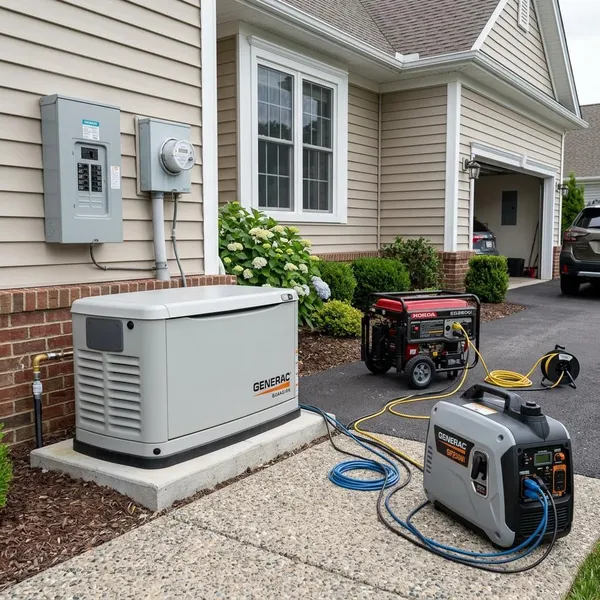
Home backup generators usually fall into three practical groups: portable, inverter, and standby. The right one depends on outage length, noise tolerance, fuel access, and whether you are comfortable setting up equipment during bad weather.
If you only lose power for a few hours once in a while, a portable option may be enough. If outages are frequent, overnight, or risky because of a sump pump, well pump, medical equipment, or work-from-home needs, convenience and reliability become much more important than the lowest purchase price.
Portable generators provide affordable short-term power
Portable generators are the budget choice for temporary backup. You place the unit outdoors, start it manually, and power appliances with heavy-duty cords or through a properly installed manual transfer switch.
They make sense when you want to protect basics such as a refrigerator, freezer, lights, phone charging, a fan, or internet equipment. The tradeoff is hands-on work: fuel storage, refueling, noise, weather protection, and safe placement to reduce carbon monoxide risk.
Inverter generators provide quieter and cleaner electricity
Inverter generators are still portable, but they are usually quieter and produce more stable power for electronics. They are a better fit if you care about laptops, routers, televisions, or sensitive appliance controls, especially during evening or overnight outages when noise becomes more noticeable.
- Good fit: occasional outages, electronics, smaller loads, closer neighbors.
- Less ideal: large whole-home loads or heavy appliances unless the model is sized for them.
How much does each type of backup generator cost?
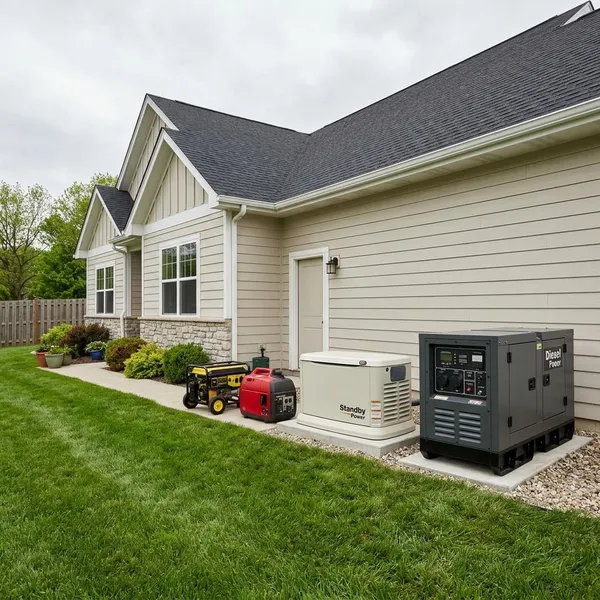
Generator prices vary because each type solves a different problem. A portable unit buys you basic emergency coverage. An inverter generator buys quieter, cleaner power. A standby system buys automatic backup and far more convenience.
| Generator type | Typical equipment cost | Best for |
|---|---|---|
| Portable generator | About $400 to $2,500 | Basic short-term backup on a lower budget |
| Inverter generator | About $700 to $3,000+ | Quieter backup for electronics and smaller loads |
| Standby generator | About $3,000 to $10,000+ before installation | Automatic backup for selected circuits or most of the home |
Installed standby systems commonly land around $7,000 to $20,000, and complex homes can go higher. Large electric loads, long fuel-line runs, panel upgrades, or difficult site work are the usual reasons the final bill climbs.
Portable generators have the lowest upfront cost
A portable generator is usually the cheapest way to get usable backup power. Smaller models may cover a refrigerator, a few lights, charging, and internet equipment, while larger portable units can support more circuits when connected safely.
Do not judge the budget by the generator box alone. Heavy-duty cords, safe fuel cans, a weather cover, wheel kit, inlet box, and manual transfer switch can add hundreds or more to the real setup cost.
Inverter generators cost more for better performance
Inverter models cost more per watt, but the premium can be worth it if you want less noise, better fuel behavior at lighter loads, and cleaner power for electronics. For a household that mainly wants the fridge, Wi-Fi, phones, and a few lights during a storm, a good inverter generator can feel much easier to live with than a loud standard portable unit.
What affects backup generator cost?
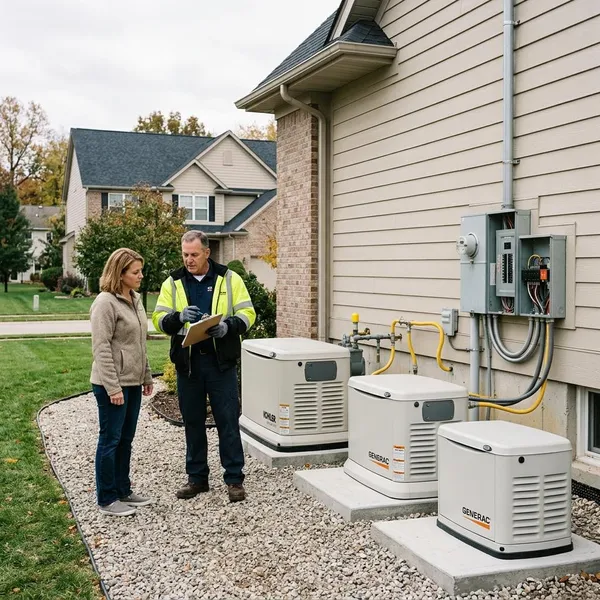
The biggest cost drivers are size, installation complexity, fuel choice, and the level of convenience you want. Before shopping by brand or sale price, decide what must keep running and what you can live without during an outage.
A useful priority order is simple: protect safety first, prevent property damage second, then add comfort if the budget allows.
- Safety loads: medical equipment, heat in cold climates, basic lighting, communication.
- Property protection: sump pump, freezer, refrigerator, well pump, security system.
- Comfort loads: air conditioning, electric cooking, laundry, entertainment, full-house convenience.
Generator size increases equipment costs
More wattage usually means a higher equipment price, more fuel use, and sometimes more installation work. A home that only needs a refrigerator, lights, Wi-Fi, and a sump pump can often use a much smaller setup than a home expecting central air and multiple large electric appliances.
- Occasional short outage: size for essentials, not normal daily life.
- Multi-day outage risk: think harder about fuel supply and runtime.
- High-risk home: prioritize pumps, heat, medical needs, or well water before comfort items.
Installation needs increase the total price
Installation gets expensive when the generator must sit far from the panel or fuel source, when trenching is needed, or when the electrical panel is older or crowded. Even a portable generator can have installation costs if you want a safer inlet and transfer switch instead of running cords through doors or windows.
How much does backup generator installation cost?
Installation can be almost nothing for a very basic portable setup, but that does not mean it is the best way to use one. A safer portable connection with an inlet box and manual transfer switch often costs around $500 to $2,000, while standby installation commonly adds $3,000 to $10,000 or more to the equipment price.
The quote matters more than a national average because every home is different. A generator placed close to a modern panel and nearby fuel source is a very different project from one requiring long gas runs, trenching, panel upgrades, or difficult access.
Transfer switches add electrical work costs
A transfer switch keeps generator power separated from utility lines and lets you feed selected circuits safely. For portable generators, a manual transfer switch is often the practical middle ground: you still start the generator yourself, but you avoid unsafe backfeeding and messy extension-cord setups.
Standby generators use automatic transfer switches, which cost more but remove the need to be home or awake when the outage starts. That convenience is one of the main reasons standby systems cost so much more.
Fuel connections and site preparation add installation costs
Fuel and placement can change the quote quickly. Watch for these line items:
- Gas or propane work: line length, regulators, tank placement, and supplier coordination.
- Generator base: prefabricated pad, gravel base, or poured concrete depending on the site.
- Clearance and access: space around doors, windows, vents, fences, and service areas.
- Trenching or long runs: often a major reason one install costs more than another.
Permits and labor affect the final price
Most permanent installations need permits and inspections, and requirements vary by location. When comparing quotes, ask whether permits, startup testing, load calculation, owner instruction, and cleanup are included, because a low-looking bid may simply leave more items outside the price.
What does it cost to run and maintain a backup generator?
Running and maintenance costs depend on fuel use, how often outages happen, and how well the generator is kept ready. A generator that is cheap to buy can still become frustrating if it burns too much fuel, is hard to start, or has poor local service support.
For budgeting, separate outage cost from readiness cost. Fuel is what you spend during an outage; maintenance is what you spend so the generator actually works when that outage arrives.
Fuel use determines operating costs during outages
Fuel cost depends on load. A generator running a refrigerator and a few outlets uses much less fuel than one supporting heavy appliances or whole-home comfort. That is why "bigger just in case" can become expensive if the extra capacity is rarely needed.
For a practical estimate, check the model's fuel consumption at 25%, 50%, and 100% load, then multiply by local fuel prices and expected runtime. If you are planning for multi-day outages, also ask how you would refuel safely if gas stations are closed or roads are difficult.
Regular maintenance keeps the generator reliable
Maintenance is not exciting, but it is what separates a useful generator from a machine that sits in the garage and refuses to start during a storm.
- Portable units: rotate gasoline, run periodic test starts, check oil, filters, plugs, and battery if equipped.
- Inverter units: follow the same basics, with extra care around clean fuel and storage.
- Standby systems: schedule regular service, check the battery, and pay attention to error codes or failed self-tests.
Repairs and service affect long-term ownership costs
Cheaper generators can be fine for light use, but repair support matters if you rely on the unit. Carburetor issues, weak batteries, fuel-system problems, sensors, and control boards can all add cost over time. Before buying, check whether parts and service are easy to get locally; that can matter more than saving a small amount upfront.

Conclusion
The best value is usually the smallest generator setup that safely covers your real outage priorities. Choose portable power if you only need occasional essentials, consider an inverter if noise and electronics matter, and price a standby system if outages are frequent, long, or risky for your home. Once installation and fuel are included, the right choice is less about the cheapest generator and more about the backup plan you will actually use safely.