
Power outages in Winter Park can range from a minor disruption to a serious household problem, depending on what you need to keep running. For some homes, an essentials-only generator that powers lights, a refrigerator, Wi-Fi, and a few outlets is enough. For others, losing central AC, medical equipment, refrigeration, security systems, or remote-work access makes a properly sized standby generator the safer long-term choice. The best starting point is to list what must stay on during an outage, then choose the generator type, capacity, and fuel setup around those needs instead of shopping by price alone.
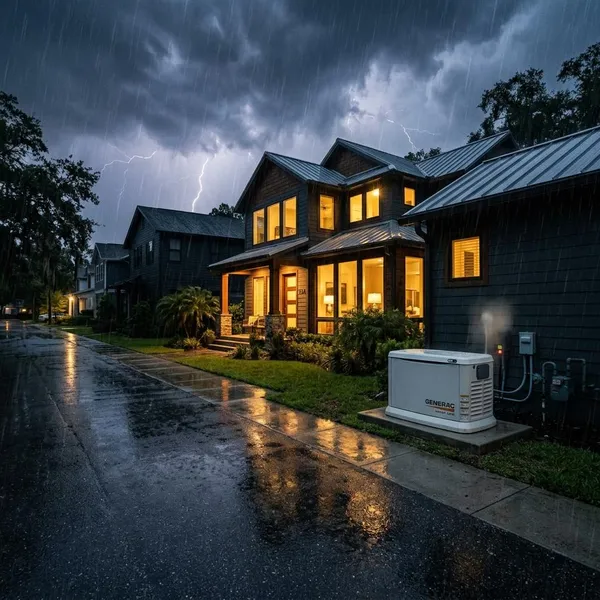
Why do Winter Park homes need backup power?
Winter Park homes are especially dependent on electricity because outages often happen when weather is already uncomfortable. A short outage may only mean flashlights and warm food. A longer outage can affect cooling, work, security, refrigeration, and the ability to keep phones and devices charged.
The first decision is not "whole-house or nothing." It is deciding which parts of your home become difficult, unsafe, or expensive to lose. For one household, that may be the refrigerator, a few outlets, and Wi-Fi. For another, it may be central AC, medical equipment, and a home office that cannot go offline for half a day.
Storms and outages can interrupt essential home systems
Storms, wind, lightning, and utility issues can shut down several systems at once: refrigerators, garage doors, routers, lights, charging stations, and sometimes security equipment. That is why a useful backup plan starts with the appliances you would miss in the first hour, not the luxury items you might only use if the outage lasts all weekend.
- First priority: refrigeration, lights, phone charging, and any medical or safety-related equipment.
- Second priority: internet, work devices, fans, and selected kitchen outlets.
- Comfort priority: central AC, cooking appliances, laundry, and other high-demand loads.
Air conditioning needs reliable power during hot weather
In Winter Park, cooling can move from "nice to have" to "hard to live without" very quickly in hot, humid weather. A household with healthy adults may tolerate fans and limited power for a short outage. A home with young children, older adults, pets, heat-sensitive health needs, or remote work equipment may need a more serious backup plan.
Backup power protects comfort, work, and important devices
Backup power is most valuable when it prevents a chain reaction of small problems: spoiled food, dead phones, missed work, overheated rooms, and lost internet during a storm. For occasional short outages, a portable generator may solve enough of those problems. For a household that needs predictable power while away from home or overnight, automatic standby backup is usually a better fit.
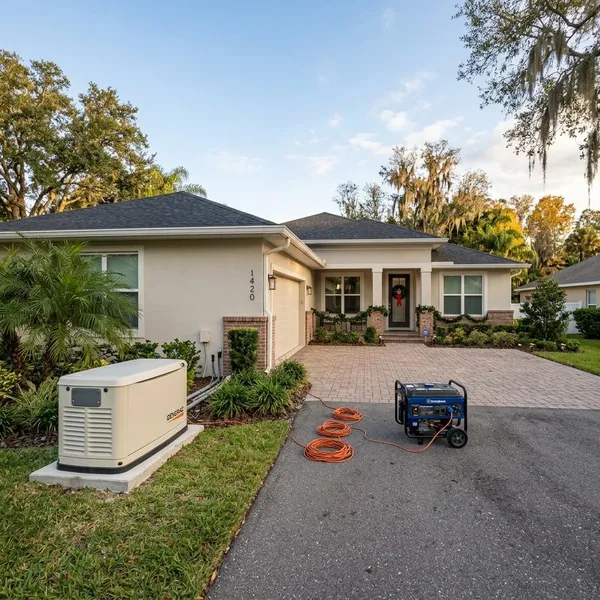
Which backup generator type fits your home?
The best generator type depends on how much involvement you want during an outage. Portable and inverter generators can be practical for a lighter emergency plan, but they require setup, safe outdoor placement, and refueling. Standby generators cost more, yet they start automatically and can support larger parts of the home when sized and installed correctly.
| Best fit | Generator type | What to watch |
|---|---|---|
| Automatic backup, larger loads, possible AC support | Standby generator | Higher installed cost, permitting, fuel connection, professional sizing |
| Essentials during occasional outages | Portable generator | Manual setup, safe placement, fuel storage, limited circuits |
| Quiet power for smaller electronics and light loads | Inverter generator | Lower capacity, usually not a central AC solution |
Standby generators provide automatic home backup
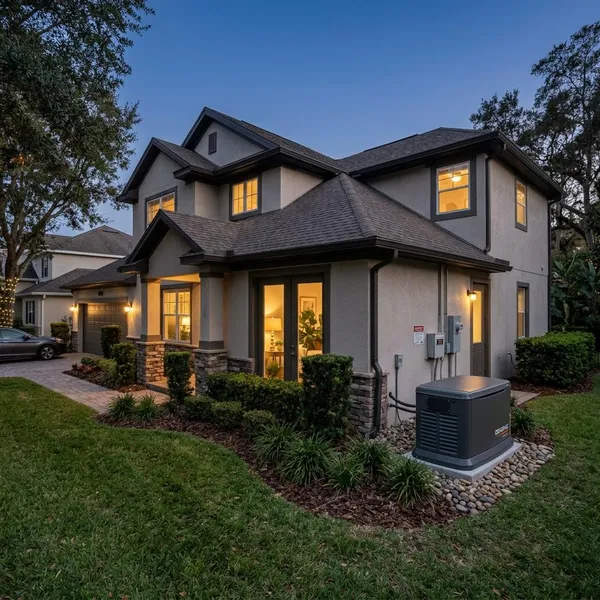
A standby generator is the strongest option when you want backup power without pulling equipment out during bad weather. It is installed outside, connected through a transfer switch, and designed to start when utility power fails.
This type makes the most sense for homeowners who travel, work from home, want overnight protection, or need central AC as part of the plan. It is also the option most likely to support a larger list of circuits, although the exact capacity still depends on load calculation, fuel supply, and the transfer setup.
Portable generators provide flexible emergency power
- Good use case: refrigerator, lights, internet, chargers, fans, and a few outlets.
- Less suitable: automatic backup, long unattended outages, or full central AC support.
- Common mistake: relying on extension cords for too many loads instead of planning a safer transfer setup.
Inverter generators provide quiet backup electricity
Inverter generators are often a comfortable middle ground for smaller needs. They are usually quieter than conventional portable models and are often chosen for electronics, internet equipment, laptops, phone charging, and light household loads.
How do you choose the right generator size for your home?
Generator sizing starts with a load list, not a guess. Write down what must run during an outage, separate those items from comfort loads, and check both running watts and startup demand for larger appliances. A generator can look large enough for normal operation and still struggle when a compressor or motor starts.
A simple way to avoid overspending is to choose between three levels of backup before getting quotes:
- Essentials only: food, lights, phones, internet, and a few outlets.
- Comfort backup: essentials plus fans, selected kitchen use, and possibly one cooling load.
- Whole-home style backup: broader circuit coverage with fewer daily compromises.
Essential appliances determine minimum power needs
Your minimum size comes from the items you cannot reasonably lose. For many homes, that means refrigerator, freezer, lights, Wi-Fi, chargers, and any health or safety equipment. This is the right starting point if you want a lower-cost emergency setup instead of a large permanent system.
Large appliances require more starting power
Large appliances are where sizing mistakes usually show up. Refrigerators, freezers, pumps, and especially air conditioning equipment may need a brief surge of power to start. If two major loads start at the same time, a marginal generator may trip, stall, or fail to start one of the appliances.
Whole-home backup needs higher generator capacity
Whole-home backup is best for homeowners who do not want to manage every circuit during an outage. It may be the right choice if outages disrupt work, if the home needs cooling for comfort or health, or if you want the system to operate while you are not there.
- Mark every circuit you expect to use during an outage.
- Identify the largest motor loads, especially AC equipment.
- Decide which loads can be delayed or locked out.
- Have the panel, fuel supply, transfer equipment, and placement reviewed before choosing the final generator size.
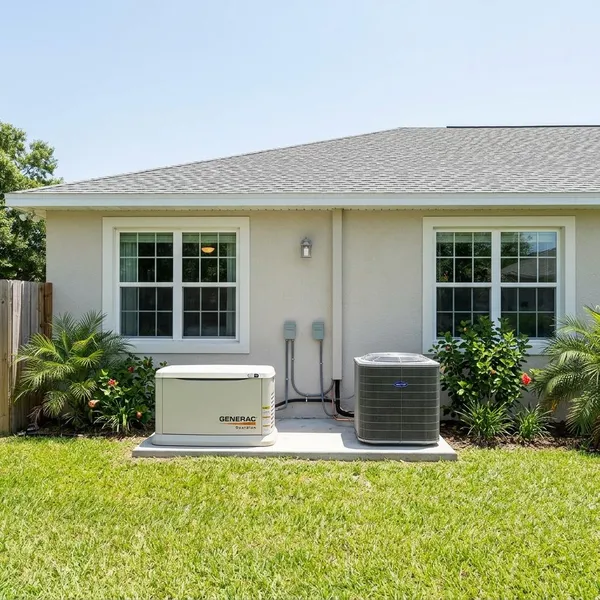
Can a backup generator run central AC in Winter Park?
A backup generator can run central AC in Winter Park, but only when the generator, transfer equipment, and load plan are designed for it. This is one of the most important questions to answer early because AC can change the entire size and cost of the project.
If you only need lights, refrigeration, and internet, a smaller setup may be reasonable. If you expect the house to stay close to normal during a summer outage, plan for a larger standby system or a carefully managed setup that prioritizes cooling over less important high-power appliances.
Central AC requires extra startup power
Central AC does not only need power while it is running; it also needs extra power when the compressor starts. That startup demand is why an undersized generator may run small appliances smoothly but fail when the cooling system cycles on.
Load management reduces high-power demand
Load management helps by preventing too many heavy appliances from drawing power at the same time. For example, the system may allow central AC to run while delaying an electric water heater, range, or another large load.
This is useful when your main goal is comfort rather than powering everything at once. It can sometimes make a smaller standby generator more practical, but only if the managed loads match how your household actually uses power during an outage.
Larger systems support full HVAC backup
Homes with multiple AC units, larger floor plans, or a "keep life normal" expectation usually need a higher-capacity standby generator. That does not mean every circuit should run without limits, but it gives the system a better chance of supporting cooling, refrigeration, lighting, and daily essentials together.
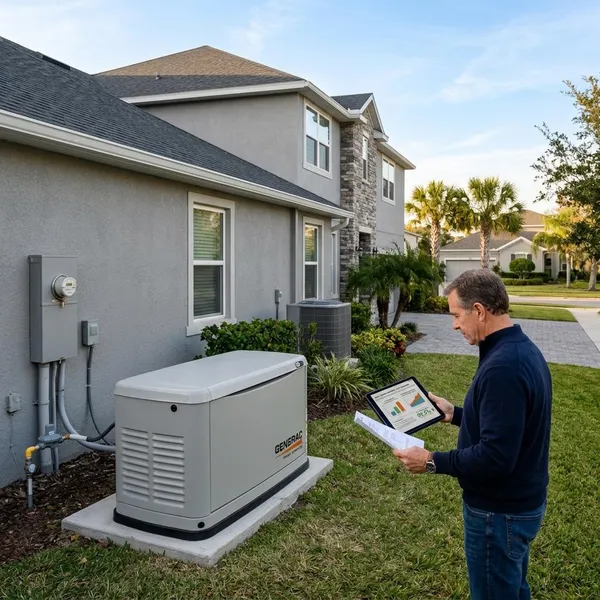
How much does a home backup generator cost in Winter Park?
Cost depends less on the generator label and more on the finished system. A portable generator may be the lowest-cost way to cover essentials, while a standby generator includes equipment, transfer gear, permits, fuel connection, electrical labor, and startup testing.
Two Winter Park homes can choose the same generator model and still get different installed prices. Panel location, fuel access, generator placement, gas line distance, concrete pad needs, and local permitting can all affect the quote.
Generator size affects equipment cost
Bigger generators cost more because they are built to support heavier loads and larger startup demands. The key is not to buy the largest model you can afford, but to avoid paying for capacity you will never use.
A homeowner who only wants refrigeration, lights, and internet should compare essentials-focused options first. A homeowner who wants central AC, multiple kitchen loads, and automatic operation should expect a different price range because the system is solving a much larger problem.
Installation adds electrical and setup expenses
Standby installation usually includes a transfer switch, wiring, a mounting pad, fuel connection, permits, inspection, and system testing. Some homes may also need panel work, trenching, gas line changes, or a different placement than the homeowner first expected.
Maintenance affects long-term ownership cost
A generator that sits unused for months still needs attention. Standby systems commonly require periodic service, battery checks, exercise cycles, oil and filter changes, and general inspection so they are ready when utility power fails.
Fuel choice also affects ownership. Natural gas is convenient when service is available, while propane gives you stored fuel on the property. The better choice depends on access, storage space, expected outage length, and how much responsibility you want for monitoring fuel levels.
Conclusion
The right choice is the one that matches your outage risk without creating unnecessary cost or complexity. If you only need basic emergency power, keep the plan simple and safe. If heat, remote work, health needs, or frequent outages make power loss a serious disruption, invest the time in proper sizing, load planning, fuel selection, and professional installation before choosing the system.