
The best portable generator for home backup is one that can power your essential appliances safely, reliably, and without being larger, louder, or more expensive than you actually need. Focus first on what must stay running during an outage—such as your refrigerator, lights, Wi-Fi, sump pump, furnace blower, or medical devices—then compare running watts, starting watts, fuel type, runtime, noise level, and the safest connection method for your home.
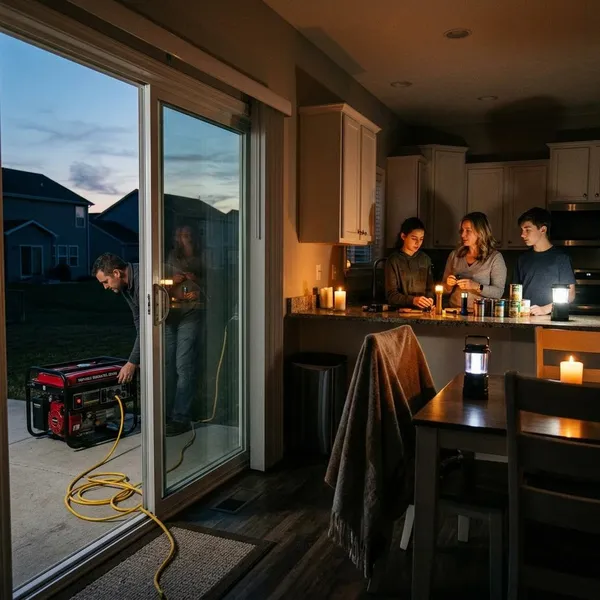
Why choose a portable generator for home backup?
A portable generator makes sense when you want backup power for essentials, not a fully automatic whole-house system. It is usually cheaper to buy, easier to store, and flexible enough for households that only deal with occasional outages or seasonal storms.
The tradeoff is that you need to plan more carefully. You must move it outdoors, connect it safely, manage fuel, and decide which appliances matter most before the outage happens.
Portable generators provide affordable backup power
Portable generators usually cost far less than installed standby systems because they do not require a permanent pad, automatic transfer equipment, or fixed fuel-line work in the same way. For a home that loses power a few times a year, that lower entry cost can be the practical choice.
The money saved should not all go toward the biggest wattage number. Budget for the parts that make the generator usable: heavy-duty outdoor-rated cords, a proper inlet or transfer setup if needed, fuel cans or propane tanks, oil, and a cover for storage.
Portable generators support essential home appliances
A well-sized portable generator can keep the important things running: refrigerator, freezer, furnace blower, sump pump, lights, phone charging, internet equipment, and sometimes a microwave or well pump. Most homes do not need every circuit powered to get through an outage safely.
- Short outage: food storage, lights, phones, and internet may be enough.
- Winter outage: the furnace blower or boiler controls become a higher priority.
- Flood-prone basement: the sump pump may matter more than comfort appliances.
- Remote property: a well pump or 240V circuit may decide the generator size.
Portable generators offer flexible storage and mobility
Because the generator is not permanently installed, you can store it in a garage or shed and move it outside only when needed. That is useful if you have limited yard space or do not want a standby unit sitting outside year-round.
Mobility can also become a weakness if the generator is too heavy for your setup. Before buying, picture the actual route from storage to the operating spot: steps, gravel, snow, a sloped driveway, or a narrow gate can make a "portable" unit feel much less portable.
How much generator power do you need for your home?
Generator sizing starts with a simple question: what must run at the same time? Running watts tell you the normal load, while starting watts tell you whether motors and compressors can start without tripping the generator.
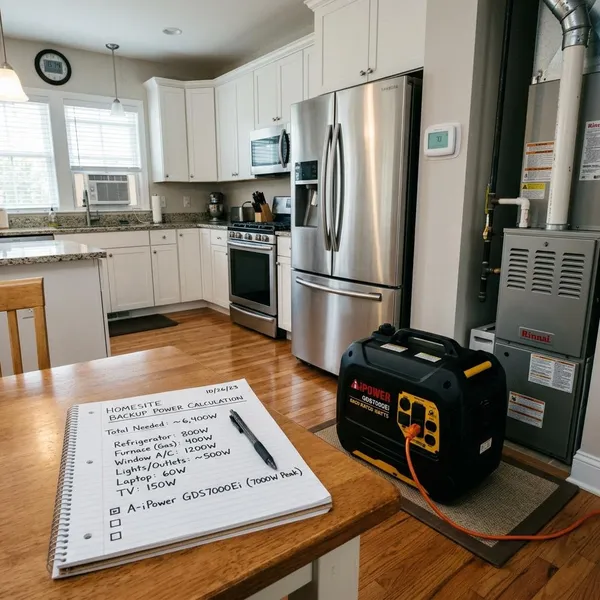
A realistic load plan is better than guessing high. Oversizing costs more, burns more fuel, and can be harder to store; undersizing causes overloads and forces constant appliance juggling.
Running watts determine normal power needs
Running watts are the continuous power an appliance uses after it is already operating. Add the running watts for the items you expect to use together, such as a refrigerator, freezer, furnace blower, a few lights, modem, router, and phone chargers.
Do not plan to run every convenience item at once. A microwave, toaster, coffee maker, or hair dryer can often be used briefly and separately, which keeps the generator smaller and easier to live with.
Appliance priorities determine the right generator size
Rank your loads before choosing a size. Essentials come first, comfort loads come second, and high-draw convenience items should only be added if the generator can handle them without making the whole setup awkward.
- List must-run appliances. Include running watts and starting watts when you can find them.
- Add only simultaneous loads. Separate items you can use one at a time.
- Find the largest motor surge. Pumps and compressors often set the real limit.
- Check voltage needs. Some pumps, transfer setups, and larger loads require 240V.
- Add margin. Avoid running the generator at its limit for hours.
| Backup goal | Common generator range | Best fit |
|---|---|---|
| Minimal essentials | About 2,000–3,500 watts | Fridge, lights, chargers, modem, short outages |
| Typical home essentials | About 5,000–7,500 watts | Fridge, freezer, furnace blower, sump pump, selected small loads |
| Broader circuit coverage | About 7,500–10,000+ watts | Transfer switch use, larger pumps, some 240V needs |
These ranges are only starting points. Appliance labels, manuals, or electrician input matter more when pumps, central air, electric heat, or hardwired circuits are involved.
Which portable generator type fits your needs?
The right type depends on what bothers you most during an outage: price, noise, fuel access, or power quality. A storm-prone household planning for multi-day outages may choose differently from someone who only wants quiet backup for a refrigerator and internet equipment.
Standard portable generators suit basic home backup
Standard open-frame portable generators are often the best value when you need solid wattage for home essentials. They are common in the 5,000-watt-and-up range and may include outlets suitable for transfer-switch or inlet-box setups.
The downside is noise and weight. If your generator will run near neighbors overnight, or if one person must move it alone, a cheaper high-output model may not feel like a bargain after the first long outage.
Inverter generators suit quiet and clean power needs
Inverter generators are usually quieter and produce cleaner, more stable power than many conventional open-frame models. That makes them attractive for laptops, routers, phones, TVs, and appliances with sensitive electronic controls.
They are a strong fit for lighter backup plans: keeping food cold, charging devices, running internet gear, and powering a few lights. For whole-home circuit coverage or large motors, they can become expensive quickly unless you move into larger inverter models or parallel setups.
Dual-fuel generators suit flexible outage planning
Dual-fuel models can run on gasoline or propane, which gives you a second option if one fuel source is hard to get. Gasoline often provides the highest output, while propane stores longer and can be easier to keep ready for storm season.
What features should a home backup generator have?
Useful features are the ones that make the generator safer and easier to use when conditions are bad. A dark, wet, cold outage is not the time to discover that the controls are confusing, the tank is too small, or the outlet layout does not match your backup plan.
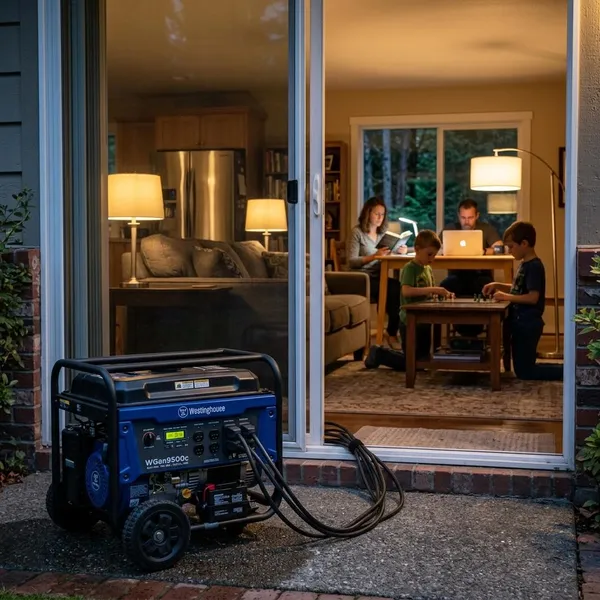
- Right outlets: match extension cords, inlet boxes, or transfer equipment.
- Good wheels and handles: important for heavy units and uneven ground.
- Clear controls: easier for another family member to operate safely.
- Low-oil shutdown: helps protect the engine during long use.
Longer runtime reduces refueling needs
Runtime matters because refueling during a storm or in the middle of the night is inconvenient and can be unsafe if rushed. Look at runtime at realistic load levels, not only the number advertised at 25% load.
A practical target for many homes is enough runtime to get through a large part of the night while running essentials. A slightly smaller generator carrying the right loads may sometimes be easier to manage than a large unit that drains fuel quickly.
Electric and remote starts improve convenience
Electric start is worth considering if pulling a recoil cord would be difficult in cold weather, rain, or darkness. It also helps if more than one person in the household may need to start the generator.
Remote start can be convenient, but it should not encourage shortcuts. The generator still needs to be outdoors, positioned safely, connected correctly, and checked before it runs for hours.
CO safety features improve operating safety
Carbon monoxide protection is not optional thinking; portable generators produce deadly exhaust. Run the generator outside only, away from doors, windows, vents, crawl spaces, and garages. A built-in CO shutoff is a valuable backup layer, not permission to place the unit close to the house.
What mistakes should you avoid when buying a portable generator?
The easiest way to buy the wrong generator is to shop by the biggest number on the box. A better purchase comes from matching the machine to your actual loads, fuel plan, safe connection method, storage space, and noise tolerance.
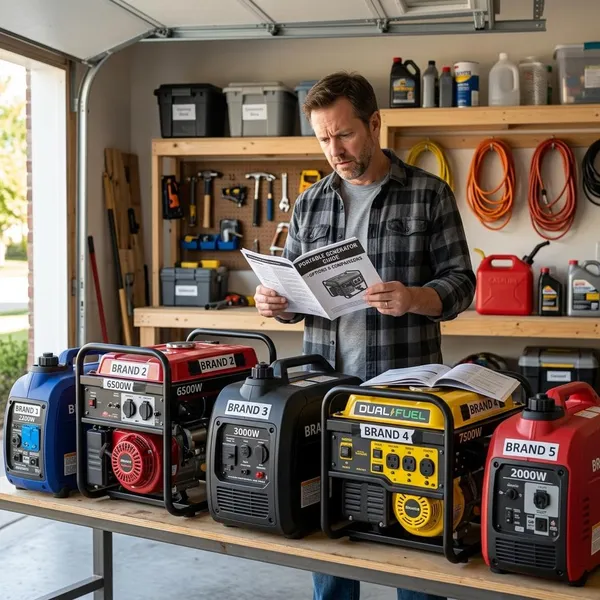
Choosing only by peak watts
Peak watts are temporary. Rated running watts are what the generator can support for longer periods, so they should be the first number you compare.
A model with a high peak rating but weak running output can still struggle with normal outage loads. Check the rated watts, outlet capacity, and whether the generator can deliver the power through the connection you plan to use.
Ignoring starting power requirements
Motor-driven appliances can overload a generator even when the running-watt total looks fine. Refrigerators, freezers, furnace blowers, sump pumps, and well pumps deserve extra attention because their startup surge may be the deciding factor.
If exact starting watts are hard to find, use a cautious margin and avoid loading the generator to its limit. For a high-risk setup, such as a sump pump that protects a finished basement, it is better to size conservatively than hope the pump starts when needed.
Overlooking noise and storage needs
Noise and storage are not minor details. A generator that is too loud for your neighborhood, too heavy to move, or too awkward to store may not get tested and maintained as often as it should.
Conclusion
The right portable generator is not automatically the largest one you can afford; it is the one that covers your must-run loads, starts motor appliances reliably, fits your fuel and storage situation, and can be used safely without improvising. If you size for essentials first and treat connection, carbon monoxide safety, and refueling as part of the purchase, your backup setup will be much easier to trust when the power goes out.