
The best propane generator for home backup is the one that can safely power your essential appliances without overspending on capacity you do not need. A portable propane generator is usually enough for refrigerators, lights, internet equipment, sump pumps, and a few key outlets, while a standby propane generator is better for automatic, whole-home backup during longer outages. The right choice comes down to your required wattage, expected runtime, fuel setup, noise limits, and how you plan to connect the generator to your home.
Why choose propane for home backup power?
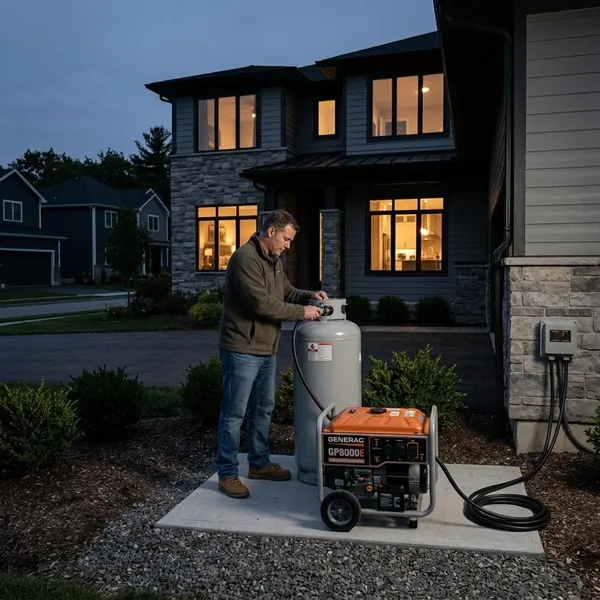
Propane makes sense for home backup because it is easier to store for emergencies than gasoline. If your generator only comes out during storms, ice events, or the occasional grid failure, fuel readiness matters as much as engine size.
The biggest advantage is practical: propane can sit in a sealed tank without the same rotation routine gasoline needs. That does not remove the need to maintain the generator itself, but it does make the fuel side of your backup plan simpler.
Propane stores longer than gasoline for emergencies
Gasoline can age, absorb moisture, and leave deposits if it sits too long. Propane is stored under pressure in a sealed cylinder or tank, so it is usually better suited to a generator that may sit unused for months before the next outage.
This matters most for households preparing "just in case." If you only lose power a few times a year, propane reduces the chance that your emergency fuel has quietly become the weak point in your plan.
Propane requires less fuel maintenance during storage
With gasoline, you may need stabilizer, rotation, careful storage, and carburetor attention. With propane, the main job is simpler: keep tanks filled, stored safely, and compatible with your generator setup.
- Occasional outage use: propane is easier to keep ready between seasons.
- Storm-prone areas: larger propane storage can reduce last-minute fuel runs.
- Low-maintenance preference: fewer fuel-handling steps means fewer chances to forget something.
Propane provides cleaner and more reliable fuel storage
Propane avoids spilled liquid fuel, strong gasoline odors, and rows of gas cans in the garage. It also tends to burn cleaner than gasoline, which can help reduce some fuel-related engine issues, although routine oil changes and test runs are still necessary.
Which propane generator type fits your home needs?
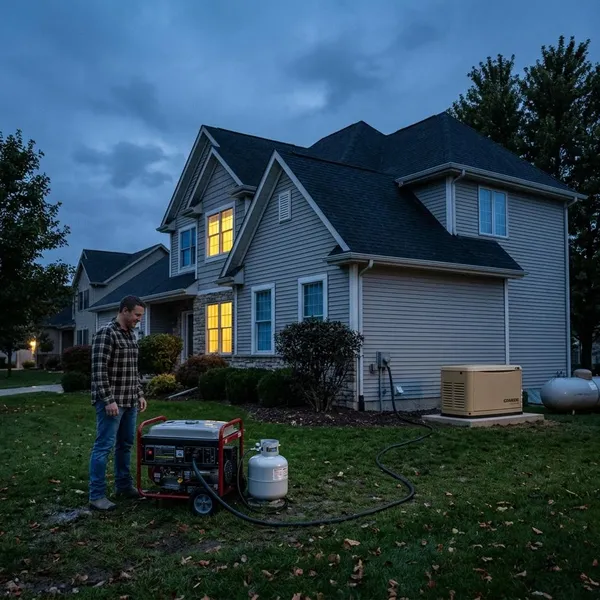
Choose the generator type by deciding how much effort you are willing to handle during an outage. A portable generator can be enough for food, lights, internet, and a sump pump. A standby generator is a better fit if you want the system to start automatically when you are asleep, away from home, or unable to set up equipment outside.
| Generator type | Best fit | Main tradeoff |
|---|---|---|
| Portable propane | Essential appliances on a tighter budget | Manual setup and safe outdoor placement |
| Inverter | Quiet backup for electronics and lighter loads | Often costs more per watt |
| Dual-fuel | Homes that want propane plus gasoline flexibility | Wattage differs by fuel |
| Standby | Automatic backup for selected circuits or the whole home | Higher purchase and installation cost |
Portable generators provide affordable backup for essential appliances
A portable propane generator is usually the most realistic starting point if you want to keep the basics running without installing a permanent system. Think refrigerator, freezer, a few lights, phone charging, router, and possibly a sump pump or furnace blower if the generator is sized correctly.
The important warning is connection safety. Do not backfeed power through a wall outlet. Use properly rated extension cords for individual devices or a professionally installed transfer switch for household circuits.
Inverter generators provide quieter backup power
Inverter generators are worth considering when the outage plan is lighter but comfort matters. They are often quieter than open-frame portable generators and can provide steadier power for routers, laptops, chargers, and some sensitive electronics.
They are a good match for a home office outage, overnight use in a close neighborhood, or a household that mainly needs communication, refrigeration, and small essentials. They are less suitable if your priority is central air, a large well pump, or multiple heavy loads at once.
Dual-fuel generators provide more fuel flexibility
A dual-fuel generator gives you a useful backup plan within your backup plan. You can run propane when you want cleaner storage, then switch to gasoline if propane refills become difficult after a storm.
Before buying, compare the running watts and starting watts on propane. Some models advertise a strong gasoline rating, but the propane output may be lower than what your pump, refrigerator, or heating equipment needs.
Which appliances can a propane generator run?
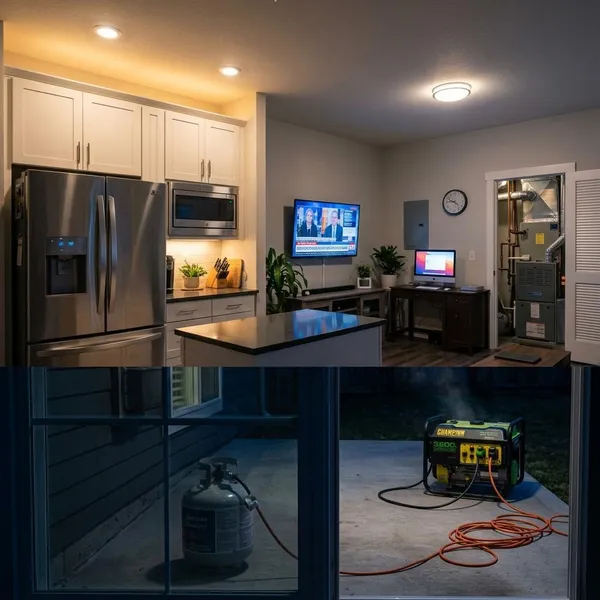
A propane generator can run anything from a few essentials to most of a house, but not every appliance should be treated equally. Start with the loads that protect food, safety, heat, communication, and health. Comfort appliances come after that.
The key sizing mistake is counting only running watts. Motors and compressors often need extra starting power for a few seconds, and that surge can overload a generator that looked large enough on paper.
- Check first: refrigerator, freezer, sump pump, furnace blower, medical equipment, router, and basic lighting.
- Add carefully: microwave, coffee maker, window AC, power tools, or extra rooms.
- Be cautious: central air, electric heat, electric ovens, and large well pumps can require much larger systems.
Refrigerators and freezers need reliable backup power
Refrigerators and freezers are usually top-priority loads because they protect food and reduce the cost of a long outage. Their normal running wattage may be modest, but the compressor startup surge still needs room.
If you have both a kitchen refrigerator and a chest freezer, do not assume they will start at different times. Leave enough generator capacity for both to cycle without tripping overload protection.
Pumps and heating systems need higher starting power
Sump pumps, well pumps, and furnace blowers can be more important than comfort devices. A sump pump may prevent water damage, and a furnace blower may be needed to move heat through the home during a winter outage.
For a basement that floods quickly, size around the sump pump before adding entertainment devices. For a cold-climate home, heating support may matter more than running every kitchen appliance.
Medical devices and internet equipment need stable electricity
Medical devices and internet equipment often need reliability more than raw wattage. CPAP machines, oxygen equipment, routers, modems, and work laptops may not draw huge loads, but interruptions can create real problems.
If a household member depends on powered medical equipment, treat that as a high-priority scenario. Consider stable power output, overnight runtime, safe indoor device connection, and a backup battery where appropriate instead of relying on generator wattage alone.
How do you compare propane generators before buying?
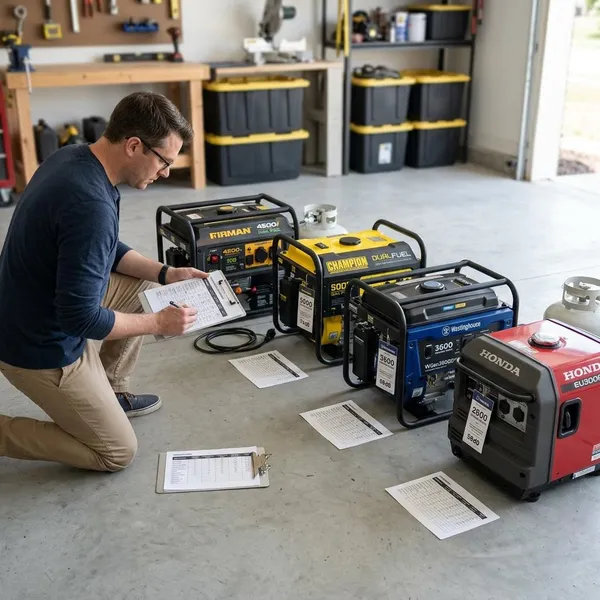
Compare propane generators by how they would perform during your most likely outage, not by the largest number printed on the box. A good model should handle your priority loads, run long enough to be useful, stay tolerable near your home, and include safety features that reduce mistakes under pressure.
A simple way to narrow the choice is to picture two situations: a short evening outage where you only need food, lights, and Wi-Fi, and a two-day outage with weather stress. If the same generator cannot support your realistic second scenario, you may need more wattage, more fuel storage, or a different generator type.
Higher watt output supports more appliances
Higher wattage gives you more room for motors starting, appliances cycling, and small mistakes in load planning. It is especially helpful if your must-run list includes pumps, furnace blowers, or air conditioning.
More wattage is not automatically better, though. An oversized generator can cost more, burn more fuel, and make more noise than necessary. Aim for your essential loads plus a margin, not every device in the house unless you are intentionally buying whole-home backup.
Longer runtime reduces refueling needs
Runtime matters most when the outage stretches overnight. Swapping propane cylinders in bad weather at 2 a.m. is exactly the kind of problem a good backup plan should avoid.
Look at runtime at partial load, then compare it with your own must-run list. A generator running a refrigerator and router may last much longer than the same unit supporting pumps, cooking appliances, or cooling.
How long can a propane generator run?
A propane generator can run for several hours or much longer depending on tank size, load, and generator efficiency. The more useful question is how long it can run while powering your actual priority appliances.
Use the manufacturer's propane consumption information as your starting point, then be conservative. Real outages often include changing weather, extra loads, and less-than-perfect operating conditions.
Tank size determines available runtime
A small portable tank is easy to move but limits runtime. Larger cylinders or a fixed residential propane tank can support longer outages with fewer interruptions, assuming the generator is designed and connected for that setup.
For a short outage, one or two portable tanks may be enough for essentials. For multi-day winter storms or repeated outages, larger storage is usually more practical than relying on frequent refills.
Power load affects fuel consumption
Fuel use rises as electrical load increases. A generator powering only refrigeration, internet, and a few lights will use less propane than one also running pumps, cooking appliances, or air conditioning.
One practical habit is load rotation. Run the freezer long enough to stay cold, then shift power to another need instead of keeping every appliance connected all day.

Conclusion
The right propane generator is the one that covers your essential loads without making the outage harder to manage. If you only need food protection, Wi-Fi, lights, and a pump, a portable or inverter model may be enough; if you need automatic power for heating, medical needs, or most of the house, a standby setup is the more dependable choice. Decide around your real outage risk, then size the generator and propane supply with a little margin instead of buying on headline wattage alone.