
The best solar generator for home backup power is the one that keeps your most important devices running when the grid goes down—not simply the biggest or most expensive model. For most homes, that means covering essentials such as a refrigerator, Wi-Fi router, phones, lights, medical equipment, or a sump pump for several hours or more. Once you know which devices matter most and how long they need to run, choosing the right capacity, battery type, and solar charging setup becomes much easier.
Which Solar Generator Is Best for Home Backup Power?
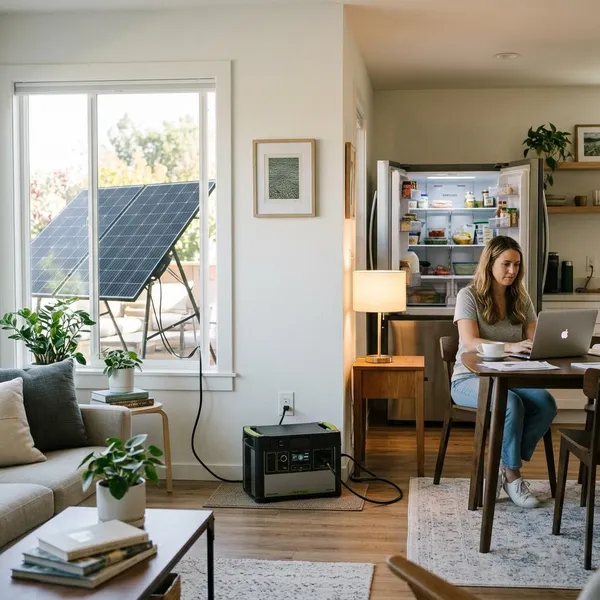
The best solar generator for home backup power is the one that fits your outage pattern. A small apartment setup for phone charging and lights is a very different purchase from a rural backup system expected to support a refrigerator, freezer, router, and well-related equipment during long interruptions.
The best choice depends on your backup needs
A good choice starts with a short "must-run" list. For a low-risk, short outage, that list may only include LED lights, phones, a laptop, and a router. For a more serious outage, it may include a refrigerator, CPAP machine, freezer, sump pump, or work-from-home equipment.
Do not size the system around everything you might want to use. Size it around the devices that would cause real inconvenience, safety concerns, food loss, or income disruption if they stopped working.
The best size depends on your power demands
Size is mainly about two things: how much power the unit can deliver at once and how much energy the battery can store. A compact unit may be enough for electronics, but a refrigerator or pump usually needs more inverter headroom and more stored energy.
- Choose smaller if you only need charging, lights, internet, and one or two low-draw devices.
- Choose mid-size if refrigerator backup is part of the plan.
- Choose expandable if outages are frequent, overnight, or likely to last more than a day.
The best system balances capacity, cost, and runtime
Bigger is not automatically better. A large unit can be expensive, heavy, and unnecessary if your outages are rare and short. At the same time, buying too small is frustrating when the battery is empty before morning or the inverter shuts down when the refrigerator compressor starts.
A practical middle ground is to buy enough capacity for your essentials first, then pay extra for expansion only if your outage history justifies it. If you lose power once a year for two hours, portability may matter more than huge capacity. If storms regularly knock power out overnight, runtime and recharge speed deserve more of the budget.
What Size Solar Generator Do You Need?
The right size comes from your appliance list, not from a marketing label. Write down what you want to run at the same time, then separate normal running power from startup power. That one step prevents most bad purchases.
Running watts determine normal power needs
Running watts are the steady power your devices use while operating. Add the devices you expect to use together, such as a refrigerator, router, LED lights, phone chargers, and a fan. High-draw appliances like kettles, microwaves, toasters, and coffee makers are better treated as short, one-at-a-time loads rather than part of the continuous setup.
Surge watts determine startup power needs
Surge watts matter when an appliance needs a brief burst of power to start. Refrigerators, freezers, sump pumps, and some power tools can all need more power for startup than they use while running.
This is where many buyers get caught. A unit may look strong enough based on running watts but still fail during compressor startup. If the label or manual does not clearly show startup demand, leave extra headroom instead of sizing right on the edge.
Battery capacity determines backup time
Battery capacity is usually listed in watt-hours. As a rough planning method, divide usable watt-hours by your average load in watts; leaving some margin for efficiency loss is safer than assuming the full advertised capacity will be available. For example, a low-draw internet-and-lighting setup can last much longer than a refrigerator-plus-fan setup on the same battery.
What Can a Solar Generator Power at Home?
A solar generator is best for selected essentials, not for running a normal household without limits. Think of it as a way to keep the important parts of daily life working: food storage, communication, lighting, and a few comfort items.
It runs lights, electronics, and small appliances
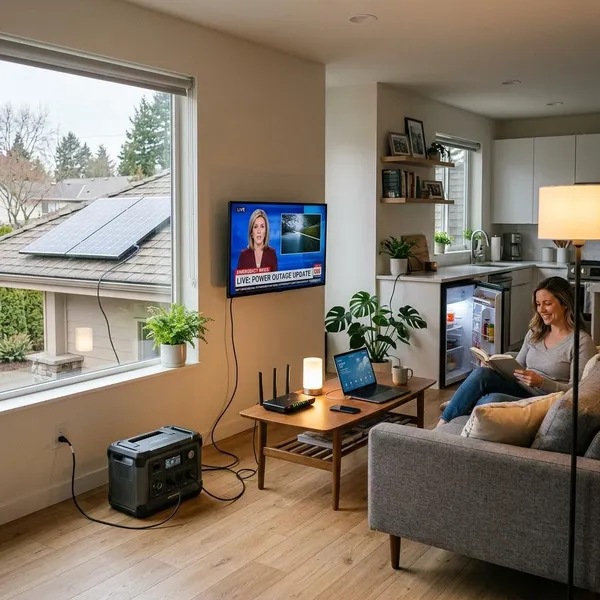
LED lights, phones, tablets, laptops, routers, modems, small fans, and many CPAP machines are good solar-generator loads because they provide a lot of value for relatively little energy. For apartment renters, this may be enough to make a short blackout manageable without needing a large system.
Small kitchen or comfort appliances can be used carefully if the unit has enough output. The safer habit is to run one high-draw item briefly, then turn it off before adding another load.
It supports refrigerators and essential devices
Many mid-size and larger units can support a refrigerator, as long as the inverter can handle startup surge and the battery has enough capacity for the outage length. This is often the point where a solar generator becomes more than a charging station and starts acting like practical home backup.
For refrigerator backup, leave room for other low-draw essentials. A setup that powers the fridge but leaves no margin for lights, phone charging, or the router may be too tight for real use.
It has limits with high-power equipment
Electric water heaters, space heaters, central air conditioners, clothes dryers, and full-size electric ovens are usually poor matches for portable solar generators. The issue is not only whether the appliance can turn on; it is whether the battery can keep it running long enough to be useful.
If your emergency plan depends on whole-home heating, cooling, or several large 240V loads, a portable battery power station may not be the right main backup source. In that situation, compare larger integrated battery systems, professionally installed backup options, or a fuel generator for heavy loads.
Can a Solar Generator Power an Entire House?
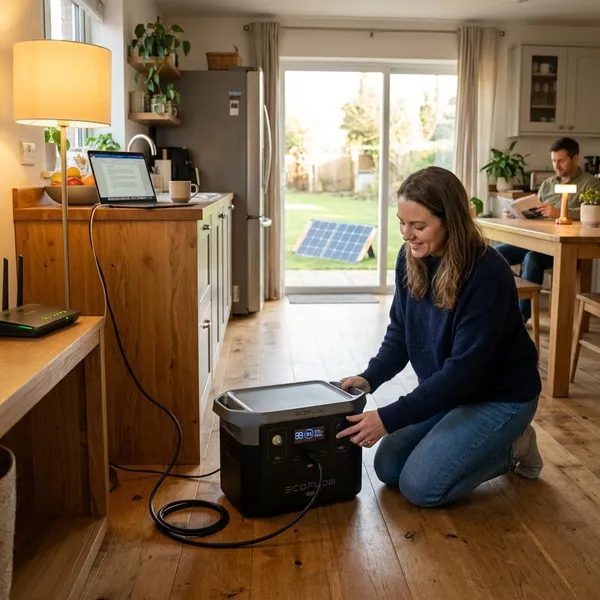
For most homes, a solar generator should be treated as essential-load backup rather than full-house replacement power. Larger systems can cover more circuits and more appliances, but expecting a portable unit to behave like the grid usually leads to disappointment.
It works well for essential backup loads
Essential-load backup is where solar generators make the most sense. Keeping the refrigerator cold, phones charged, internet equipment running, and a few lights on can make an outage feel controlled instead of chaotic.
This approach also stretches the battery. Instead of spreading power across every outlet and appliance, you protect the parts of the home that matter most during the first few hours or overnight.
It has limits with heating and cooling equipment
Heating and cooling are the hardest loads for most battery generators. A small fan is easy. A central air conditioner or electric resistance heater is a very different demand and can drain stored energy quickly.
For summer-only outages, a fan, charged devices, and refrigerator support may be enough. For winter outages in an all-electric home, the risk is higher, and backup heat should be planned separately rather than assumed from a portable solar generator.
How Long Can a Solar Generator Run Home Appliances?
Runtime depends on battery capacity, appliance power use, and whether you can recharge during the outage. A router and a few lights may run for many hours, while a heater or cooking appliance can use the same stored energy much faster.
Battery capacity affects runtime
More watt-hours usually mean longer backup, but do not plan around perfect conditions. Inverter losses, battery reserve settings, temperature, and appliance cycling can all reduce real runtime. A sensible plan leaves extra capacity for the devices you forgot, longer-than-expected outages, or less sun than expected.
Appliance power use affects backup duration
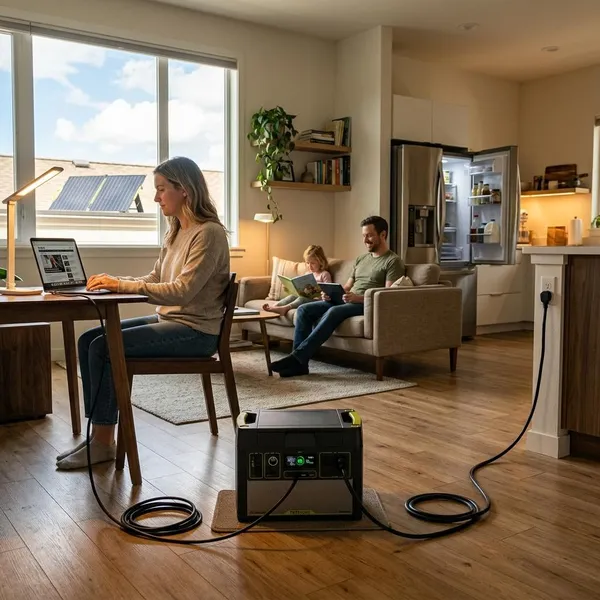
The same generator can feel generous or undersized depending on how you use it. A family that keeps lights, internet, and a refrigerator running while using a microwave only briefly may get much better results than a household trying to run several high-draw appliances at once.
- Best for long runtime: LED lights, routers, phones, laptops, small fans.
- Manage carefully: refrigerators, freezers, CPAP machines, small kitchen appliances.
- Avoid for battery backup: space heaters, electric ovens, dryers, large water heaters.
Solar charging affects extended outage support
Solar charging can turn a one-night battery into a more useful emergency setup, but only if the panels produce enough energy in real conditions. Cloud cover, winter sun, shade, and poor panel angle can all reduce output. If long outages are common where you live, choose stronger solar input and plan where the panels will actually sit before the power goes out.
Which Solar Generator Fits Different Homes?
Different homes need different backup strategies. Storage space, outage length, household size, and the cost of losing power all change what counts as a good fit.
Compact units suit apartments and renters
Compact units are best when portability and simple indoor use matter more than running large appliances. A renter may only need enough power for a router, phone charging, a laptop, lights, and maybe a small fan.
This is a low-complexity setup: easy to store, easy to carry, and useful during short outages. It is usually not the right choice if refrigerator backup is a must unless the unit's output and battery capacity clearly support it.
Mid-size units suit typical family homes
Mid-size units are often the practical sweet spot for family homes. They can usually support a refrigerator plus basic electronics and lighting, while still being manageable enough to move and store.
This tier works well for households that face occasional overnight outages but do not need a permanent whole-home battery system. It also gives room for better load management: run essentials continuously, then rotate short-use appliances as needed.
High-capacity units suit rural homes and frequent outages
High-capacity or expandable systems make more sense when outages are longer, more frequent, or more costly. Rural homes may have extra pressure from freezers, medical equipment, work needs, sump pumps, or limited access to quick repairs.
In that setting, extra battery capacity is not just a convenience. It reduces food-loss risk, cuts down on constant rationing, and gives more flexibility when the weather stays bad for more than one day.
Conclusion
The smartest choice is the solar generator that protects your highest-priority loads without forcing you to overspend on capacity you will rarely use. Check running watts first, then surge watts, then battery runtime, and finally solar recharge speed. If the system can handle your essentials with some margin, it is far more useful than a larger-looking unit that does not match how your home actually loses power.