For a typical electric drip coffee maker, plan on a portable power station for coffee maker use with enough AC output first, then enough battery capacity for the number of brews you want. Many home brewers need roughly 900W to 1,500W while heating, so a small 300W or 500W unit often will not run them at all. Check the wattage label before you shop, because that one number decides whether the power station is even in the right class.
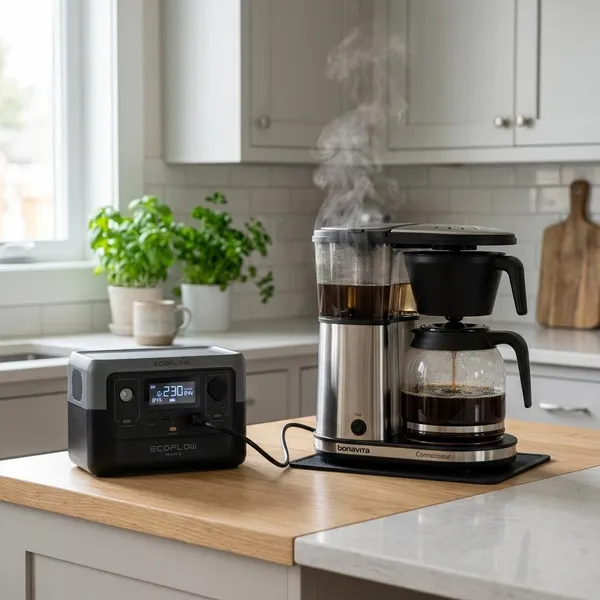
What size power station do you need for a coffee maker?
The right size comes from four checks: the coffee maker's wattage, the power station's continuous AC output, the energy used during one brew, and a safety margin for real-world losses. If you are choosing for a weekend campsite, one or two brews may be enough. If you want backup power during outages, you need more reserve because recharging may not be convenient.
Check the coffee maker wattage
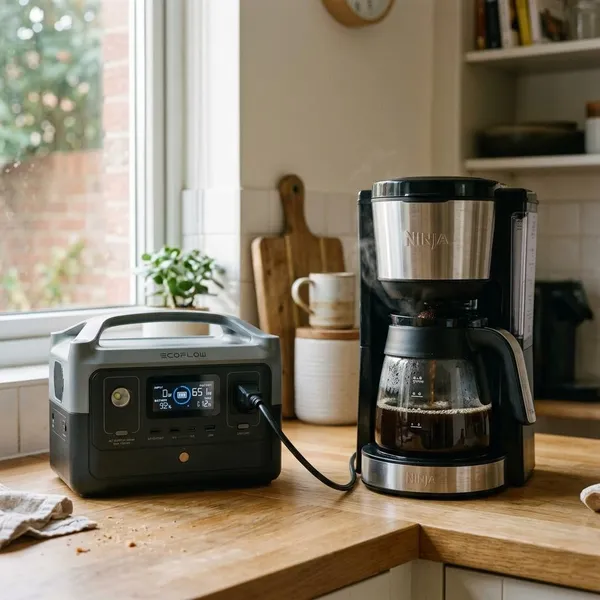
Look for the wattage on the label, usually on the bottom, back, plug, or manual. Compact drip brewers may sit around 600W to 900W, while many standard kitchen coffee makers are closer to 900W to 1,500W. Pod machines can also draw high power even though they brew quickly.
Do not judge by the size of the coffee maker. A small single-serve machine may still need more power than a larger-looking low-watt travel brewer.
Match the power station AC output
The power station's continuous AC output must be at least as high as the coffee maker's rated wattage. Battery capacity does not help if the inverter cannot deliver enough watts at the moment the heating element turns on.
- 600W brewer: choose about 700W or more AC output.
- 900W brewer: choose around 1,000W or more.
- 1,200W brewer: 1,500W gives safer headroom.
- High-power espresso machine: often needs 1,500W to 2,000W class output.
Estimate the energy used per brew
After output is covered, estimate watt-hours per brew. The quick formula is: watts × hours used. A 1,000W coffee maker running for 6 minutes uses about 100Wh before losses, because 6 minutes is one-tenth of an hour.
- Find the coffee maker wattage.
- Time one normal brew cycle.
- Convert minutes to hours.
- Multiply watts by hours.
- Reduce the result for inverter loss.
A fast high-watt brewer may use less total energy than a slower lower-watt machine. Brew time matters almost as much as the wattage label.
Add a safety margin
Add roughly 20% to 30% to your estimate if you want fewer surprises. A battery is rarely usable down to the last advertised watt-hour, and AC conversion wastes some energy. Cold weather, battery age, and leaving a warming plate on can reduce the number of brews further.
For example, if your coffee maker appears to need about 300Wh for the morning, shopping closer to 400Wh is more realistic than buying exactly 300Wh and expecting perfect performance.
How many brews can a portable power station make?
A portable power station may make one brew or many, depending on usable battery capacity and how long the coffee maker actually runs. The cleanest estimate is to calculate one brew first, then divide your usable battery capacity by that number.
Battery capacity affects the number of brews
Capacity is listed in watt-hours, but the advertised number is not the same as the energy your coffee maker receives. A 500Wh station might provide about 3 to 4 brews if each brew uses roughly 100Wh after losses and you avoid draining the battery completely.
For a weekend camper making coffee once each morning, that may be enough. For a family using a drip machine several times a day during a power outage, the same unit can feel small very quickly.
Coffee maker wattage affects energy use
Higher wattage raises the power requirement, but it does not always mean a much higher total energy use. A 1,400W machine brewing for 4 minutes can land near the same watt-hour use as an 800W machine brewing for 7 minutes.
Brew time affects energy use
The longer the heater stays on, the more battery you spend. Drip machines with warming plates are the easy one to overlook: brewing may be finished, but the hot plate can keep pulling power afterward.
If you are off-grid, pour the coffee into an insulated carafe and turn the machine off once brewing is done. That simple habit can save more battery than switching to a slightly larger power station.
Inverter losses reduce usable capacity
AC appliances run through the power station's inverter, and that conversion is not perfectly efficient. A practical planning assumption is about 10% to 15% loss, though the exact number depends on the model and the load.
This is why "500Wh divided by 100Wh equals five brews" is usually too optimistic. Plan for fewer brews and treat any extra as a bonus.
Which power station size fits your coffee maker?
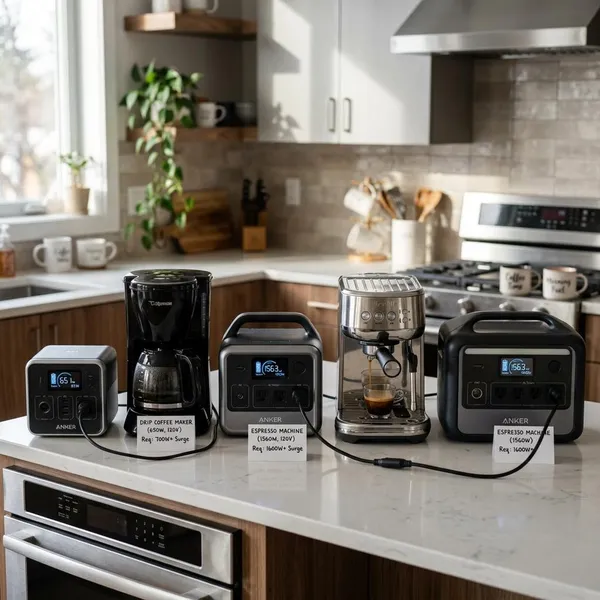
Choose the size by matching the machine you actually use, not the biggest number you can afford. The best setup for a solo camping trip is very different from a home backup setup for a full-size drip machine.
Small units suit low-watt brewers
Small power stations are best for low-watt travel brewers, compact coffee makers, or manual methods paired with a low-watt kettle. A 200Wh to 300Wh unit is easy to carry, but it is usually the wrong choice for a standard countertop coffee maker.
This size makes sense when portability matters more than convenience. Think one person, occasional camping, and a brewer that is clearly rated below the power station's AC limit.
Mid-size units suit most standard coffee makers
Mid-size units are often the sweet spot for common drip coffee makers and many single-serve machines. Look for the combination of enough output and enough capacity, not just one of those specs.
- Capacity: roughly 500Wh to 1,000Wh.
- Continuous AC output: usually 1,000W to 1,500W.
- Best fit: RV mornings, weekend trips, and basic home backup.
- Watch out for: brewers rated right at the inverter limit.
Large units suit high-power coffee machines
Large power stations are the safer match for espresso machines, high-watt drip brewers, and households that want repeated brews without careful rationing. They cost more and weigh more, but they give you more room for startup demand and repeated heating cycles.
If coffee is part of a longer backup-power plan, this larger class is more sensible than trying to stretch a small battery. If you only want one cup at a campsite, it is probably more capacity than you need.
What mistakes should you avoid when powering a coffee maker?
Most bad matches come from reading only one spec. For coffee makers, the priority order is simple: AC output first, realistic brew count second, convenience and weight after that.
Choosing too little AC output
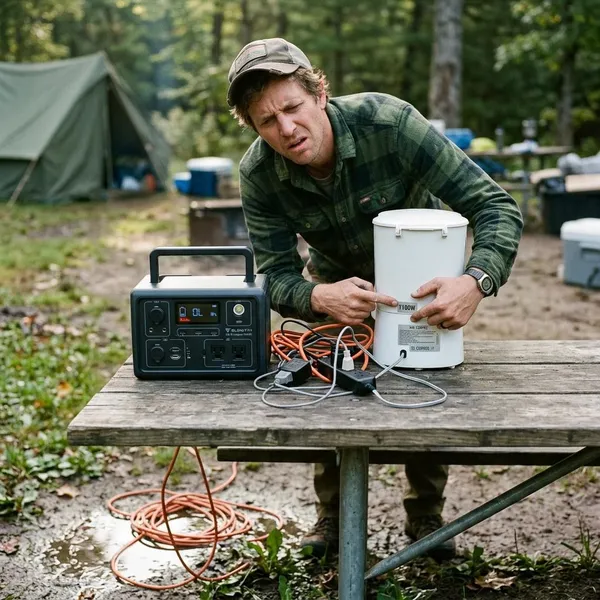
This is the mistake that stops everything before brewing starts. A 1,100W coffee maker will not run properly on a 500W continuous AC outlet, even if the power station has a large battery.
Check the continuous AC rating, not just surge power. Surge ratings are temporary and should not be treated as the normal operating limit for a heating appliance.
Looking only at battery capacity
A large watt-hour number tells you how much energy the unit stores, not whether it can deliver enough power at once. A power station can have decent capacity and still be too weak for a coffee maker with a high heating load.
Overestimating the number of brews
Real brew counts are usually lower than quick mental math suggests. Leave room for inverter losses, battery reserve, longer-than-usual brew cycles, and anyone who forgets to switch off the warming plate.
For shared use, plan around the busiest morning rather than the easiest one. Two people making one pot is a different demand from four people making several single-serve cups back to back.
Ignoring inverter losses
Inverter loss is not a tiny detail when you are running a heating appliance. If you calculate brew count from the advertised battery capacity alone, your estimate will be too generous.
Choosing more capacity than you need
Oversizing can be its own problem. A large unit may be excellent for home backup, but annoying to carry, slow to recharge, and unnecessarily expensive for one or two camping brews.
A practical rule: buy enough output to run the coffee maker comfortably, then choose capacity based on your real brewing habit. Do not pay for a huge battery just because it looks safer on paper.
Conclusion
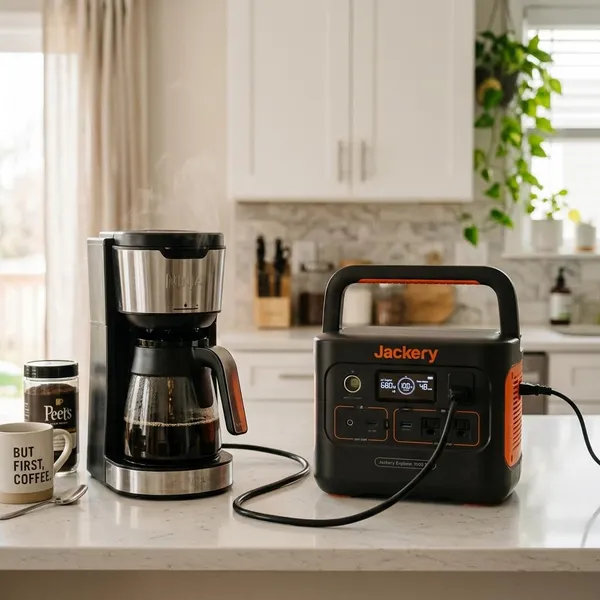
The best choice is the smallest power station that can safely meet your coffee maker's wattage and your real brew count. For many standard brewers, that points to a mid-size unit with around 1,000W to 1,500W continuous AC output; for espresso machines or frequent backup use, move up a class. Check the appliance label first, add a margin, and you are far less likely to buy a battery that is either too weak or bigger than you will actually use.