
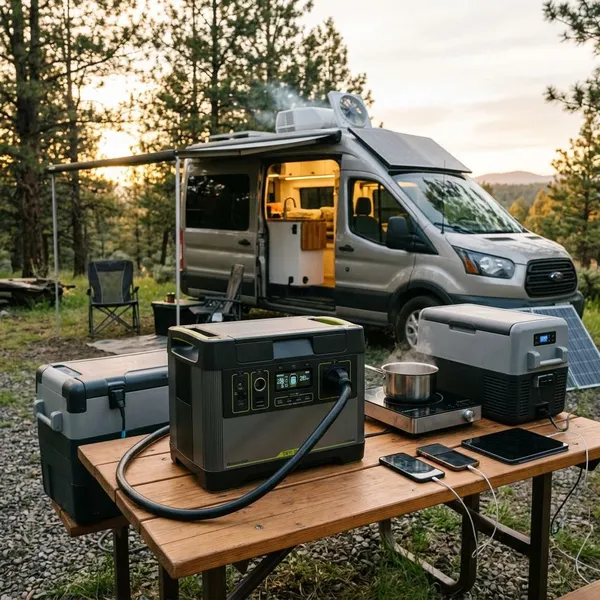
A solar generator with 30 amp outlet access can be a good match for an RV, but the plug is only the starting point. What it can actually power depends first on the inverter watts, then on surge capacity, battery size, and recharge speed. If you want to run more than lights, a fridge, and small devices, check those numbers before assuming the 30 amp label means full RV-style power.
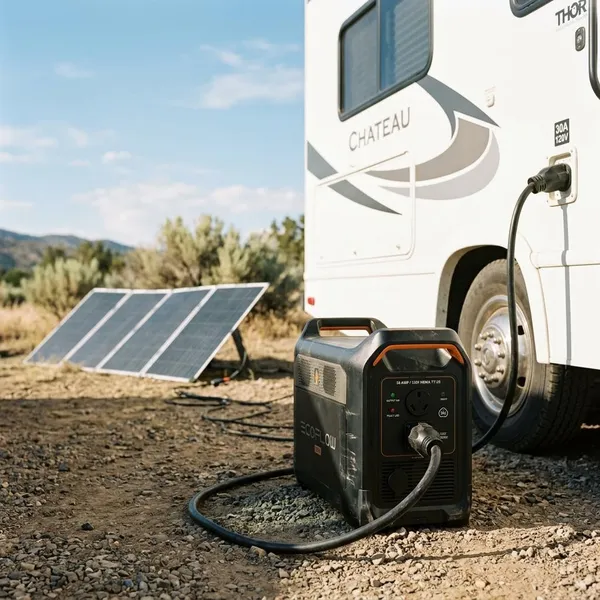
How does a 30 amp outlet work on a solar generator?
A 30 amp outlet mainly gives you the right physical connection for certain cords, especially common RV shore power cords. It does not automatically mean the solar generator can deliver 30 amps continuously, and that is where many buying mistakes start.
The outlet determines plug compatibility
On many RV-focused power stations, the 30 amp receptacle is a TT-30 outlet. That matters if your travel trailer or small motorhome already uses a standard 30 amp RV cord, because you can connect without stacking adapters.
For a weekend campsite setup, plug compatibility can make the system feel much cleaner: one RV cord, one generator, fewer loose connections. For a permanent or frequent-use setup, compatibility is still not enough; you also need to know whether the generator can support the loads inside the RV.
The voltage determines the power system
A typical 30 amp RV outlet in the U.S. is 120V, not 240V. At 120V, a true 30 amp circuit can theoretically provide up to 3,600 watts, but a solar generator may be limited to less than that by its internal design.
This is why the voltage label is worth checking before you buy or plug in. A 120V TT-30 outlet is meant for a different use case than a 240V outlet for larger home circuits or certain heavy equipment.
The inverter determines available watts
The inverter is the real power gatekeeper. A generator may have a 30 amp-style outlet but only a 2,000W or 3,000W continuous inverter, so the outlet fits your RV cord while the inverter still limits what can run at the same time.
- Check continuous watts for normal running loads.
- Check surge watts for compressors and motors starting up.
- Leave headroom instead of running the unit at its limit all day.
An adapter changes the connection, not the power
An adapter can make one plug fit another receptacle, but it cannot add watts, voltage, or battery capacity. If a generator can only supply 1,800W from a household outlet, using an RV adapter does not turn it into a full 30 amp power source.
The common mistake is buying based on the cord you can attach rather than the load the generator can carry. If the adapter is part of your setup, treat it as a connection tool only, not a performance upgrade.
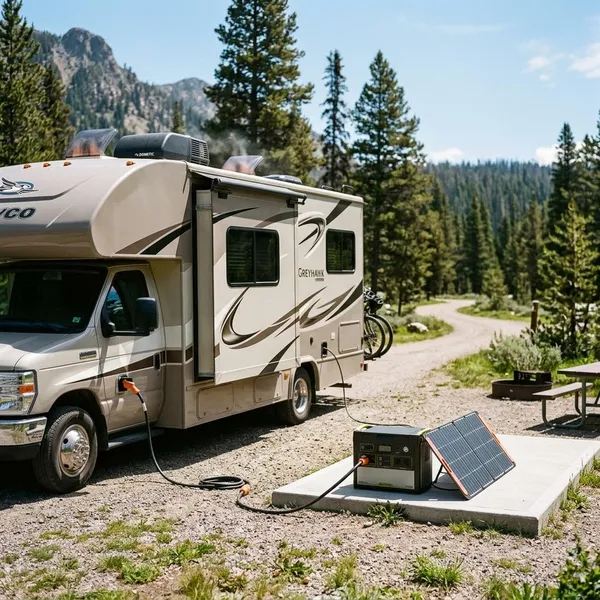
Can a 30 amp solar generator run an RV air conditioner?
It can, but only when the inverter, surge rating, and battery capacity are all large enough for that specific air conditioner. An RV AC is usually the load that separates a comfortable setup from one that looks good on paper but trips off in real use.
Continuous output must cover running watts
Many RV air conditioners draw roughly 1,200W to 1,800W while running, though the actual number depends on the model, temperature, fan speed, and whether other RV systems are running at the same time. A generator rated barely above the AC's running load may work in mild weather but struggle on a hot afternoon.
A practical approach is to add the AC running watts plus the basics you do not want to turn off, such as the refrigerator control board, lights, a fan, or device charging. If that total sits too close to the generator's continuous rating, choose a larger unit or plan to run fewer appliances together.
Surge output must cover startup watts
The startup surge is often the harder test. When the compressor kicks on, an RV air conditioner may need a short burst that is much higher than its running wattage, sometimes several thousand watts depending on the unit.
If the AC tries to start and the generator shuts down, the running wattage was not the problem; the surge rating was. A soft start device may reduce that startup spike, but it should be treated as part of the sizing plan, not as a guarantee that any smaller generator will work.
Battery capacity must cover the desired runtime
Starting the air conditioner is one thing; running it for hours is the bigger battery challenge. A 2,000Wh battery running a 1,500W AC load may give only a little over an hour after normal conversion losses.
For a short lunch stop, that may be enough to cool the RV down. For summer nights or all-day off-grid camping, you are usually looking at a much larger battery system, expandable batteries, strong solar input, or a different cooling strategy.
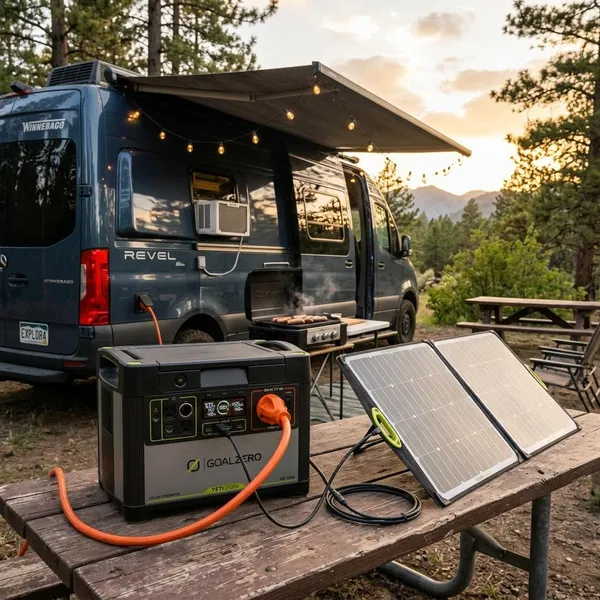
How long will a 30 amp solar generator run?
Runtime depends on how much energy is stored and how quickly your appliances use it. A small fridge and lights can run for many hours on a large unit, while an air conditioner, microwave, or electric heater can drain the same battery surprisingly fast.
Battery capacity affects runtime
Battery capacity is listed in watt-hours, often shown as Wh. More watt-hours generally means longer runtime, but the useful amount is lower once inverter losses and system overhead are included.
- Around 1,000Wh: best for phones, lights, laptops, routers, and short appliance use.
- Around 2,000Wh: more comfortable for fridge backup, CPAP use, and modest RV loads.
- 3,500Wh to 5,000Wh+: more realistic for heavier RV use or longer outage coverage.
Appliance load affects runtime
The same generator behaves very differently with different loads. A 70W fan is a long-runtime load; a 1,500W heater is a battery-draining load. For RV use, the biggest runtime mistake is leaving several high-draw appliances available at once and assuming the generator will manage them like campground shore power.
| Load type | What to expect | Practical decision |
|---|---|---|
| Lights, router, laptop | Low draw | Good for long backup windows |
| Fridge or freezer | Cycles on and off | Size for startup and average use |
| Microwave or coffee maker | High draw, short use | Run briefly and avoid stacking loads |
| RV air conditioner | High draw, long use | Needs serious battery capacity |
Inverter losses reduce runtime
A simple estimate is to multiply battery capacity by about 0.85, then divide by the appliance wattage. That gives a more realistic AC runtime estimate than using the full battery number.
For example, a 2,000Wh battery running a 500W load is roughly 2,000Wh × 0.85 = 1,700Wh usable. Divide 1,700Wh by 500W, and the estimate is about 3.4 hours before other real-world factors are considered.
Solar input can extend runtime
Solar charging can stretch runtime during the day, especially with lighter loads. If your panels are bringing in more power than your devices are using, the battery may drain slowly or even recharge while in use.
With heavy loads, solar often just slows the drop. For example, 600W of real solar input helps a lot with a fridge, fan, and laptop, but it will not fully offset a large RV air conditioner pulling far more than that for hours.
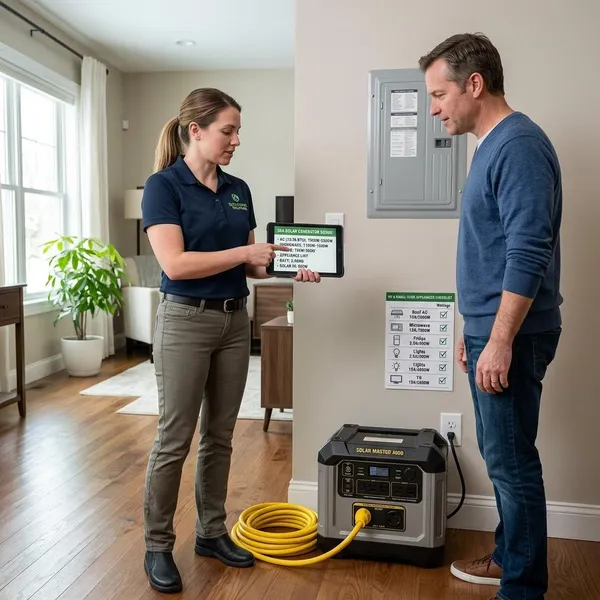
How do you size a 30 amp solar generator?
Start with the appliances you actually plan to run, not the outlet label. The right size for occasional tailgating can be much smaller than the right size for summer RV camping or multi-day home backup.
List the appliances you want to run
Write down the must-run items first, then separate comfort items from essentials. For an RV, essentials might be lights, fridge controls, water pump, device charging, and maybe the air conditioner. For a home outage, the priority may be the refrigerator, internet gear, fans, lights, and medical devices.
- Must run: items you cannot easily go without.
- Nice to have: comfort items you can turn off if needed.
- High draw: AC, microwave, heater, coffee maker, or power tools.
- Not simultaneous: appliances you can schedule one at a time.
Add their running watts
Add only the appliances that may run at the same time. If your RV air conditioner, fridge, and small electronics total around 2,300W while operating, a 2,000W generator is not a comfortable match.
A useful rule is to leave headroom for heat, cycling loads, and normal user mistakes. If a family member starts the microwave while the AC is running, a system with no margin is more likely to overload.
Account for startup surges
Any appliance with a compressor or motor may need extra power for a moment at startup. That includes air conditioners, refrigerators, freezers, pumps, and some tools.
Check the generator's peak or surge rating against the largest startup load you expect. If two compressor loads could start close together, be more conservative or plan how you will manage them manually.
Calculate the battery capacity needed
Once the wattage looks workable, estimate storage. Multiply your expected average load by the number of hours you want, then add room for losses.
For a simple example, a 700W average load for 5 hours needs 3,500Wh before losses. After allowing for inverter inefficiency and a little margin, a battery closer to 4,000Wh is a more realistic target.
Check charging and solar input
A large battery is only convenient if you can recharge it fast enough for your routine. For weekend use, overnight wall charging may be fine. For longer off-grid stays, the solar input limit, panel wattage, and daily sun matter much more.
Before buying, compare five numbers in this order: continuous watts, surge watts, battery Wh, solar input limit, and AC recharge time. If one of those is weak, the 30 amp outlet will not make the whole system feel capable.
Conclusion
A 30 amp outlet is useful when it matches your RV cord, but it should never be the main reason you choose a solar generator. Check the inverter first, then surge capacity, battery size, and recharge options; if those numbers match your real loads, the outlet becomes genuinely useful instead of just RV-friendly on the spec sheet.