
A backup generator can power a house, but the right setup depends on how much of the home you expect it to run. For most homeowners, the first step is choosing the essentials: refrigerator, heating system, well pump, sump pump, medical equipment, internet, lights, or air conditioning. Once those priorities are clear, it becomes much easier to choose the correct generator size, fuel type, and safe connection method.
Can a Backup Generator Power a House?
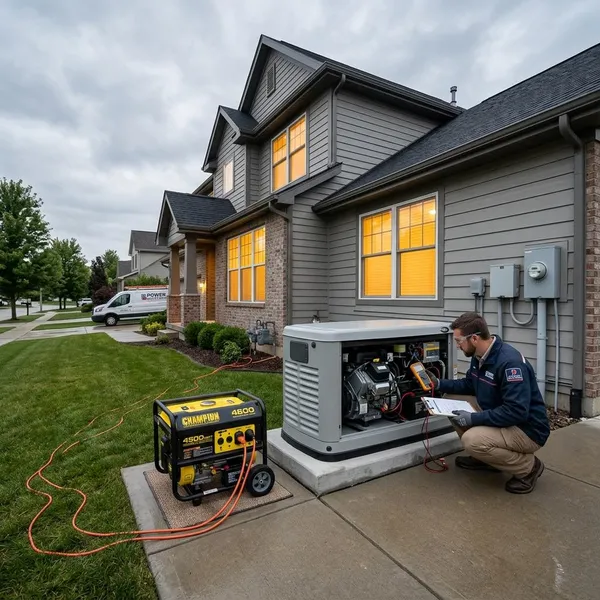
A backup generator can power a house during an outage, but the amount of the house it can support depends on capacity and load planning. A small unit may keep food cold and lights on. A larger standby system may support heating, cooling, pumps, and many everyday circuits.
The first check is not the square footage of the house. It is the list of appliances that need power at the same time. Motors and compressors, such as refrigerators, sump pumps, well pumps, and air conditioners, can need extra starting power for a short moment, so running watts alone do not tell the full story.
It can run essential home systems during outages
For many homes, essential backup is enough. That usually means the refrigerator, freezer, several lights, phone charging, internet equipment, a furnace blower, and possibly a sump pump or well pump.
This setup works well for a short storm outage or a household that can live simply for a day or two. If the goal is to protect food, stay informed, and keep one critical heating or water system working, you may not need a whole-home generator.
It can support more devices with higher capacity
A higher-capacity generator can run more circuits and make an outage feel closer to normal life. It may support kitchen appliances, laundry equipment, larger pumps, or air conditioning if the system is sized and wired for those loads.
- Work-from-home household: prioritize internet, office equipment, lighting, and heating or cooling for one main area.
- Hot-climate household: air conditioning may move from "comfort" to "important," especially during long summer outages.
- Medical or mobility needs: automatic standby power may be worth considering because manual setup can be risky or inconvenient.
It depends on generator size and fuel supply
Generator output matters, but fuel supply decides how useful that output is during a long outage. A gasoline portable generator may run key loads well, yet still need refueling every several hours. Propane stores well, but runtime depends on tank size. Natural gas standby units can run for long periods if gas service remains available.
Before buying, match three things together: the loads you want to run, the startup surge of those loads, and the fuel you can realistically keep available. A powerful generator with limited fuel may not be better than a smaller system that can run reliably through the night.
Essential Backup vs Whole-Home Backup
The main difference is how much normal life you want to preserve. Essential backup keeps the important systems running. Whole-home backup is designed to support most daily routines with less switching, unplugging, and load management.
| Backup goal | Usually covers | Best fit |
|---|---|---|
| Essential backup | Fridge, freezer, lights, router, furnace blower, sump or well pump | Short outages, lower budget, practical emergency use |
| Expanded backup | Essentials plus microwave, more outlets, selected HVAC, extra circuits | Longer outages or households that need more comfort |
| Whole-home backup | Most major circuits, often with automatic transfer | Frequent outages, larger homes, medical needs, less manual work |
Essential backup keeps critical systems running
Essential backup is the practical choice when you care more about safety and basic function than convenience. It keeps the circuits that matter most alive while leaving heavy or optional loads off.
A good essential-load list is short and honest. If an appliance prevents food loss, water damage, loss of heat, or a communication problem, it belongs near the top. If it only makes the outage more comfortable, it can wait unless your generator has spare capacity.
Whole-home backup supports normal household use
Whole-home backup is for people who want the house to operate with minimal disruption. These systems are commonly paired with standby generators, automatic transfer switches, and professional load planning.
The tradeoff is cost and fuel use. Running central air, electric water heating, cooking appliances, and laundry takes far more capacity than running a refrigerator and a few lights. In an area with one brief outage a year, that may be overkill. In a place with repeated multi-day outages, the convenience can be easier to justify.
What Types of Generators Can Power a House?
Portable, inverter, and standby generators can all power parts of a home, but they solve different problems. The right type depends on how much power you need, how often outages happen, how much noise you can tolerate, and whether you want manual or automatic operation.
Portable generators provide flexible emergency power
Portable generators are the common budget-friendly option for emergency use. With the right wattage and a safe connection method, they can run selected circuits such as refrigeration, lights, a furnace blower, and some outlets.
The catch is hands-on work. You have to move the generator outside, connect it correctly, manage cords or an inlet, watch fuel, and keep exhaust away from the house. For occasional outages, that may be acceptable. For frequent overnight outages, it can become tiring fast.
Inverter generators offer quiet efficient backup
Inverter generators are useful when noise, fuel efficiency, and cleaner power matter more than maximum output. They are often a good fit for routers, laptops, TVs, lights, refrigeration, and smaller comfort loads.
How to Connect a Generator to a House Safely
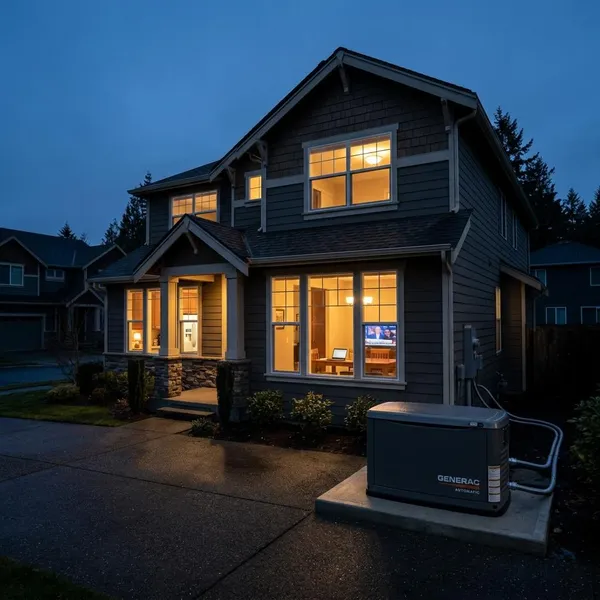
A generator should not be connected to a house by plugging it into a wall outlet. That can energize wiring in dangerous ways and create backfeeding risks for utility workers, neighbors, your appliances, and your own electrical system.
The safe path is planned equipment: a transfer switch, an approved interlock system, a proper inlet, correct cords, and installation that follows local electrical requirements. This is one part of the project where guessing is not worth it.
- Choose the circuits you need during an outage.
- Confirm the generator can handle those loads and startup surges.
- Use a transfer switch or approved interlock, not a wall outlet.
- Have the house-side wiring installed by a qualified electrician.
- Test the system before a real outage.
Transfer switches provide safe power transfer
A transfer switch separates generator power from utility power and directs backup power only where it is supposed to go. Manual transfer switches are common with portable generators, while automatic transfer switches are usually used with standby systems.
The practical benefit is clarity. During an outage, you are not guessing which circuits are safe to use. The system has already been planned around the loads the generator can support.
Interlock systems control panel connections
An interlock system uses a mechanical lockout so the main breaker and generator breaker cannot be on at the same time. When installed correctly on a compatible panel, it can be a flexible way to power selected circuits from a portable generator.
The important phrase is "installed correctly." An interlock is not just a plate you add casually. It needs the right panel fit, proper inlet wiring, breaker placement, and clear operating steps for anyone who may use it.
Can a Portable Generator Power an Entire House?
Most portable generators cannot power an entire house in the normal sense of using every circuit freely. They are usually better for selected loads, even when connected to a panel through safe equipment.
There are larger portable models that can support a surprising amount, especially in a smaller home with gas heat, gas hot water, and no need for central air. But "entire house" still usually means careful choices, not unlimited use.
Most portable units run selected circuits
A typical portable unit is best used for a focused outage plan: refrigerator, freezer, some lights, internet, a furnace blower, and maybe a pump or microwave. That is often enough to keep a household safe and functional.
The mistake is treating the generator like a mini power company. If several large loads cycle on at once, the unit may trip, stall, or run poorly. Selected-circuit thinking prevents that frustration.
Larger portable models support more appliances
Larger portable generators can support more of the home, especially when paired with a proper inlet and load management. They may handle essentials plus selected kitchen loads, pumps, and limited HVAC depending on the home.
- Run one heavy appliance at a time when possible.
- Turn off nonessential circuits before adding a large load.
- Keep fuel storage and refueling safety in the plan.
- Do not rely only on advertised peak watts.
How to Keep a Home Generator Reliable
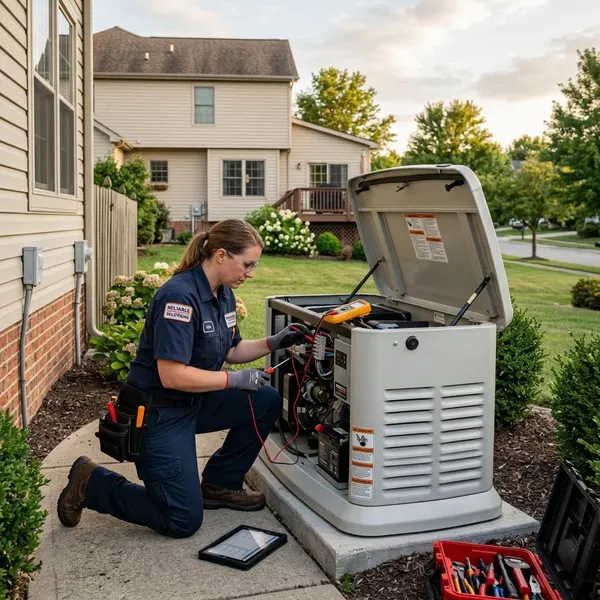
A generator is only useful if it starts, carries the load, and has enough fuel when the outage happens. Reliability comes from correct sizing, safe installation, routine testing, and not asking the generator to do more than it was chosen to do.
Proper installation improves safe operation
Good installation makes the system safer and easier to use under pressure. That includes correct transfer equipment, proper generator placement, suitable wiring, and a clear plan for which circuits the generator will support.
For standby units, installation also affects fuel delivery and automatic startup. For portable units, a proper inlet and labeled panel setup can make the difference between a calm outage routine and a confusing mess of cords.
Regular maintenance keeps backup ready
Maintenance should not wait until the first storm warning. Follow the manufacturer schedule for oil, filters, plugs, battery checks, and service intervals.
- Run test cycles: confirm the generator starts and carries a real load.
- Watch stored fuel: rotate gasoline and keep containers safe and approved.
- Check batteries: weak starting batteries are a common standby failure point.
- Inspect cords and inlets: damaged connections can become dangerous quickly.
Conclusion
A backup generator can power a house, but the smart choice is based on the outage you are actually preparing for. If you only need food, lights, heat controls, internet, and a pump, an essential-load setup may be enough; if you want the house to feel close to normal, plan for a larger standby-style system, safe transfer equipment, and a fuel source that can last as long as the outage.