
Solar panels can act like a generator only when they are part of a backup power system, not when they are simply installed on a roof. The key things to confirm are straightforward: you need a battery, an inverter capable of running your essential loads, and a safe way to power selected circuits during an outage. Without those components, solar panels may reduce your electric bill but still leave your home without backup electricity when the grid goes down.
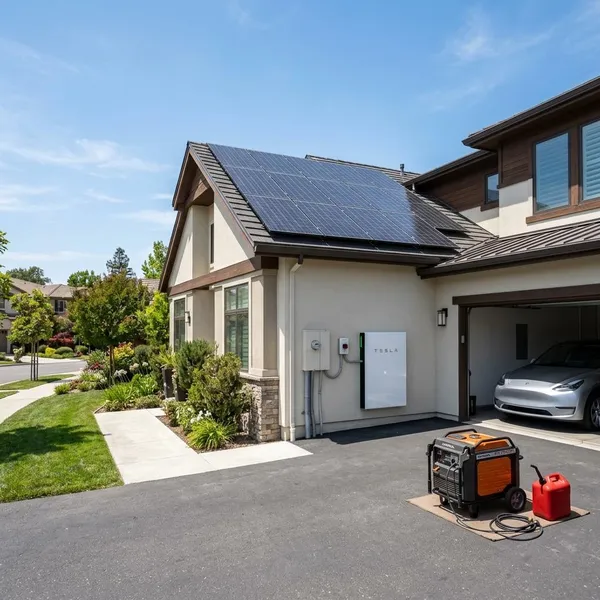
Can solar panels replace a generator for backup power?
Solar can replace a generator for light to moderate backup needs, especially if you only want to keep essentials running. It is much less likely to replace a fuel generator comfortably if you expect to run central air conditioning, electric heat, large pumps, or a whole home for several days with no change in habits.
Solar systems work well for quiet and clean backup energy
Solar backup is strongest when silence, low maintenance, and indoor-safe stored power matter. For a suburban home with occasional short outages, a battery charged by solar can keep food cold, devices charged, and internet running without fuel cans, fumes, or engine noise.
It is also a good fit for cabins, RVs, and portable power setups where the goal is not to run everything, but to keep daily essentials going. The practical limit is that the battery has to be sized for the night, and the panels need enough sun the next day to recover.
Fuel generators work better for long high-power outages
A fuel generator is often the better tool when the outage is long, the weather is poor, or the loads are heavy. A rural home with a well pump, freezers, and winter storm outages may need the predictable output of gas, propane, or diesel, especially when solar production is low for several days.
- Choose solar-first for quiet essential backup and low routine upkeep.
- Choose generator-first for large appliances, high startup surges, or multi-day emergency power.
- Be cautious with whole-home expectations unless the system is professionally sized for that goal.
Hybrid systems provide more reliable backup power
A hybrid setup is often the most practical answer for outage-prone homes. The battery handles normal essentials quietly, solar reduces fuel use when sunlight is available, and the generator becomes the safety net for high loads or bad weather.
This works especially well when you want everyday convenience but do not want to gamble during a long storm. Instead of buying a huge battery for rare worst-case conditions, some households use a smaller solar battery system and keep generator support for the few times when demand or outage length is higher than normal.
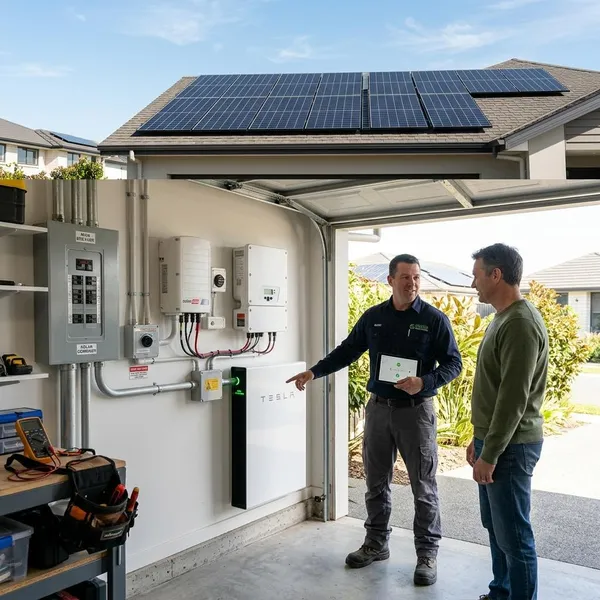
How does a solar backup system work?
Solar panels produce electricity from sunlight
Panels produce DC electricity when sunlight reaches them, but they do not store energy. That means a panel can help during the day, yet it cannot keep power available after sunset unless the energy has been stored somewhere.
Panel ratings can also be misleading in backup planning. A 400-watt panel does not produce 400 watts all day; shade, roof angle, clouds, season, and heat all affect output. For backup use, daily energy collected matters more than the peak number on the label.
Batteries store extra energy for later use
The battery is what turns solar from a daytime source into backup power. Without storage, an outage at night or during heavy cloud cover leaves you with very little practical protection.
Think of battery size in terms of what you want to survive, not what your home normally consumes. A small setup may cover phones, LED lights, a laptop, and a router. A larger home battery may support a refrigerator, freezer, selected outlets, and a few critical circuits for longer, depending on usage.
Inverters convert stored power for home devices
The inverter converts DC power from the battery into AC power for common household devices. Its continuous output and surge capacity matter because refrigerators, pumps, and some tools may need a short burst of power when they start.
- Check battery capacity to estimate how long essentials can run.
- Check inverter output to see what can run at the same time.
- Check surge rating before backing up motors or compressors.
- Check backup wiring so power goes only where it is safe and useful.
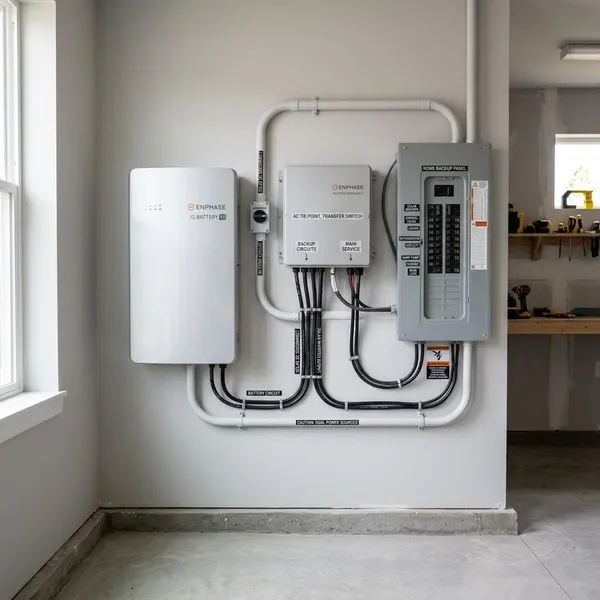
What equipment does solar backup power need?
Solar backup power usually needs panels, batteries, an inverter, charge control equipment, protective wiring, disconnects, and often a transfer switch or backup loads panel. A portable "solar generator" may combine several of these parts in one box, while a home system usually separates them and connects them to selected circuits.
Batteries store energy during outages
Batteries decide how long your backup power lasts once the grid is down or the sun is gone. For most homes, it is smarter to size the battery around essentials first: refrigeration, communications, lighting, key outlets, and any device that cannot be left off.
Battery location also matters. Very hot or cold conditions can affect charging and performance, so installation should follow the manufacturer's temperature, clearance, and safety requirements rather than being treated like a normal storage box.
Inverters provide usable AC power
An inverter makes stored solar energy usable for standard appliances. If the inverter is too small, the battery may still have energy left, but the system may not be able to start or run the device you care about.
For a simple portable setup, this might mean checking whether the unit can run a mini fridge or laptop charger. For a home backup setup, it may mean confirming whether the inverter can support a refrigerator, sump pump, freezer, or several selected circuits at once.
Charge controllers manage solar charging
Charge controllers regulate how solar power enters the battery so charging stays safe and efficient. In many modern portable power stations and home batteries, this function is built in. In custom systems, it may be a separate component matched to the panels and battery bank.
- Portable backup: often one battery box, plug-in solar panels, and limited output.
- Partial-home backup: battery, inverter, solar input, and selected circuits.
- Whole-home backup: larger equipment, careful load planning, and often professional installation.
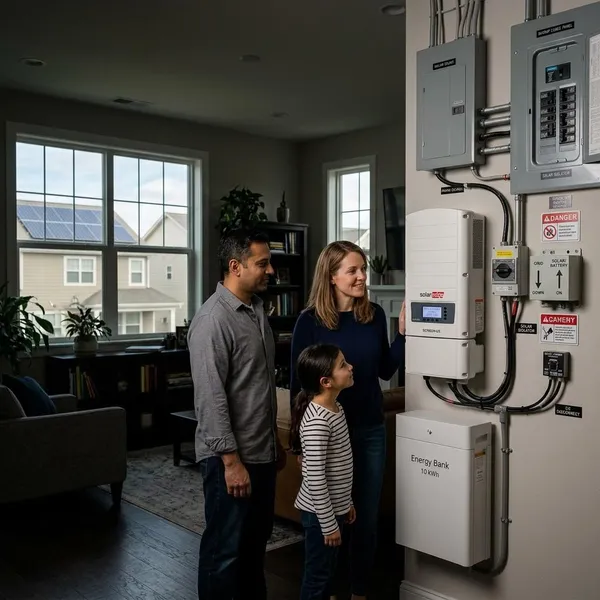
Do solar panels work during a power outage?
Solar panels do not automatically work during a power outage just because they are installed. Standard grid-tied systems often shut down when the utility grid fails, even on a sunny day. Backup power requires equipment that can isolate from the grid and keep selected loads powered safely.
Grid-tied solar systems shut down during outages
Most basic grid-tied solar systems shut down during a blackout for safety. They are designed to avoid sending electricity into utility lines while crews may be repairing them.
That can feel frustrating if the sun is out and your roof is full of panels, but the system is doing what it was designed to do. Bill-saving solar and backup-capable solar are not the same setup.
Battery systems keep selected circuits running
A battery-backed system can keep planned circuits running when the grid fails. This usually means choosing essentials rather than trying to power the entire home exactly as usual.
- Good backup circuits: refrigerator, freezer, lights, router, phone charging, key outlets.
- Use caution: sump pumps, well pumps, and medical devices need reliable sizing and testing.
- Usually avoid on battery-only backup: electric heat, ovens, large HVAC, and high-draw appliances.
Off-grid systems provide independent backup power
Off-grid systems are built to operate without relying on the utility grid, so they can function more like a primary power source. They are common for remote cabins, workshops, RVs, and properties where grid service is unavailable or unreliable.
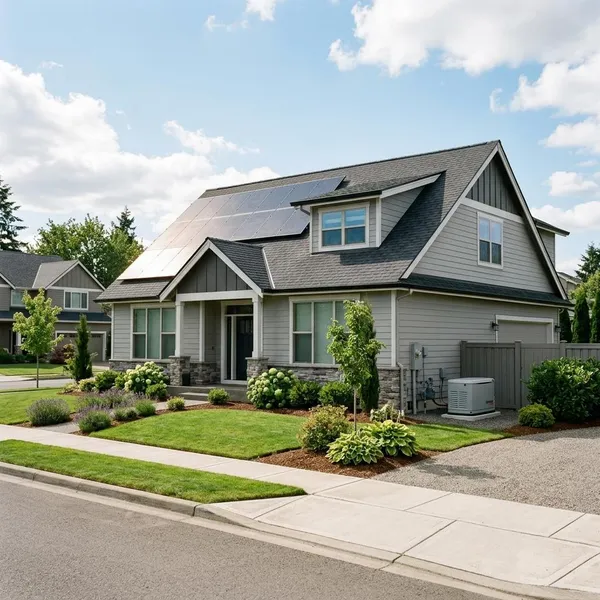
Solar vs generator: Which backup option fits your needs?
Solar systems suit clean and low-maintenance power
Solar suits people who want backup that is quiet, low-maintenance, and useful beyond emergencies. It is especially appealing for short outages, home offices, apartments using portable power stations, camping, RV travel, and homes where storing fuel is inconvenient.
The tradeoff is restraint. If you use the battery for everything at once, it drains quickly. Solar backup works best when you decide ahead of time what gets power and what waits until the grid returns.
Generators suit high-demand emergency backup
Generators suit high-demand emergency backup because they can produce steady power as long as fuel is available. They are often more practical for central HVAC, large pumps, jobsite tools, or a home that needs to operate close to normal during a long outage.
The safety side is not optional. Fuel generators produce exhaust and should never be used indoors, in garages, or near openings where carbon monoxide could enter the home. They also need maintenance, fuel planning, and periodic testing.
The best choice depends on power needs and usage
A simple decision path works better than comparing labels:
- Short outages and essential loads: solar battery backup may be enough.
- Long outages with heavy appliances: a generator is often more realistic.
- Frequent outages with mixed needs: a hybrid system gives more flexibility.
- Portable charging and small devices: a compact solar generator can be practical.
If you are unsure, start with the loads that truly matter for the first 24 hours. Once those are covered, decide whether comfort items are worth the extra cost, fuel, equipment size, or installation complexity.
Conclusion
Solar panels can act as a generator only when the system includes storage, conversion, and safe backup controls. For quiet essential power, solar can be an excellent choice; for heavy loads or long storm outages, a generator or hybrid setup is often more dependable. The smartest plan is to size backup around what must stay on first, then add capacity only where it genuinely improves your outage comfort or safety.