
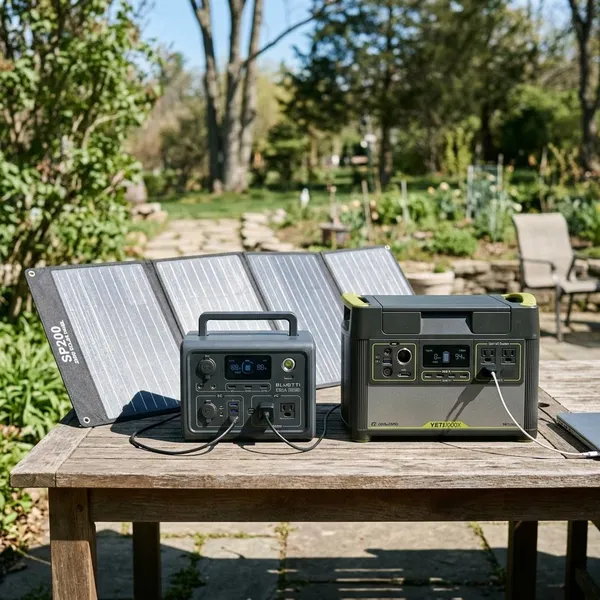
The difference between solar generator and portable power station products comes down to setup, charging method, and how the product is marketed. A portable power station is the battery unit with outlets and an inverter, while a solar generator usually refers to a similar power station paired with solar panels or designed for solar charging. Before choosing one, focus on what is included in the package, how quickly it can recharge, and whether its output and capacity are enough for the devices you need to run.
Are Solar Generators and Portable Power Stations the Same?
They are closely related, but the names are not always used consistently. Many products sold under both labels contain a rechargeable battery, an inverter, and output ports for everyday devices.
They use similar battery and inverter technology
Both types usually store electricity in an internal battery and use an inverter to turn that stored power into AC electricity for devices such as laptops, lights, routers, small fans, or camera chargers. Many also include USB ports, 12V outputs, battery management systems, and safety protections.
For the person using it, the basic routine feels the same: charge the unit, plug in your devices, and use stored power when a wall outlet is not available. The label on the box matters less than the battery capacity, output rating, and charging options.
They differ in solar charging options
The solar side is where the names start to separate. A portable power station may support solar charging, but the panels are often optional. A solar generator is more likely to be sold as a solar-ready package, sometimes with panels, cables, and adapters included.
- Do not assume panels are included. Some "solar generator" listings include only the battery unit.
- Check solar input limits. The panel voltage and wattage must match what the unit can accept.
- Look at real recharge time. A small panel may work technically but still be too slow for a long outage.
They serve different user needs
A portable power station suits someone who wants flexible backup first and may add solar later. That could be a renter keeping internet and phones running during short outages, or a weekend camper who mostly charges from a wall outlet before leaving home.
A solar generator makes more sense when solar charging is part of the plan from day one. For example, an RV traveler, cabin owner, or household preparing for multi-day outages may prefer a matched setup instead of piecing together panels and connectors separately.
What Are the Main Differences Between Them?
The main differences are packaging, setup flexibility, and total cost. The power unit may be very similar, but the buying experience can be quite different.
Solar generators include solar charging equipment
A solar generator package may include foldable panels, solar cables, adapters, and basic setup instructions. That can be helpful if you want a simpler purchase and do not want to compare connector types or voltage ranges yourself.
The practical warning is simple: read the "what's in the box" section carefully. If the package includes a low-wattage panel, it may be fine for topping up phones and lights but frustrating if you expect to recharge a large battery during one short winter day.
Portable power stations offer flexible setups
With a portable power station, you can buy the battery unit first and build around it later. This is useful if your needs are still unclear or if you want to spend more on the battery and less on accessories at the beginning.
That flexibility is valuable for gradual use. You might first use the unit for laptops, phones, and a router at home, then add solar panels later for camping or longer outages. The trade-off is that you must check compatibility instead of relying on a pre-matched bundle.
Solar generators usually cost more as complete systems
Complete solar generator kits usually cost more upfront because panels and accessories are included. You are often paying for convenience, not necessarily a stronger battery or better inverter.
The higher price is easier to justify if you expect to use solar often. If solar charging is only a "maybe someday" feature, a standalone power station may be the cleaner purchase.
What Are the Pros and Cons of Each Option?
Neither option is automatically better. A portable power station gives you more control over the setup, while a solar generator reduces the number of decisions you need to make.
Portable power stations offer flexibility with fewer extras
A portable power station is often the better first purchase if you want backup power for mixed situations. It can sit in a closet for outages, travel in a car for road trips, or power small devices at an outdoor event without requiring solar panels every time.
- Best fit: short outages, renters, road trips, laptops, phones, routers, lights, and small fans.
- Main advantage: lower starting cost and easier upgrades later.
- Main drawback: solar charging may require extra research and separate purchases.
Solar generators offer convenience with higher upfront costs
A solar generator is easier when you want a solar-focused setup without building the system piece by piece. A matched kit reduces the chance of buying the wrong cable, panel voltage, or undersized accessory.
Both options have limits based on power capacity
The real test is not the product name; it is what you plan to plug in. Small units may handle phones, tablets, LED lights, laptops, and routers well. High-draw devices such as kettles, microwaves, hair dryers, heaters, and some power tools can drain batteries quickly or exceed the inverter rating.
Which One Fits Your Needs?
The right choice depends on how often you need power, where you will recharge, and whether you want a simple kit or a flexible system. Start with your use case rather than the label.
Portable power stations work well for flexible backup
Choose a portable power station if you mostly want quiet backup for short interruptions or mobile use. It is a practical fit for keeping a modem, phone, laptop, or lamp running during a brief outage, especially if you can recharge from the wall before the next use.
Solar generators work well for ready-to-use solar power
A solar generator is the stronger choice when recharging from sunlight is not optional. If you expect several days away from outlets, frequent camping in sunny locations, or outage preparation where grid power may be unavailable, a bundled solar setup can save time and reduce guesswork.
It still needs realistic expectations. A portable solar kit will not usually behave like a whole-home generator. It is better viewed as backup for selected essentials, not as a way to run every appliance normally.
Both options support camping and emergency use
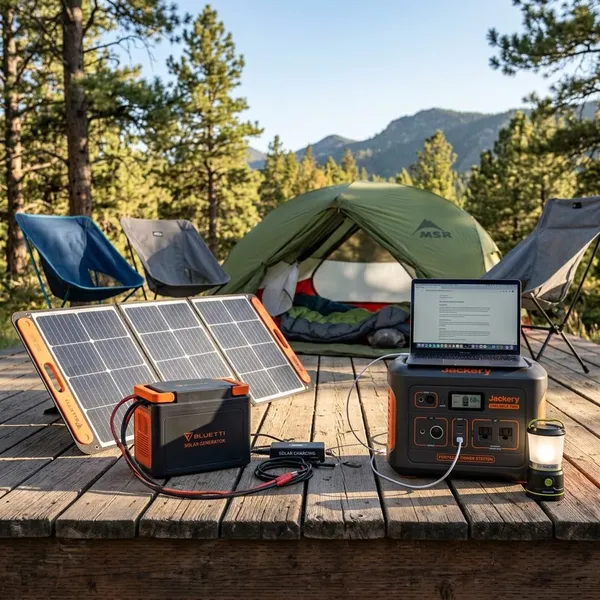
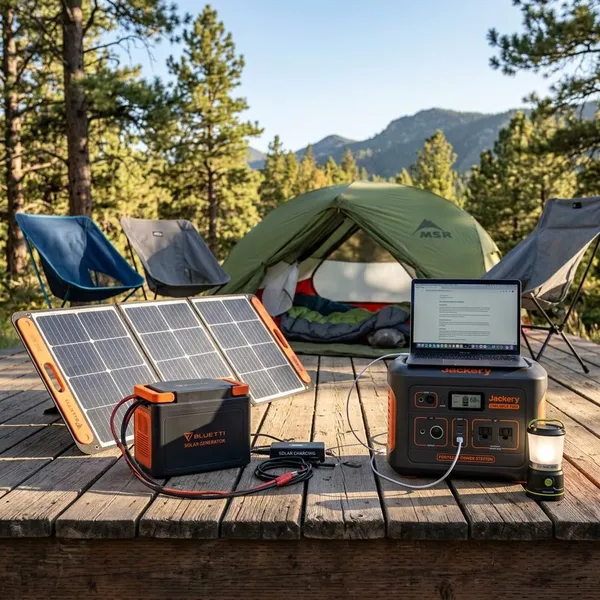
For camping, the better option depends on trip length. A weekend trip with lights, phones, cameras, and a small fan may only need a compact power station charged before leaving. A longer stay away from outlets makes solar charging much more useful.
For emergency use, both are generally more suitable indoors than fuel-burning generators because they do not produce exhaust while operating. Still, follow the manufacturer's instructions, keep vents clear, avoid overloading the unit, and do not treat any battery system as maintenance-free.
How to Choose Between a Solar Generator and Portable Power Station
The safest way to choose is to compare the system around your actual devices. Ignore the name at first, then check capacity, output, charging method, included gear, and upgrade options.
Match battery size with your devices
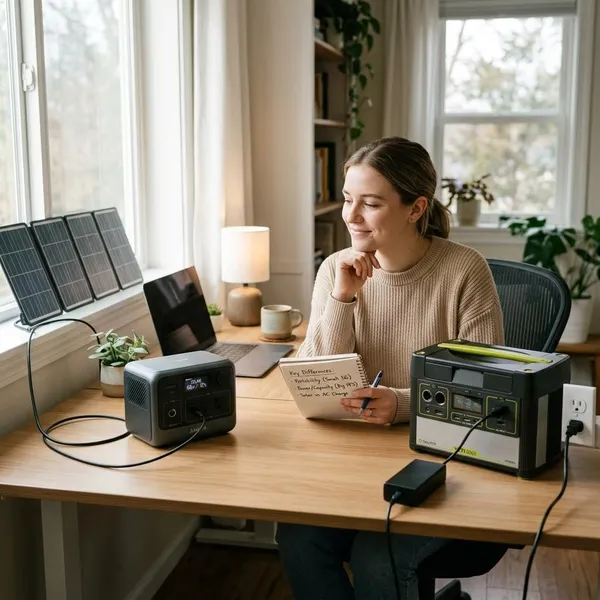
Start with the devices you cannot do without. Write down their wattage and how many hours you want to run them. A phone-and-laptop setup needs far less energy than a refrigerator, CPAP machine, cooler, or multiple household devices.
Do not shop only by the number of outlets. Runtime is what you will notice during an outage or trip. If your main device draws a lot of power, a small unit with many ports can still be the wrong choice.
Check included solar charging equipment
If solar charging matters, confirm exactly what the package includes: panels, cables, adapters, stands, and extension leads if needed. Then check whether the panel wattage is realistic for the battery size.
- Good sign: the package clearly states compatible solar input and expected charging conditions.
- Warning sign: the listing says "solar" but does not clearly show panels in the package.
- Common mistake: buying a large battery with a small panel and expecting fast daily recharges.
Compare charging speed and future expansion
Charging speed affects how useful the system feels. Fast wall charging helps before storms or trips, while stronger solar input matters if you want to recharge during the day and use the battery again at night.
Expansion is worth considering if this is not a one-time purchase. Some models accept extra batteries or more solar input; others are fixed. If you expect your needs to grow from occasional camping to regular backup, choosing an expandable model can be smarter than replacing the whole setup later.
Conclusion
If you want the lowest-risk choice, decide based on use rather than wording: buy a portable power station when you want flexible backup and may add solar later, and choose a solar generator when you already know you want a ready-to-use solar charging setup. The name can be fuzzy, but the practical checks are not—capacity, output, recharge speed, included panels, and upgrade room will tell you whether the system fits your life.