
Home battery backup systems usually need proper grounding when they are permanently connected to household wiring. Portable power stations used only through their built-in outlets may not follow the same rules, but the moment a battery system connects to a transfer switch, power inlet, backup panel, solar array, or main electrical system, grounding and bonding become essential for safety, code compliance, and reliable operation.
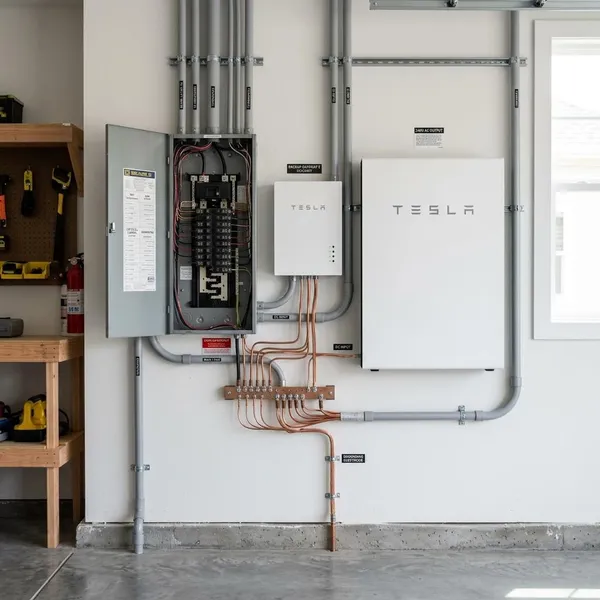
Do home battery backup systems need grounding?
Most do, but the answer depends on how the battery is used. The first thing to check is not the battery size. It is whether the unit is standalone, plugged into individual appliances, or wired into the home's electrical system.
A simple way to think about it: if the battery becomes part of your home wiring, treat grounding as a safety requirement, not an optional upgrade. If it stays as a portable unit powering a lamp, router, or small appliance directly, the manufacturer's built-in design may handle the grounding arrangement differently.
Most permanent systems need proper grounding for safety
A wall-mounted or floor-mounted battery connected to a panel, transfer switch, gateway, or backup loads panel normally needs a proper equipment grounding path. That path helps metal enclosures, disconnects, and wiring stay safer if a fault occurs.
This matters most in places where people can easily touch the equipment, such as a garage, utility room, or basement. If a fault energizes a metal case, the grounding path helps protective devices respond instead of leaving the case dangerous to touch.
Portable battery units may follow different grounding rules
Portable battery backups are often designed as self-contained power sources. If you plug a phone charger, Wi-Fi router, or refrigerator directly into the built-in outlets during a short outage, you are usually using the unit the way the manufacturer intended.
The situation changes when that same unit is connected to house wiring. A portable power station that is fine for direct plug-in use may not be approved for a generator inlet or transfer switch, especially if the neutral and ground arrangement does not match the transfer equipment.
The right method depends on the system design
Grounding is not solved by simply adding a ground rod. The correct method depends on the inverter, neutral handling, transfer equipment, wiring layout, and local code requirements.
Before making changes, find these items in the manual or installation diagram:
- Whether the inverter output is floating or bonded.
- Whether the neutral is switched during backup operation.
- Which transfer equipment is approved for the system.
- Where the equipment grounding conductor must connect.
What does grounding do in a battery backup system?
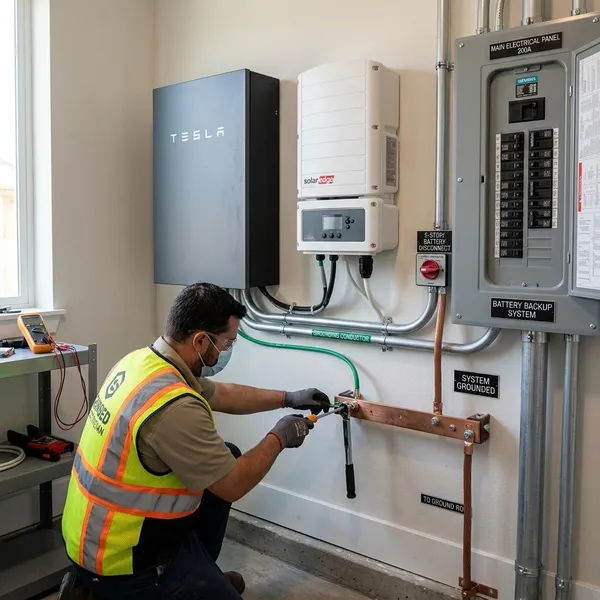
Grounding gives fault current a safer path and helps the system behave predictably when something goes wrong. In a battery backup setup, that is important because the inverter is creating usable AC power instead of simply passing utility power through.
Grounding and bonding work together, but they are not the same thing. Grounding connects equipment to the grounding system. Bonding connects conductive parts together so they remain at the same electrical potential. Neutral-ground bonding is a specific connection that should only exist where the system design allows it.
Grounding protects against electrical faults
If a damaged conductor touches a metal enclosure, a grounding path helps turn that fault into something a breaker, fuse, or inverter protection circuit can detect. Without that path, the equipment may still appear to work while the outside of the enclosure becomes unsafe.
Grounding reduces shock and equipment risks
Good grounding reduces the chance that a person becomes the easiest path for fault current. It can also help sensitive electronics in the inverter, controls, communications module, and connected household equipment respond more predictably during abnormal conditions.
It will not prevent every failure. A surge, bad connection, or damaged component can still cause problems. Grounding is one layer of protection, not a guarantee that the system is immune to electrical faults.
Grounding helps keep the system operating safely
Battery systems change modes: charging from the grid, powering loads during an outage, switching back to utility power, or working with solar. A correct grounding and bonding setup helps those transitions happen within the design limits of the equipment.
It also makes inspection and troubleshooting more straightforward. A technician can compare the actual wiring against the approved diagram instead of trying to diagnose a system that has been improvised over time.
How do grounding rules differ between battery systems?
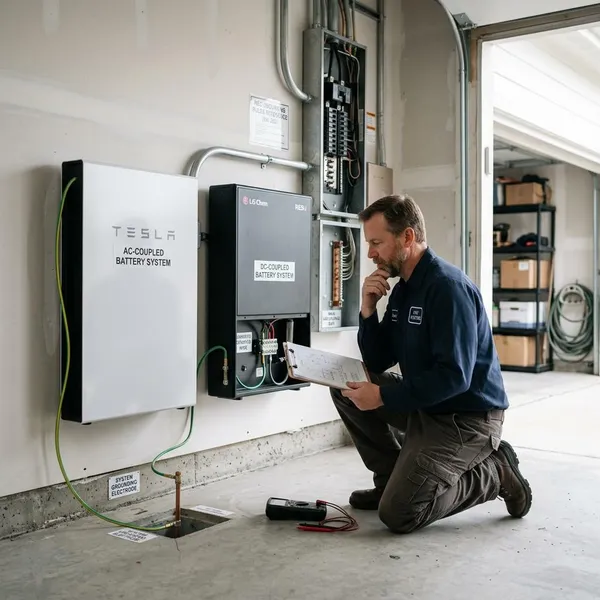
The rules change because not every battery backup interacts with the home in the same way. A weekend-use portable unit, a permanently installed whole-home battery, and a solar-plus-storage system create very different electrical conditions.
| System type | Typical use | Main grounding concern |
|---|---|---|
| Portable battery | Directly powering devices from built-in outlets | Use only as the manual allows; do not assume it can feed house wiring. |
| Whole-home battery | Connected to a panel, gateway, or transfer system | Must coordinate with home grounding, bonding, and transfer equipment. |
| Solar battery system | Battery, inverter, PV array, and backup loads working together | Needs a complete system design because multiple power sources interact. |
Portable systems follow standalone power rules
A portable unit used on its own usually follows the design built into the inverter. Some portable batteries use a floating neutral, while others handle neutral-ground relationships differently in certain modes.
A practical example: using a portable battery to keep a router and a few lights running during a storm is different from plugging that battery into a home inlet. The first use may be normal portable operation. The second turns it into part of a larger wiring system and needs approved transfer equipment.
Whole-home systems follow home wiring requirements
Whole-home systems are usually treated like permanent electrical equipment. They must work with the home's equipment grounding conductors, grounding electrode system, service equipment, and backup switching method.
This is where neutral switching becomes important. If the transfer equipment switches the neutral, the system may be handled differently than one where the neutral remains connected. That detail affects where bonding is allowed.
Solar battery systems follow additional connection requirements
Solar-plus-storage systems add more variables: PV wiring, rapid shutdown equipment, hybrid inverters, charge control, grid export, and backup operation. Looking only at the battery can miss part of the grounding picture.
If you are adding a battery to an existing solar system, do not assume the old solar grounding plan automatically covers the new setup. The battery, inverter, and backup loads need to be reviewed together.
What determines the grounding requirements?
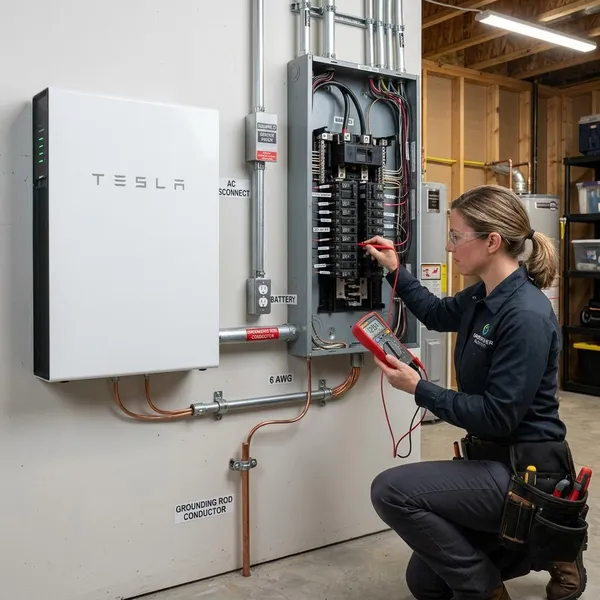
The most useful order is simple: check the inverter design first, then the transfer equipment, then the manufacturer's approved wiring method, then local code and inspection requirements. Skipping any one of those can lead to a system that works in normal use but fails the safety test when something goes wrong.
Inverter design affects grounding needs
The inverter decides how the backup power source behaves electrically. Some designs use a floating output, some include an internal neutral-ground bond, and some change bonding behavior depending on operating mode.
If you add a bond where the inverter already has one, you may create unwanted current paths. If the inverter expects a bond through approved equipment and it is missing, fault protection may not work as intended.
Transfer equipment affects system connections
The transfer switch, smart gateway, inlet, or backup panel controls how the battery connects to the house. It may switch only the hot conductors, or it may switch the neutral as well.
That one detail can change the grounding approach. A battery connected through non-approved transfer equipment is not just a paperwork issue; it can create unsafe neutral or grounding paths.
Manufacturer instructions define approved methods
The manual is the best place to start because it shows how the product was designed and listed to be installed. Look for the wiring diagram, grounding terminal instructions, approved transfer equipment, and any warnings about neutral bonding.
- Find the exact model number, not just the product family.
- Check whether the unit is approved for home wiring connection.
- Look for diagrams showing backup mode, not only normal grid mode.
- Do not use online "fixes" that contradict the manual.
Local codes affect installation requirements
Local rules can add permit, labeling, disconnect, conductor, and inspection requirements. Two homes using the same battery may still need different installation details because the service equipment, existing grounding system, and local code edition are different.
For a permanent system, this is where a licensed electrician or local inspector becomes important. The goal is not just to pass inspection; it is to make sure emergency shutdown, servicing, and fault clearing are safe in your actual home.
What grounding mistakes should you avoid?
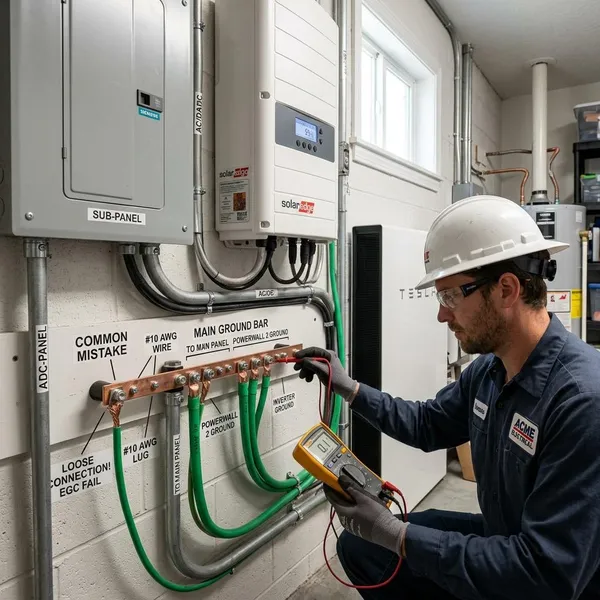
The biggest mistakes usually come from treating every battery backup like a portable generator, adding parts "just to be safe," or copying a wiring trick without knowing how the inverter handles neutral and ground.
A good rule is this: if the system is connected to house wiring, do not improvise. If it is portable, do not upgrade it into a home backup system unless the manufacturer and transfer equipment allow that use.
Incorrect bonding can create safety risks
Neutral-ground bonding in the wrong place can create parallel paths where current flows on grounding conductors or metal parts that should not normally carry current. Missing the required bond can be just as bad because a fault may not clear properly.
The safe answer is not "always bond it" or "never bond it." The safe answer is to bond only at the point allowed by the system design and code.
Missing grounding can increase electrical hazards
A missing equipment grounding path may not be obvious during normal use. The lights may turn on, the refrigerator may run, and the inverter may show no alarm.
The danger shows up during a fault. If an energized wire contacts a metal cabinet and there is no effective grounding path, the cabinet can remain hazardous until someone touches it or another failure occurs.
Conclusion
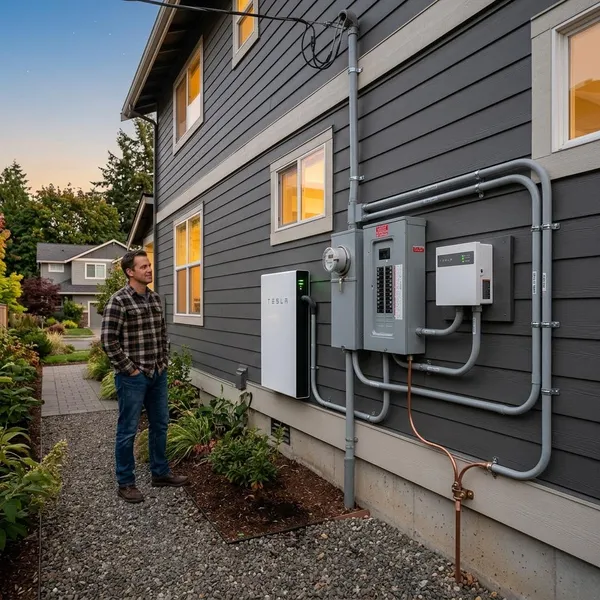
If your battery backup is permanently connected to your home, plan on proper grounding and bonding as part of the installation, not as an afterthought. If it is a portable unit used only through its own outlets, follow the manual and do not connect it to house wiring unless that setup is specifically approved. The safest first checks are the inverter design, transfer equipment, manufacturer diagram, and local code requirements.