
Solar panels can lower your electric bill, but they do not automatically keep your home powered during an outage. Whether you still need a generator depends on how your solar system is set up, whether it includes battery storage, and how much power you want available when the grid goes down. For basic backup needs, solar with a properly sized battery may be enough; for longer outages or whole-home power, a generator can still be useful.
Do Solar Panels Work During a Power Outage?
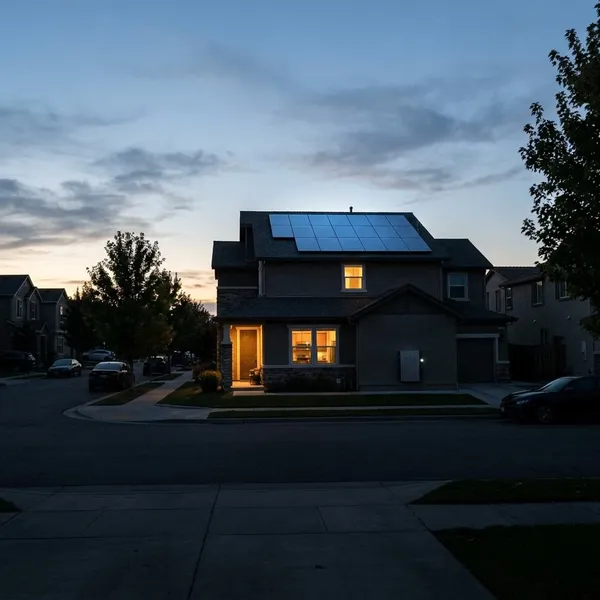
Most rooftop solar systems do not power a home during a blackout by default. If your system was installed mainly to lower electric bills, it may shut off as soon as the utility grid fails.
Grid-tied systems shut down without backup equipment
A standard grid-tied solar system normally turns off during an outage. This protects utility workers by preventing your panels from sending power back onto lines that are supposed to be de-energized.
That can feel counterintuitive on a sunny day. The panels may be producing electricity, but without outage-capable equipment, the inverter usually has no safe way to keep your home powered. If you only have basic grid-tied solar, assume your outlets, lights, refrigerator, and HVAC will lose power like everyone else on the street.
Battery systems keep selected loads powered
With a properly designed battery system, solar can keep part of your home running during a blackout. The battery and hybrid inverter isolate your backup circuits from the grid, then use stored energy and daytime solar production to support those loads.
The practical word is "selected." Most battery setups are designed around essentials, such as:
- Refrigerator and freezer
- A few lights and outlets
- Wi-Fi, phone charging, and basic electronics
- Medical devices or a sump pump, if needed
- Possibly one small heating or cooling zone, depending on system size
A small household that only wants food, internet, and lights protected may be comfortable with battery-only backup. A home that expects central air conditioning, electric cooking, and laundry during an outage will need a much larger system or a different backup plan.
Off-grid systems provide built-in backup power
An off-grid solar system is built to operate without utility power, so backup is part of the design from the beginning. These systems usually include solar panels, batteries, inverters, charge controls, and carefully managed loads.
Still, many off-grid homes keep a generator. Several cloudy days, winter production drops, or a sudden need to run a pump or tool can drain batteries faster than expected. In that setting, the generator is less of a daily power source and more of a reliability layer.
When Can Solar Work Without a Generator?
Solar can work without a generator when your backup goal is modest and your battery has enough usable capacity for the outage you are likely to face. The best fit is usually a home with short outages, manageable loads, and decent daytime solar production.
Batteries cover short and planned outages
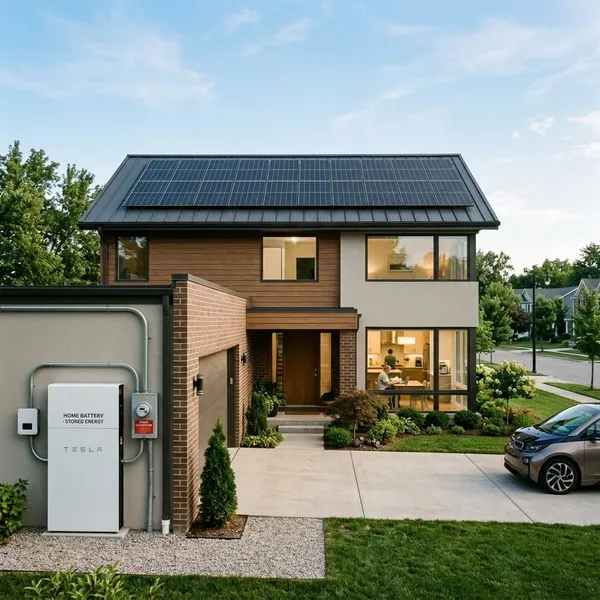
Batteries are often enough for short blackouts, especially outages that last a few hours rather than several days. They switch over quietly, do not need fuel, and can keep essential circuits running without anyone going outside to start equipment.
This is especially useful for planned utility shutoffs or brief storm-related outages. If you know power is usually restored the same day, a battery can be a cleaner and easier solution than storing fuel for a generator you rarely use.
Small loads need less backup power
The smaller your emergency load list, the easier it is to avoid a generator. A refrigerator, router, lights, and phone chargers use far less energy than central AC, an electric oven, a dryer, or a large well pump.
A good rule of thumb is to separate "must run" from "nice to have." If an appliance is mainly about comfort, convenience, or routine, leave it off the critical-load list first. That one step can make a battery setup more realistic and much less expensive.
Reliable solar production reduces generator use
Homes with strong sun exposure can stretch battery backup much further during daytime outages. If the panels can recharge the battery while also supporting small loads, the system may handle repeated short outages with little or no generator help.
Solar production is still weather-dependent. Heavy shade, snow, smoke, winter days, or several cloudy afternoons can change the answer quickly. A sunny suburban home with short summer outages is a very different case from a mountain property dealing with winter storms and limited daylight.
When Do You Still Need a Generator With Solar?
A generator still makes sense when the outage risk is bigger than your battery can comfortably cover. The main reasons are long outage duration, large electrical loads, and locations where losing power creates more than a minor inconvenience.
Long outages need extra backup runtime
Batteries have a fixed amount of stored energy. Once that energy is used, you are depending on solar production to refill them, and that may not happen quickly during storms, smoke, snow, or short winter days.
If your area has hurricanes, ice storms, wildfire shutoffs, or rural line repairs that can last multiple days, a generator gives you runtime that batteries alone may not provide. It can also recharge batteries in a combined system, so the generator does not have to run constantly.
Large appliances need higher power output
Large appliances can push a battery system beyond what is practical. Central air conditioners, electric water heaters, ovens, dryers, well pumps, and workshop tools may need high running power or a strong startup surge.
The common mistake is sizing backup around daily comfort instead of emergency priorities. Running one high-demand appliance can drain the battery and leave less energy for food storage, lights, communication, or medical equipment. If your goal is near-normal living during a blackout, a generator may be the more sensible support.
Remote homes need more energy reliability
Remote homes often benefit from having both solar and a generator. Utility repairs can take longer, roads may be harder to access, and backup loads may include things that are not optional, such as a well pump, septic equipment, heated water lines, gates, or livestock systems.
For a rural property, the question is not only "Can I get through tonight?" It may be "Can I manage three bad-weather days without risking water, heat, or access?" That higher-risk scenario is where a generator becomes much easier to justify.
Solar Battery vs Generator for Backup Power
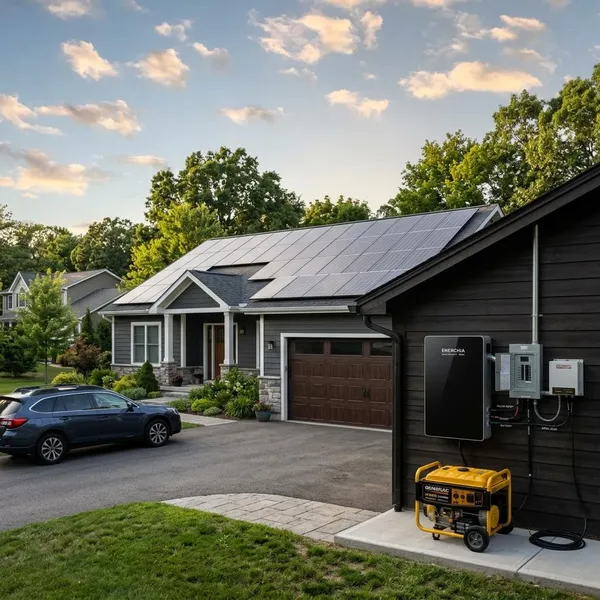
Batteries and generators solve different backup problems. A battery is best for quiet, automatic power over a limited period. A generator is better when runtime and high output matter more than silence or convenience.
Batteries provide quiet stored energy
Batteries are easy to live with. They switch on automatically, produce no onsite exhaust, and are quiet enough for nighttime outages or dense neighborhoods where generator noise would be frustrating.
The limitation is capacity. A battery may be perfect for a refrigerator, lights, Wi-Fi, and a few outlets, but it can become expensive if you expect it to cover heavy appliances for a long time.
Generators provide longer fuel-based backup
A generator can keep producing power as long as it is properly fueled and operated. That makes it useful for multi-day outages or homes with loads that would empty a battery quickly.
The tradeoff is ownership effort. Generators need safe placement, ventilation, maintenance, testing, and fuel planning. Portable units also require more hands-on setup, while standby models cost more but are easier to use during an emergency.
Each option fits different outage needs
The clearest choice comes from matching the equipment to the outage you are actually planning for:
| Backup choice | Best fit | Main caution |
|---|---|---|
| Battery only | Short outages, quiet backup, essential circuits | Limited runtime if loads are large |
| Generator only | Long outages, high-demand appliances, lower-cost runtime | Fuel, noise, exhaust, and maintenance |
| Battery plus generator | Homes that want automatic backup and longer emergency coverage | Higher system cost and more design planning |
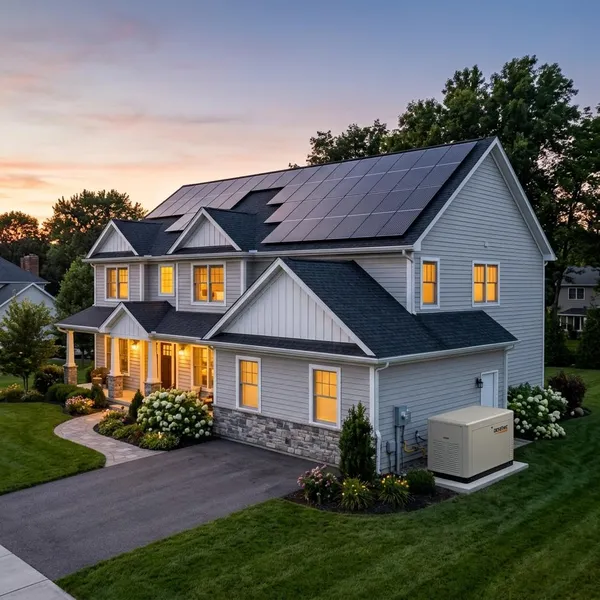
For many solar homes, the combined setup is the most balanced option: the battery handles the first few hours quietly, and the generator is saved for extended outages or poor solar weather.
How to Choose the Right Backup Setup?
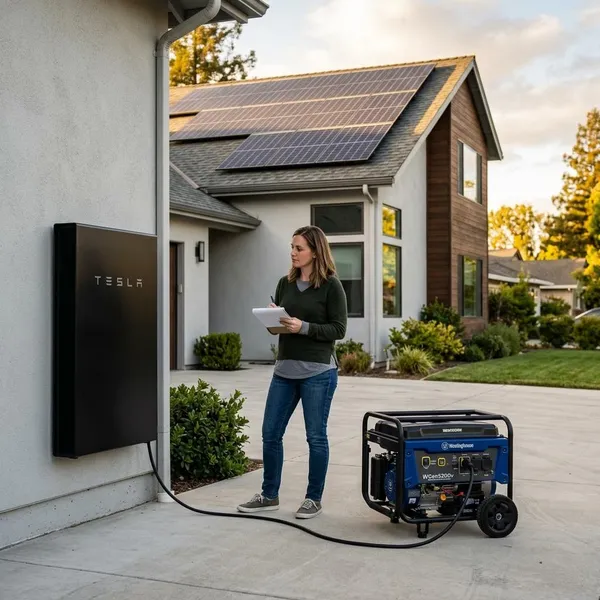
Start with your actual risk, not with the equipment. The right backup setup depends on what your solar system can do now, what you truly need powered, and how long local outages usually last.
Check your solar system and outage risks
First, confirm whether your system is grid-tied, hybrid, or off-grid. If it is a standard grid-tied system with no battery or backup inverter, it probably will not power your home during a blackout.
Then look at your outage pattern. A city home with two short outages a year may only need essential battery backup. A storm-prone or rural home should plan more conservatively because restoration can take longer and fuel access may also become part of the problem.
Define critical loads and backup time
Make a short list before asking for quotes. This keeps the design practical and helps you avoid paying for backup capacity you will barely use.
- List must-run devices: refrigerator, freezer, lights, internet, medical devices, sump pump, or well pump.
- Choose a target duration: a few hours, overnight, one full day, or several days.
- Mark large loads separately: HVAC, electric water heating, ovens, dryers, pumps, and tools.
- Ask whether each load needs automatic backup or can wait until a generator is started.
This is where many decisions become obvious. If your must-run list is small and outages are short, battery-only backup may be enough. If one large pump or HVAC system is non-negotiable, you may need a generator or a much more robust battery design.
Conclusion
If your solar system has a properly sized battery, your outages are usually short, and you are willing to back up only essential loads, you may not need a generator. If outages can last for days, your home depends on large appliances, or you live somewhere remote, a generator is still a useful safety layer. The smartest move is to design around your real outage risk first, then decide whether solar plus batteries is enough or whether fuel-based backup earns its place.