
If your goal is home solar panels battery storage integration energy independence, the realistic answer is usually partial independence: lower grid use, better control after sunset, and backup for the circuits that matter most. A battery is worth considering when your solar power is produced at the wrong time of day, your utility rates are high in the evening, or outages interrupt normal life.
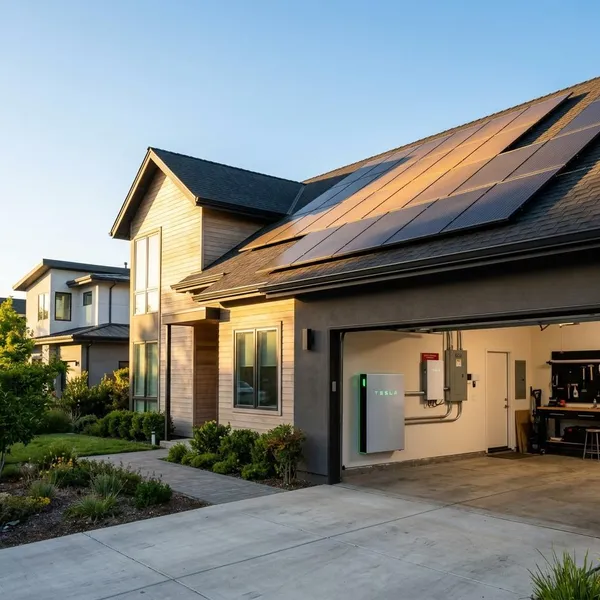
Why Add Battery Storage to Home Solar Panels?
Solar panels are most useful while the sun is out. A battery makes the system more useful when the sun is not helping: evening cooking, overnight refrigeration, early-morning routines, and some blackout situations.
It reduces reliance on grid electricity
A battery reduces grid reliance by storing extra daytime solar energy and using it later. That is especially useful for a working household that produces plenty of solar power at noon but uses more electricity after 5 p.m.
It does not mean the grid disappears from your life. Cloudy weather, winter production, large appliances, and battery size all affect how often you still need utility power.
It provides backup power during outages
For many homeowners, backup power is the clearest reason to add storage. A properly designed system can keep selected essentials running, such as a refrigerator, Wi-Fi router, lights, phone charging, a garage door opener, or a few key outlets.
- Good fit: short outages, storm-prone areas, remote work, food spoilage concerns.
- Needs careful sizing: well pumps, sump pumps, medical equipment, or long outages.
- Usually expensive: whole-home backup with central air, electric heat, or EV charging.
How Does a Solar Plus Battery System Work?
A solar plus battery system has three main jobs: generate electricity, direct it safely, and store what is not needed right away. In normal use, solar power serves the house first, charges the battery when there is surplus, and may export extra power after the battery is full.
When solar production falls, the battery can discharge to support the home. During an outage, only backup-capable systems can keep operating, and only for the circuits included in the backup design.
Solar panels generate electricity during the day
Solar panels produce most strongly in bright daylight, often around midday. Output changes with shading, roof direction, weather, season, and panel layout, so a summer afternoon and a cloudy winter morning can feel like two very different systems.
The inverter manages power between systems
The inverter is the traffic controller. It converts solar electricity into usable household power and decides whether energy goes to the home, the battery, or the grid.
This is why inverter details matter in quotes. Ask whether the inverter supports battery charging during an outage, which loads it can start, how it handles backup reserve, and whether it can be expanded later.
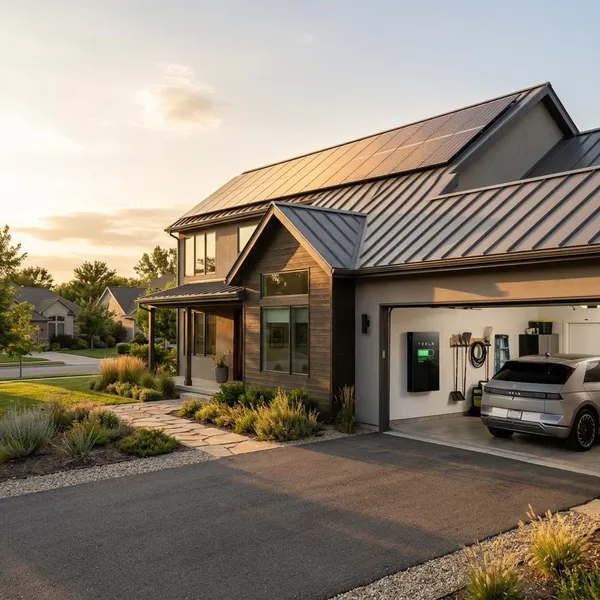
How Much Energy Independence Can Solar Storage Provide?
Solar storage can provide meaningful independence, but most grid-connected homes should think in levels rather than absolutes. A modest battery may reduce evening grid use and cover essentials during short outages. A larger system may support more daily use and longer backup. Full off-grid living is a different design with higher cost, more equipment, and stricter energy habits.
It reduces daily electricity use from the grid
In daily operation, storage is most useful when your home exports solar during the day and buys electricity back later. A household with evening cooking, laundry, electronics, and lighting may see a bigger practical benefit than a home where most electricity is already used during sunny hours.
Large loads change the picture quickly. Central air conditioning, electric heating, electric water heating, and EV charging can drain stored energy much faster than lights, refrigeration, and internet equipment.
It keeps essential devices running during outages
Outage independence is about priorities. Instead of asking whether the battery can "run the house," ask what must stay on if the grid fails tonight.
- First priority: refrigeration, communication, basic lighting, phone charging.
- Second priority: sump pump, well pump, home office, security equipment.
- Optional comfort loads: microwave, small appliance use, limited heating or cooling.
- High-demand loads: central HVAC, electric ovens, dryers, EV charging.
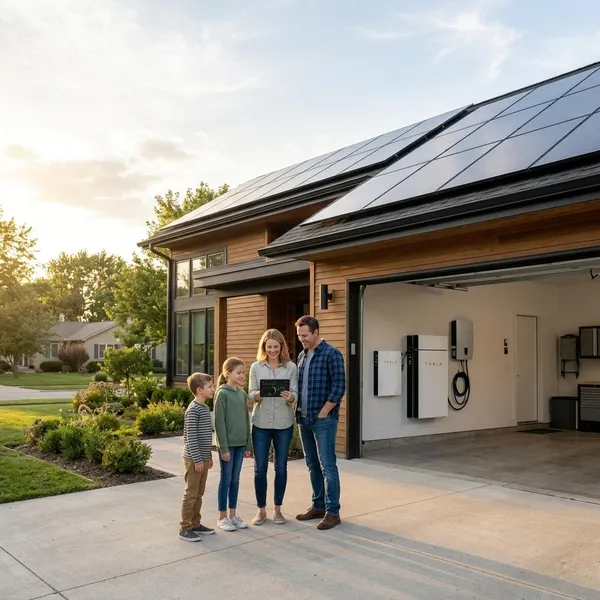
What Are the Benefits of Solar and Battery Integration?
The main benefit is control. Solar alone gives you daytime production; solar with storage gives you more choice over when that electricity helps your home.
The value is strongest when at least one of these is true: outages are disruptive, evening rates are high, export credits are weak, or you want to use more of your own generation instead of sending it away.
It lowers dependence on utility power
Storage lets the home draw on solar energy beyond daylight hours. That can reduce how often you import power from the grid, especially in the evening.
For a low-risk, grid-connected household, this may simply mean fewer utility purchases. For a home in an area with unreliable service, it can also mean less disruption when the grid is unavailable.
It improves backup power reliability
A battery can switch on quietly and automatically when the grid fails, if the system is designed for backup. That makes it different from a fuel generator, which may need manual setup, maintenance, and fuel during the exact moment you need it.
The important boundary is circuit selection. Backup reliability is much better when the battery is asked to support a clear group of essential loads rather than an undefined "everything."
It increases solar energy savings
Savings depend heavily on local utility rules. Battery storage tends to make more financial sense when exported solar earns little and evening electricity costs more than daytime electricity.
If your area has generous net metering and rare outages, the financial case may be weaker. In that situation, the battery is more of a resilience and control purchase than a simple payback decision.
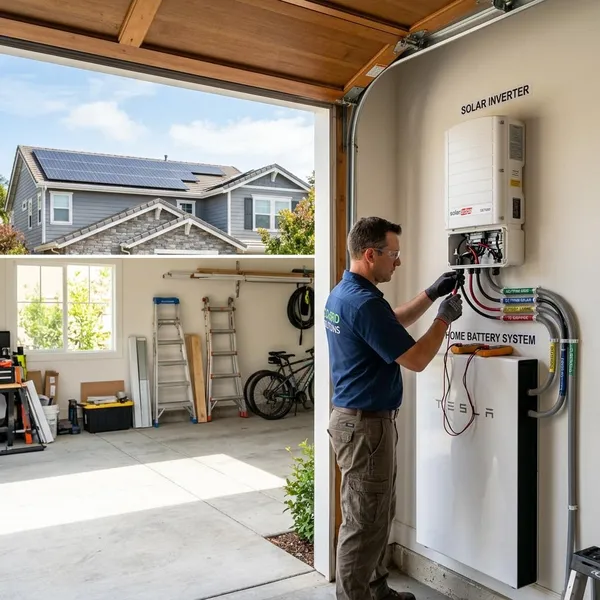
Can You Add Battery Storage to Existing Solar Panels?
Many existing solar systems can add a battery, but it is not always a simple plug-in upgrade. The answer depends on your inverter, electrical panel, backup goals, monitoring setup, and local installation requirements.
A retrofit can be a good choice when your panels are performing well and your needs have changed. Maybe outages have become more common, your utility changed its rate plan, or you now want to keep home office equipment running during interruptions.
New systems combine solar and storage together
New installations are usually easier to design cleanly because the panels, inverter, battery, and backup circuits can be selected as one system. This often gives better monitoring, fewer compatibility surprises, and clearer expectations from the start.
Existing systems can add compatible batteries
Existing solar arrays may be able to use AC-coupled batteries or other compatible retrofit options. This can add storage without replacing every part of the original solar installation.
Before accepting a retrofit quote, ask three practical questions: which circuits will be backed up, whether solar will recharge the battery during an outage, and what happens if you want more storage later.
Is Solar Battery Storage Worth It for Your Home?
Solar battery storage is worth it when the practical benefit matches the price. It is usually easier to justify for homes with frequent outages, high evening electricity rates, weak export credits, or a strong preference for using more self-generated power.
It may be harder to justify if your grid is reliable, your utility gives strong credit for exported solar, and your only goal is lowering the electric bill as cheaply as possible. In that case, solar alone may already do the main job.
| Home situation | Battery value is usually | What to check first |
|---|---|---|
| Frequent short outages | Strong for essentials | Backup circuits and reserve settings |
| High evening rates | Strong if evening use is high | Time-of-use bill pattern |
| Good net metering and rare outages | Often optional | Payback compared with solar alone |
| Whole-home backup expectation | Possible but costly | Large loads, startup surges, and battery count |
It suits homes with frequent outages
Storage is often most satisfying when outages affect daily life. If you work from home, lose refrigerated food during storms, rely on a sump pump, or need basic communication during grid failures, backup value is easy to understand even if the payback is not the fastest.
It helps homes with high electricity costs
A battery can help when your utility charges more during evening peak hours. Stored solar can reduce purchases during those expensive windows, especially if your household uses a lot of power after sunset.
Use your actual bill before making assumptions. Look for the rate schedule, peak hours, monthly usage, and export credit value; those details matter more than a general promise of "more savings."
How to Choose the Right Solar Storage Setup
Choose the setup by working backward from the result you want. A battery for short backup outages, a battery for daily bill savings, and a system for near off-grid independence can look very different.
The biggest mistake is comparing proposals before setting the same assumptions. One quote may look cheaper because it backs up fewer circuits, reserves less energy, or cannot recharge from solar during an outage.
Define your main energy goal
Pick one primary goal first: backup, lower peak-rate purchases, better solar self-consumption, or a move toward partial independence. If everything is the top priority, the system can become oversized and expensive without solving the most important problem well.
- Backup goal: list essential circuits and target runtime.
- Savings goal: compare peak rates, export credits, and evening use.
- Independence goal: review seasonal solar production and daily loads.
Match the system to your power needs
Do a load check before focusing on battery size. Write down the appliances or circuits you want supported, how long they should run, and whether any have motor startup surges.
A small home using gas heat may need far less storage for essentials than an all-electric home with heat pumps, electric water heating, and EV charging. The same battery can feel generous in one house and limited in another.
Compare options with the same standards
Ask each installer to quote against the same list of loads and the same operating goal. Then compare usable capacity, continuous power output, backed-up circuits, blackout recharge behavior, warranty terms, monitoring, and expansion options.
If a proposal is unclear, ask for a plain explanation of what happens in two moments: a normal evening after sunset and a grid outage that starts at night. Those two examples reveal more than a brochure specification sheet.
Conclusion
A solar battery is most useful when it solves a specific problem: shifting solar into the evening, protecting essential circuits, or reducing dependence on utility power in a realistic way. If your grid is reliable and your solar credits are strong, storage may be optional; if outages, peak rates, or low export credits are already costing you comfort or money, a carefully sized battery can be a smart upgrade.