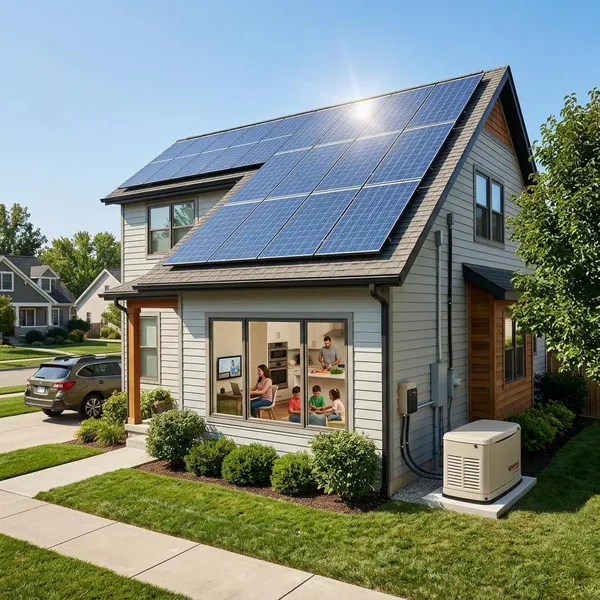
A solar-powered home with generator backup relies on solar energy first, uses batteries when sunlight is limited, and starts the generator only when stored power is low or an outage lasts longer than expected. A reliable system is not built to run every appliance nonstop; it is sized around the loads that matter most, including refrigeration, well pumps, medical equipment, internet, essential lighting, and heating or cooling controls.
How Does a Solar Backup System Work?
A solar backup system works by choosing the best available power source at each moment. Solar is used when available, batteries fill the gaps, and the generator steps in when battery charge or solar production is not enough.
The important detail is coordination. Panels, batteries, inverters, transfer equipment, and generator controls must be designed to work together. Without that, the system may not switch safely or may not allow the generator to charge the battery.
Solar power runs the home when available
During the day, solar panels produce electricity that can serve active household loads. If the home is using less than the panels are producing, extra energy can charge the battery. During an outage, that daytime solar production is especially valuable because it reduces battery drain and delays generator use.
A useful habit during an outage is to move flexible tasks into the sunniest part of the day. Charging devices, running a dishwasher, or using a small appliance while solar output is strong can be easier on the battery than doing the same tasks after sunset.
Batteries store extra energy for later use
Batteries are the bridge between solar production and real household use. They store daytime surplus and supply power at night, during cloudy periods, or when a load briefly exceeds current solar output.
They also make backup feel smoother. Instead of waiting for a generator to start, many battery-backed systems can keep lights, routers, refrigeration, and electronics running with little interruption. Runtime depends on usable battery capacity, the loads being powered, temperature, and how conservatively the system is programmed.
Generators provide power when solar is limited
The generator is used when the system needs more energy than solar and batteries can provide. That may happen overnight, during several cloudy days, or when high-demand equipment is running.
Before choosing equipment, ask one specific question: can the generator charge the battery, power the house, or both? The answer depends on the inverter and control design. A system that can recharge batteries from the generator may recover more effectively during long outages than one that only powers loads directly.
Controls manage power switching automatically
Controls are what make the setup usable instead of stressful. They monitor grid status, solar output, battery charge, household demand, and generator availability. When everything is compatible, the system can isolate from the grid, use solar and battery power, start the generator when needed, and return to normal operation when utility power comes back.
How Does the System Work During an Outage?
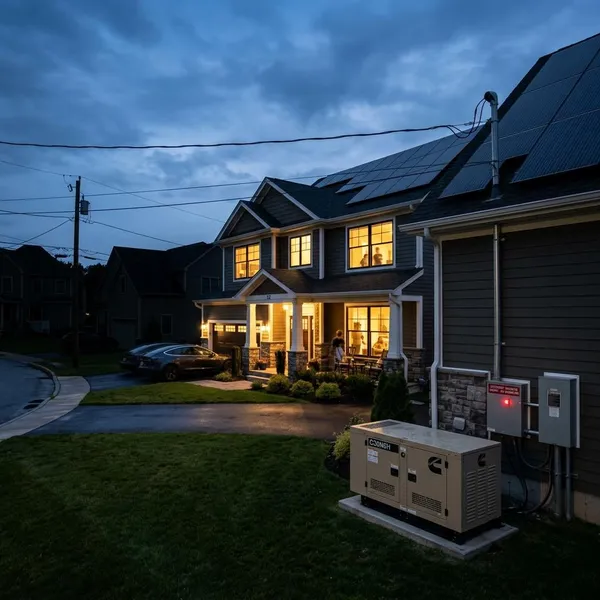
During an outage, a backup-capable system first separates the home from the utility grid. After that, the inverter creates a safe local power supply for the backed-up circuits while solar, batteries, and the generator are managed inside that isolated system.
This is why ordinary grid-tied solar is not the same as solar backup. Many standard solar systems shut down during blackouts for safety, even if the sun is shining.
The system disconnects from the grid safely
The system must disconnect from the grid so it does not send electricity back into utility lines. This protects lineworkers and prevents unsafe backfeed. Backup systems solve this with transfer equipment or integrated switching that isolates the home before local power sources continue operating.
Solar power supports loads during daylight
Once the home is isolated, solar can support the backup loads while the sun is available. On a bright day, it may run essentials and recharge the battery at the same time. On a dark winter afternoon, it may only contribute a small amount, so the battery and generator have to do more of the work.
This is where usage choices matter. A family trying to run only refrigeration, lights, internet, and a few outlets may get much longer battery life than a household that keeps several large appliances on as if the grid were normal.
Batteries provide steady backup power
Batteries smooth out the uneven nature of solar power. They help when clouds pass, when a refrigerator compressor starts, or when the sun goes down. They are also useful for quiet overnight backup, especially if you want to avoid running a generator while people are sleeping.
Generators extend backup during long outages
When battery charge falls to a programmed level, a compatible standby generator can start automatically. Portable generators may require manual setup and may not integrate with the battery system in the same way.
The generator's value is strongest in the difficult scenario: poor solar weather, a long outage, and loads that cannot be turned off. Fuel supply, maintenance, and generator size then become the real limits. A small generator may be enough for essentials, while whole-home backup usually requires more careful sizing and higher fuel use.
What Components Does the System Need?
A reliable system needs more than panels and a generator. The main components must be compatible, correctly sized, and installed so they can operate safely during both normal grid use and outages.
The first practical check is simple: ask whether the proposed solar, battery, inverter, generator, and transfer equipment have been designed as one system. Good individual parts can still perform poorly if they do not communicate properly.
Solar panels generate renewable power
Solar panels provide the everyday renewable energy source. They reduce grid use in normal conditions and support the home during daylight outages. Their backup value depends on array size, shading, roof direction, season, and weather, so solar should be treated as a variable source rather than a guaranteed fixed output.
Inverters manage power conversion
The inverter converts power between the solar panels, batteries, generator input, grid connection, and household circuits. In a backup system, it also helps decide how power flows during an outage.
This is one of the easiest places to make a costly mistake. Some inverters work well with batteries but have limited generator support. Others can coordinate generator charging, load support, and battery protection more smoothly. If generator backup is part of the plan, inverter compatibility should be checked before equipment is purchased.
Generators provide additional energy
The generator supplies extra energy when solar and batteries are not enough. Standby generators are usually easier to automate, while portable generators may be cheaper but more hands-on. Fuel type also matters: natural gas can be convenient where available, propane can store well, and diesel may fit some rural or heavy-duty situations.
Do not size the generator only by asking, "Can it run the whole house?" A better question is whether it can handle the backed-up loads, starting surges from pumps or compressors, and any planned battery charging without being wastefully oversized.
Transfer equipment controls safe operation
Transfer equipment controls how the home disconnects from the grid and which circuits receive backup power. It may be a transfer switch, a backup loads panel, smart switchgear, or equipment built into a hybrid inverter system.
A practical setup often includes three supporting pieces:
- Backup loads panel: keeps essential circuits separate from nonessential ones.
- Monitoring: shows battery level, solar output, load demand, and generator runtime.
- Load control: limits large appliances so one demand spike does not overload the system.
Who Needs a Solar Home With Generator Backup?
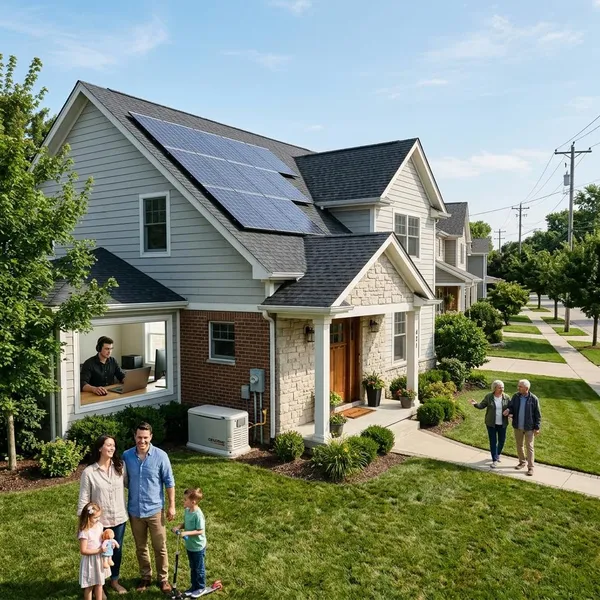
This setup is most useful when losing power creates a real problem, not just a temporary inconvenience. If outages are rare and short, solar plus a battery may be enough. If outages are frequent, long, or tied to storms and poor solar weather, generator backup becomes more convincing.
Outage-prone homes need stronger protection
Homes in storm-heavy areas, wildfire shutoff zones, or weak-grid neighborhoods need to plan for the outage that lasts longer than expected. Battery-only backup can work well for the first hours, but long outages often happen during bad weather, which can limit solar production.
For these homes, generator backup is less of a luxury and more of a risk-control choice. It protects the system from the exact situation where solar and batteries are under the most pressure.
Rural homes need reliable independent power
Rural homes often have longer repair times and more electric-dependent systems, such as well pumps, septic equipment, gates, barns, or detached workspaces. A short outage in town may be an annoyance; the same outage on a rural property can affect water, access, and daily chores.
A layered system gives rural homeowners more options. Solar can reduce fuel use during the day, the battery can cover quiet overnight needs, and the generator can carry the property through low-sun periods or heavier equipment use.
How to Choose the Right Backup Setup?
Start with the outage you are trying to survive, then choose equipment around that. The most useful design questions are not about the biggest battery or generator; they are about what must stay on, for how long, and under what weather conditions.
Match the system with your outage needs
Look at your real outage pattern first. If power usually returns within a few hours, a modest battery system may be enough. If outages often last overnight or several days, especially in winter or storm season, generator backup becomes more practical.
Also consider what happens if fuel is hard to get. A generator can extend backup only when it has a reliable fuel source, so fuel access should be part of the design rather than an afterthought.
Choose backup loads and runtime goals
Before comparing quotes, make two lists: loads that must run and loads that would be nice to run. This one step prevents many oversized, undersized, or disappointing systems.
| Decision point | Practical way to choose |
|---|---|
| Essential loads | Prioritize safety, food storage, water, communication, and required medical needs. |
| Comfort loads | Add only if budget, battery size, inverter output, and generator capacity support them. |
| Quiet runtime | Choose more battery capacity if you want to avoid generator use overnight. |
| Long-outage endurance | Plan generator fuel, maintenance access, and recharge behavior, not just battery size. |
Ask the installer to describe three situations: a sunny daytime outage, an overnight outage, and a multi-day cloudy outage. Those examples reveal much more than a simple equipment list.
Conclusion
The strongest setup is the one matched to your real outage risk: solar for daytime production, batteries for quiet short-term backup, and a generator for the situations where the outage outlasts stored energy. If you choose the right loads first and size the equipment around those needs, the system is easier to live with and far less likely to disappoint when the grid goes down.