
If you are asking how big of a solar generator do I need, start with two numbers: how many watt-hours your devices use in a day, and how many watts they may need at the same time. Battery capacity decides how long you can run things, while inverter output and surge rating decide whether the generator can actually start and support them. For most people, the right size is not the largest unit available, but the smallest setup that covers essentials with a little margin.
What Determines Solar Generator Size?
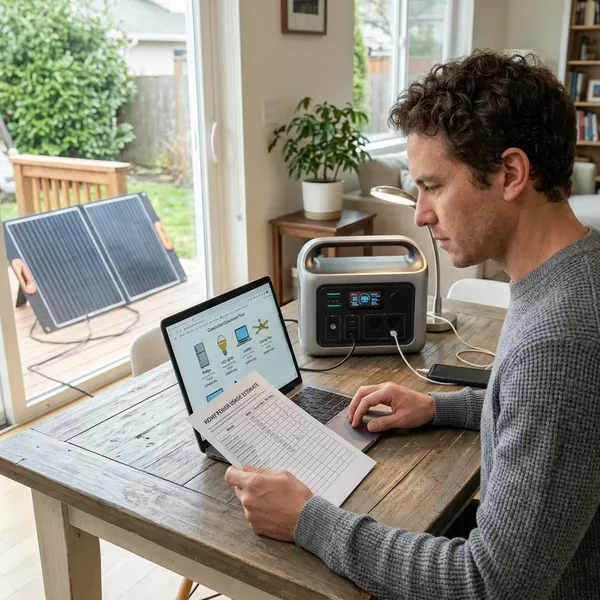
Three specs matter more than the marketing label on the box: battery capacity, inverter output, and surge watts. If one of those is too low, the generator can disappoint even if the other numbers look impressive.
Battery capacity determines backup time
Battery capacity is usually listed in watt-hours, or Wh. A 1,000Wh battery can theoretically run a 100-watt device for about 10 hours, but real runtime is usually lower because the inverter and battery system use some energy too.
This is the first number to check if your main concern is duration. A small unit may be fine for phones, LED lights, and a router during a short outage. If you want to keep a fridge cold overnight or run a CPAP while camping, you need more stored energy, not just a higher peak watt rating.
Inverter output determines supported devices
Inverter output is the continuous wattage the generator can supply at one time. If your connected devices add up to 700 running watts, a 500-watt inverter is not enough, even if the battery is large.
A common buying mistake is choosing a generator with a big battery but a weak inverter. That setup may store plenty of energy, yet still fail when you plug in a microwave, coffee maker, pump, or several devices at once. For daily use, match the inverter to the heaviest combination of devices you realistically expect to run together.
How to Calculate the Right Solar Generator Size?
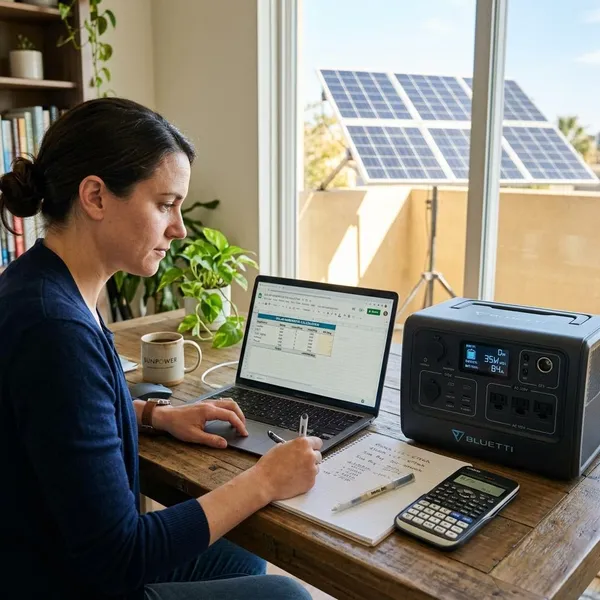
The most reliable sizing method is simple: list your devices, estimate how long each one runs, then separate daily energy use from same-time power demand. Daily watt-hours help you choose battery capacity. Simultaneous watts help you choose inverter size.
List the devices you need to power
Start with essentials, not everything you own. For a short home outage, that may mean the refrigerator, router, phone chargers, a few lights, and a fan. For camping, it may be a cooler, phones, lanterns, camera batteries, and maybe a CPAP machine.
Two different buyers can need very different sizes. A weekend camper who mainly charges phones can often stay small and portable. A household preparing for multi-day outages should size around food storage, communication, and any health-related equipment first.
Check each device running watts
Find the running watts on the product label, manual, manufacturer page, or with a plug-in watt meter. If the label gives amps and volts, multiply them: 2 amps at 120 volts is about 240 watts.
For early planning, a wattage chart is useful, but do not treat it as exact. A compact fridge, older fridge, and energy-efficient fridge can draw very different amounts. When the device is important, check the actual label or measure it.
Estimate daily usage time
Runtime assumptions change the answer quickly. A 60-watt fan used for 2 hours needs 120Wh. The same fan running all night for 8 hours needs 480Wh.
- Temporary outage: you may only need lights, internet, and refrigeration for part of the day.
- Overnight use: fans, CPAP machines, or medical devices need a more careful estimate.
- Camping in summer: cooling and portable fridges may matter more than lighting.
- Winter backup: solar recharge may be slower, so battery margin becomes more important.
Calculate total watt-hours
Multiply each device's running watts by the hours you expect to use it, then add the totals. That gives you a practical daily energy estimate.
| Device | Example use | Daily energy |
|---|---|---|
| Router | 15W for 12 hours | 180Wh |
| LED lights | 20W for 5 hours | 100Wh |
| Fan | 60W for 8 hours | 480Wh |
| Laptop | 60W for 3 hours | 180Wh |
In that example, the total is 940Wh before losses. Adding roughly 15% to 25% margin is sensible for inverter loss, colder weather, imperfect charging, and normal changes in use.
What Can Different Solar Generator Sizes Power?
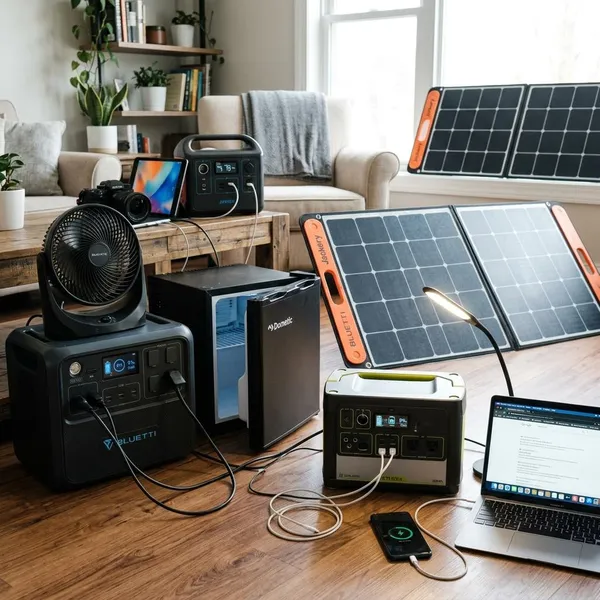
Solar generator size is easier to understand by use case than by model name. The ranges below are general, because different brands pair batteries and inverters differently, but they give a realistic starting point.
Small systems power electronics and basic devices
Small systems, often around 200Wh to 500Wh, are best for low-draw items: phones, tablets, laptops, cameras, routers, LED lights, and small fans. They are easy to carry and store, which makes them useful for car camping, day trips, and short blackouts.
They are not ideal if your plan depends on appliances. A mini fridge or electric blanket can drain this size quickly, and many kitchen devices will exceed the inverter output.
Medium systems support essential appliances
Medium systems, roughly 700Wh to 1,500Wh, are often the most practical middle ground. They can support essentials such as a refrigerator, router, lights, laptops, phones, and a fan if you manage what runs at the same time.
This size makes sense for an apartment or small home where the goal is not to live normally during an outage, but to protect food, stay connected, and keep basic comfort devices running. With enough solar input, it can also work well for RV use or repeated weekend camping.
Large systems handle higher-demand equipment
Large systems usually start around 2,000Wh and often include stronger inverters. They are better suited for longer outages, multiple appliances, freezers, sump pumps, work equipment, or a more comfortable backup setup.
- Good fit: households that lose power often or need more than basic phone-and-light backup.
- Main tradeoff: higher cost, heavier weight, and longer recharge time.
- Important check: the solar input must be strong enough to refill the larger battery in a useful timeframe.
How Do Solar Panels Affect Solar Generator Size?
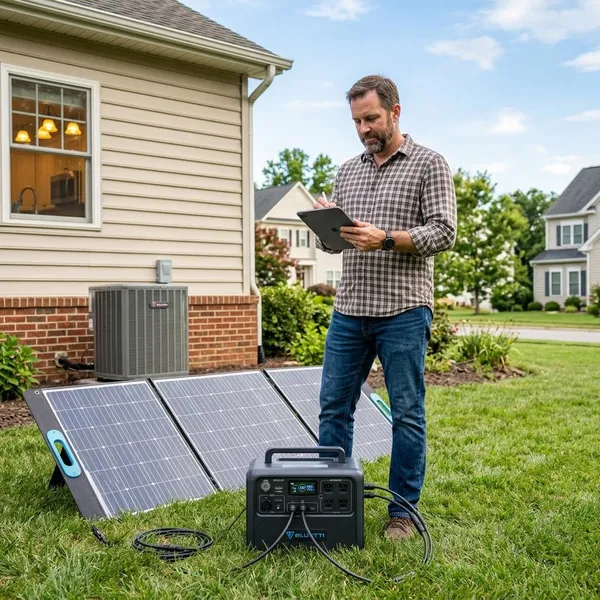
Solar panels do not increase the battery inside the generator, but they change how useful the battery is over several days. A smaller battery that recharges well can be more practical than a larger one that takes too long to refill.
Panel wattage affects recharge speed
Panel wattage controls how quickly you can replace used energy, as long as the generator can accept that input. A 1,000Wh battery paired with a single 100W panel may take much of a good day to recover. With more panel wattage, recharge time can improve noticeably.
A practical target is to recover your typical daily use during one decent day of sun. If you use about 800Wh per day, plan around enough solar input to put back close to that amount under your normal conditions, not under perfect lab conditions.
Sunlight affects daily energy recovery
Real solar output depends on shade, clouds, season, panel angle, heat, and how many strong sun hours you actually get. A panel rated at 200 watts will not produce 200 watts all day.
This matters most in longer outages. Summer camping with open sun is very different from winter backup on a cloudy day. If refrigeration, communication, or medical equipment depends on the system, add charging margin instead of assuming ideal sunlight.
Solar input limits affect charging performance
Every generator has a maximum solar input rating. If the unit accepts only 200 watts of solar input, connecting 400 watts of panels will not make it charge at 400 watts, though extra panel capacity may still help when light is weak.
Before buying panels, check three things: maximum solar watts, voltage range, and connector compatibility. This is a more useful check than simply asking how many panels to buy, because two 200W panels can be perfect for one generator and incompatible or capped on another.
How Long Can a Solar Generator Run?
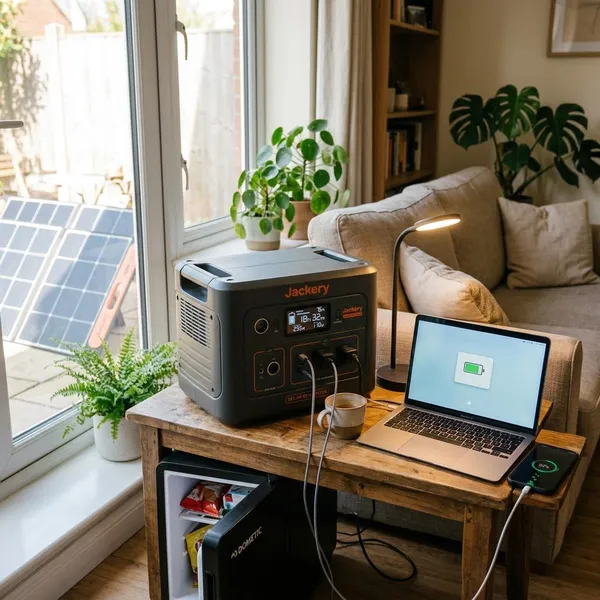
A solar generator runs as long as its usable battery energy can cover the devices plugged into it. Incoming solar can extend that time, but only if charging keeps up with what you are using.
Battery size controls available runtime
The quick estimate is battery watt-hours divided by device watts. A 1,000Wh battery running a 100-watt load has an ideal runtime of about 10 hours before losses. In real use, expect less.
This is why a large inverter does not automatically mean long runtime. A generator may be able to run a high-watt appliance, but if the battery is modest, it may only do so for a short period.
Device power use changes backup duration
Low-watt devices stretch runtime. Lights, routers, and phone chargers can run for a long time compared with heaters, hot plates, coffee makers, or large air conditioners.
Refrigerators are a special case because they cycle on and off. Their startup surge can be high, but their average energy use may be manageable if the door stays closed and the generator can handle compressor startup.
Real conditions reduce expected runtime
Calculations are estimates, not promises. Inverter loss, standby power, cold weather, battery age, and heavier-than-expected use all reduce runtime.
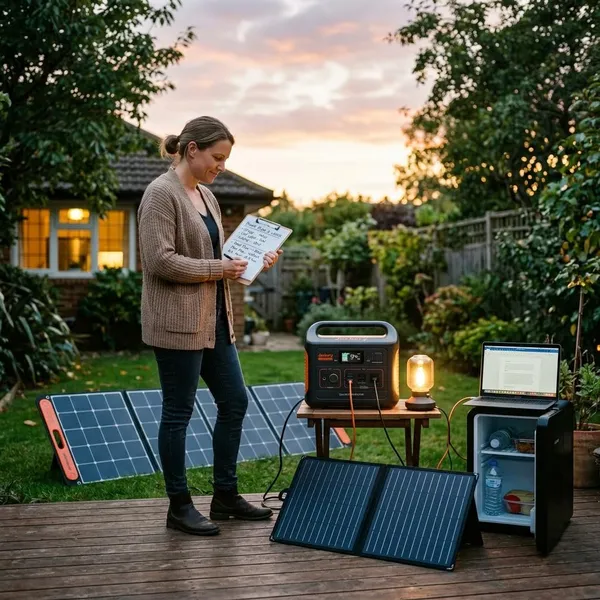
If the generator will support food storage, overnight comfort, or health equipment, test your setup before an outage. Run the actual devices for several hours, watch the battery percentage, and adjust your plan while you still have easy charging options.
Conclusion
The safest way to choose is to size the battery for your daily watt-hours, the inverter for your same-time running load, and the surge rating for anything with a motor or compressor. A small generator is fine for electronics, a medium one is often the sweet spot for essentials, and a large or expandable setup makes more sense when outages are frequent or the loads are more serious. If the numbers are close, choose extra margin on the part that matters most for your situation: runtime, startup power, or daily solar recharge.