
A solar power generator works by collecting sunlight through solar panels, storing that energy in a rechargeable battery, and delivering usable electricity through built-in outlets when you need it. To choose the right one, focus on solar input, battery capacity, inverter output, and the wattage of the devices you plan to run. It can be a quiet, portable, and fuel-free option for backup power, camping, RV use, and small appliances, but it is not always designed to replace a full home electrical system.
How Does a Solar Power Generator Work?
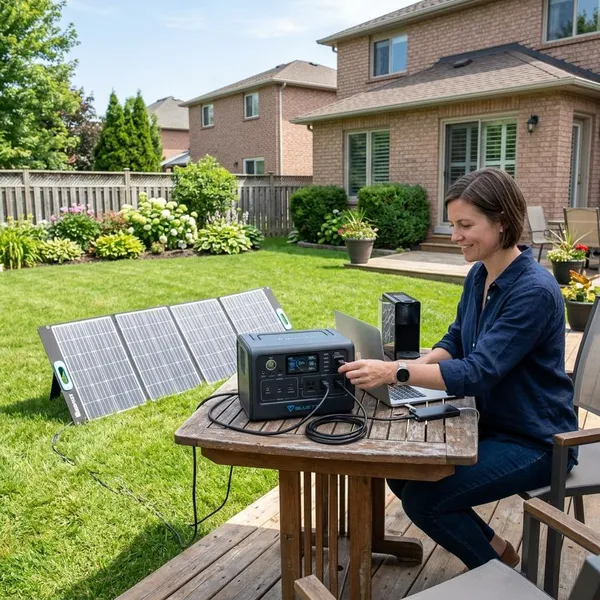
A solar power generator works in four basic stages: panels collect sunlight, a battery stores the energy, an inverter converts it into usable power, and the system sends electricity to the devices you plug in. The most important point is that the battery does the actual backup work. The panels recharge the battery, but your devices are usually running from stored energy.
Solar panels capture sunlight and create power
Solar panels use photovoltaic cells to turn sunlight into direct current, or DC electricity. Strong direct sun gives the best result, while shade, clouds, dirty panels, and low winter sun reduce charging speed.
For a weekend camping setup, a foldable panel in open sun may be enough to keep phones, lights, and a small power station topped up. For home outage backup, small panels can feel slow because the battery may drain faster overnight than the panels can refill it the next day.
The battery stores energy for later use
The battery is what lets the generator work indoors, after sunset, or during a blackout. Capacity is measured in watt-hours, and that number matters more than the number of outlets on the front.
- Small battery: best for phones, lights, tablets, and short outages.
- Mid-size battery: better for routers, laptops, fans, CPAP use, or a small fridge for limited periods.
- Large battery: useful when you need overnight backup or several essentials running together.
The inverter converts power for devices
The inverter changes stored DC power into AC power for regular household outlets. This is the part that decides whether a device can actually start and run, especially if it has a motor or compressor.
Do not look only at battery size. A full battery still may not run a refrigerator, pump, or power tool if the inverter cannot handle the startup surge. For important appliances, compare both the running wattage and surge requirement before you count on the generator.
What Is a Solar Power Generator?
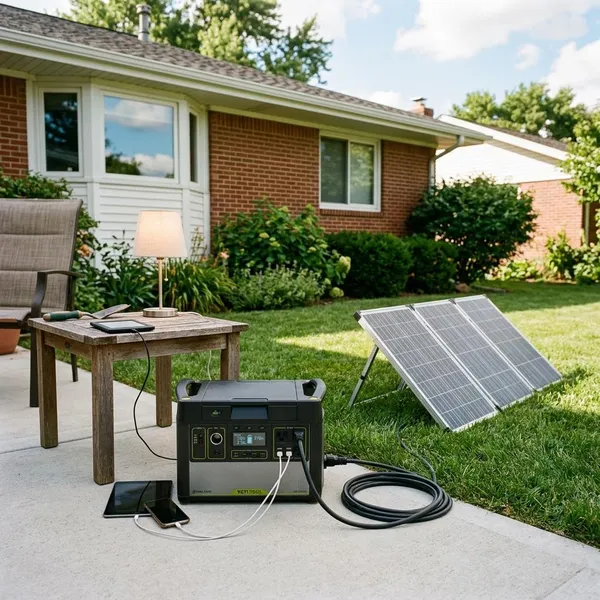
A solar power generator is a portable battery backup system that can recharge from solar panels. Most models also charge from a wall outlet or car socket, which makes them more flexible than the name suggests.
It is a battery backup system powered by solar energy
The simplest definition is this: it is a battery backup system that can be refilled by the sun. You can charge it before a storm, keep it stored, and use solar panels to extend runtime if the outage lasts longer than expected.
It combines panels, batteries, and power controls
A complete setup usually includes solar panels, a charge controller, a battery, an inverter, and output ports. The charge controller and battery management system help regulate charging and protect the battery from unsafe conditions.
What Can a Solar Power Generator Run?
It can power small electronics and essentials
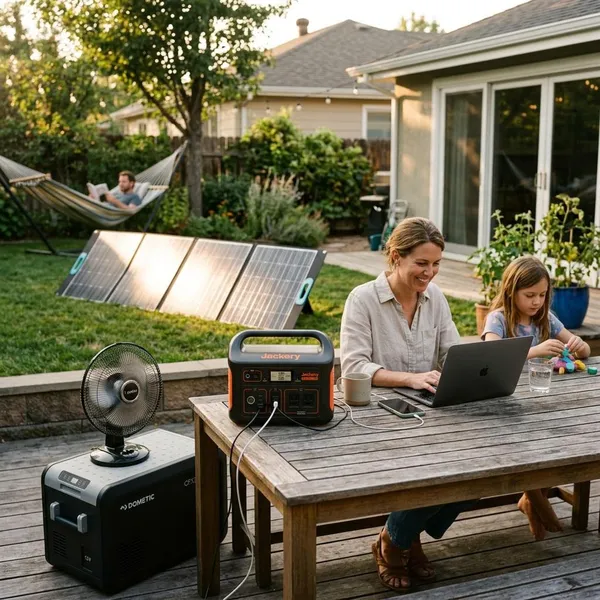
Phones, laptops, tablets, cameras, LED lamps, routers, and small fans are usually the best match. They draw relatively little power, so even a compact unit can be useful during a short blackout or a few days outdoors.
If your main goal is staying connected during storms, this is where a solar generator gives the most value. Keeping a phone, light, and router alive often matters more than trying to run every appliance in the house.
It can support appliances within power limits
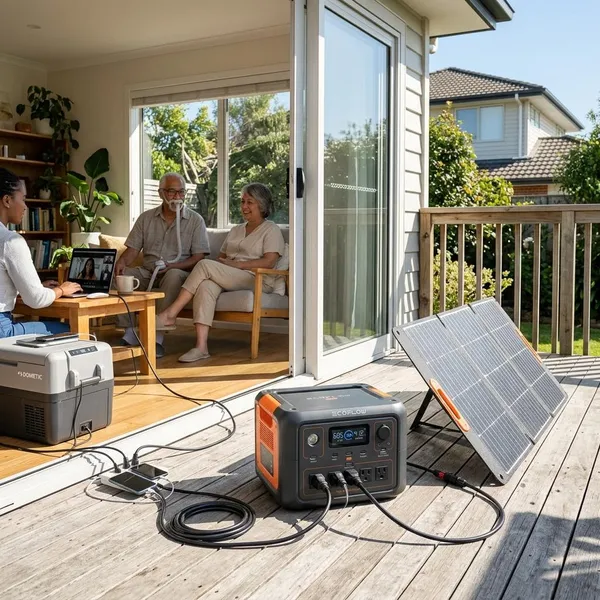
Some appliances work well, but only when the generator is sized correctly. A mini fridge, TV, CPAP machine, or portable cooler may be realistic on a mid-size or larger unit, while a space heater, kettle, microwave, or air conditioner can drain the battery quickly or exceed the inverter rating.
| Load type | Typical fit | What to check first |
|---|---|---|
| Phone, laptop, LED light | Usually easy | Battery capacity |
| Router, fan, CPAP | Often practical | Overnight runtime |
| Refrigerator or pump | Depends on size | Startup surge |
| Heater, kettle, large AC | Often poor fit | High watt draw |
It can run devices based on battery size
Battery size controls endurance. A generator might be able to start a device but still run it for only a short time if the battery is small.
For example, the same battery that keeps a router and several lights running through the evening may power a microwave only briefly. For outage planning, choose your must-run devices first and size the generator around those, not around occasional high-draw items.
Can a Solar Power Generator Work at Night?
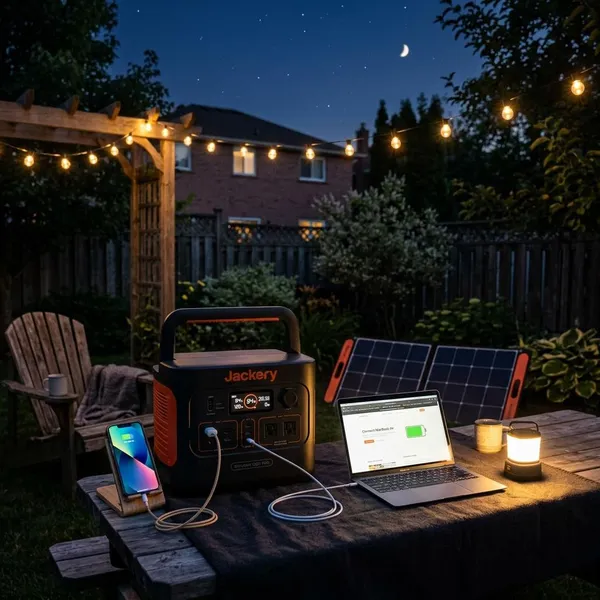
A solar power generator can work at night if its battery was charged earlier. The panels stop producing useful power after sunset, but the stored energy remains available through the outlets.
Night use is mainly a planning problem. If you spend too much energy during the day, there may not be enough left for lights, internet, medical equipment, or a refrigerator overnight.
Stored energy powers devices after sunset
After dark, the generator simply draws from the battery. This is why charging before a storm matters. A full battery gives you options; a half-empty one forces you to ration power much sooner.
Low sunlight slows battery charging
Clouds, shade, short winter days, and poor panel placement can all reduce charging. The battery may still gain power, but not fast enough to replace what you used the night before.
During a multi-day outage, treat weak sunlight as a warning to cut back. Charge phones while the sun is available, turn off convenience loads, and save stored energy for the devices that matter most after dark.
What Are the Benefits and Limits of Solar Generators?
Solar generators are best at quiet, clean, targeted backup. They are not best at running heavy appliances for long periods. That distinction matters because it prevents overspending on the wrong size or expecting a portable unit to act like a whole-house system.
They provide quiet and clean backup power
The biggest everyday advantage is comfort. A battery unit can sit near a desk, bed, campsite, or kitchen counter without engine noise or exhaust fumes.
This is especially useful for low-risk indoor needs, such as keeping a router online or charging phones during a short outage. For high-risk needs, such as medical equipment, test the setup in advance and keep a backup charging plan rather than assuming solar alone will be enough.
They require little maintenance
There is no oil to change, no spark plug to replace, and no fuel to rotate. Basic care usually means keeping the battery from sitting empty for long periods, storing it away from extreme heat, and checking cables and panels before you need them.
They have limited power for heavy loads
Heavy loads are the main weakness. Electric heaters, full-size ovens, large air conditioners, and similar appliances can exceed the inverter rating or drain the battery very quickly.
A better strategy is selective backup: lights, communication, refrigeration if the unit can handle it, and any essential health-related device. Trying to run "normal life" from a portable solar generator is where expectations often break down.
How Does a Solar Generator Compare With Other Backup Options?
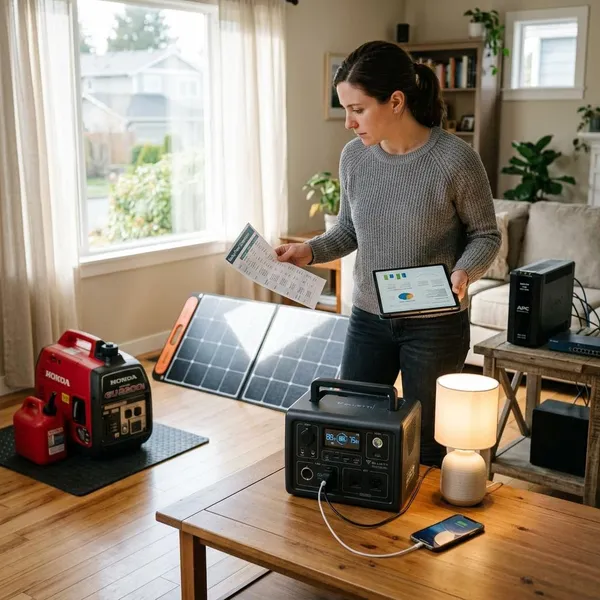
A solar generator sits between small battery banks and larger backup systems. It is more capable than a phone power bank, easier to live with than a gas generator, and far simpler than a permanent home solar battery setup.
The right choice depends less on the label and more on the situation: portable use, short home outages, heavy appliance backup, or long-term whole-home resilience.
Solar generators offer portable energy storage
Portability is the reason many people choose one. Renters can store it in a closet, RV users can move it between trips, and homeowners can use the same unit for storms, backyard work, and outdoor events.
Gas generators provide higher output power
Gas generators usually provide more continuous power for the money. They are often better for large appliances, power tools, pumps, or long runtimes when you can store enough fuel safely.
The trade-offs are noise, fumes, fuel handling, engine maintenance, and outdoor-only operation. If you mainly need indoor-safe power for essentials, a solar generator is usually easier. If you need high output for heavy loads, a gas generator may still be the more practical tool.
Home solar systems support larger energy needs
A home solar system with battery storage is designed for a different scale. It can support selected circuits or broader household loads, depending on the installation, but it costs more and requires professional planning.
That option makes more sense for homeowners thinking about long-term energy resilience. A portable solar generator is better for flexible backup, travel, and smaller emergency needs.
Each option fits different backup situations
For quick comparison, match the backup option to the job:
- Solar generator: quiet portable power for essentials and flexible use.
- Gas generator: stronger output when fuel storage and outdoor operation are acceptable.
- Home solar battery system: larger, permanent backup for homeowners with bigger budgets.
If you only need phones, lights, internet, and a small appliance, a portable unit may be enough. If you need pumps, heating, cooling, or multiple large appliances, look at a higher-output option before buying.
Conclusion
A solar power generator is most useful when you treat it as stored energy with limits, not unlimited free electricity. Check the battery capacity, inverter output, solar charging rate, and the wattage of your must-run devices before buying or relying on one. If those numbers match your real situation, it can be a quiet, practical backup for outages, travel, and everyday portable power.