
A portable power station can last anywhere from a few hours to several days on a single charge, and its battery can remain useful for years depending on how it is used. To estimate runtime, compare the station's watt-hour capacity with the total watts your devices draw, then factor in normal efficiency losses. To understand long-term lifespan, pay attention to battery chemistry, cycle life, heat exposure, storage habits, and how often the battery is drained deeply.
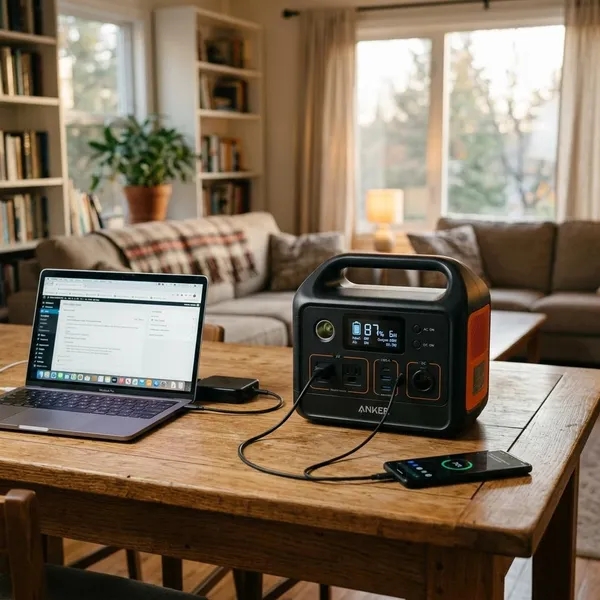
What does portable power station lifespan mean?
"Last" can mean different things with a portable power station, so it helps to separate the question before comparing models. A unit can have enough capacity for one night of camping but still have a short long-term battery life if it is used hard every day. Another unit may have a long cycle rating but still be too small for a fridge or work setup.
The three useful meanings are runtime per charge, battery life over repeated use, and service life of the whole unit.
Runtime means hours per charge
Runtime is the number of hours the power station can run your devices before it needs recharging. A 500Wh station running a steady 50W load looks like 10 hours on paper, but real use is usually a bit lower because the inverter, cables, and connected devices waste some energy.
This is the number that matters most for a short outage, a weekend trip, or overnight use. If your priority is a phone, router, LED light, and laptop, even a smaller unit can feel surprisingly useful. If your priority is a kettle, microwave, heater, or full-size fridge, the same unit may run down very quickly.
Battery life means years of use
Battery life describes how well the battery holds capacity after many charge and discharge cycles. Many brands express this as cycle life, often measured until the battery drops to around 80% of its original capacity. That does not mean the station suddenly stops working; it means it stores less energy than it did when new.
- Occasional use: camping, road trips, or emergency backup may stretch useful battery life over many calendar years.
- Daily use: powering tools, a work setup, or off-grid equipment cycles the battery more often, so wear shows up sooner.
- Hot storage: leaving the unit in a hot car or shed can age the battery even when it is not being used.
Service life means when replacement is needed
Service life is the point where the whole power station is no longer reliable or practical for the job you bought it for. That includes the battery, inverter, charging system, ports, screen, cooling fans, and internal electronics.
A useful way to judge it is by task. If a station once kept your router and CPAP running overnight but now falls short after a few hours, it may still be fine for phones and lights but no longer suitable for higher-priority backup. For medical equipment or critical emergency use, shorter runtime, unusual heat, unreliable charging, or unstable AC output should be treated seriously.
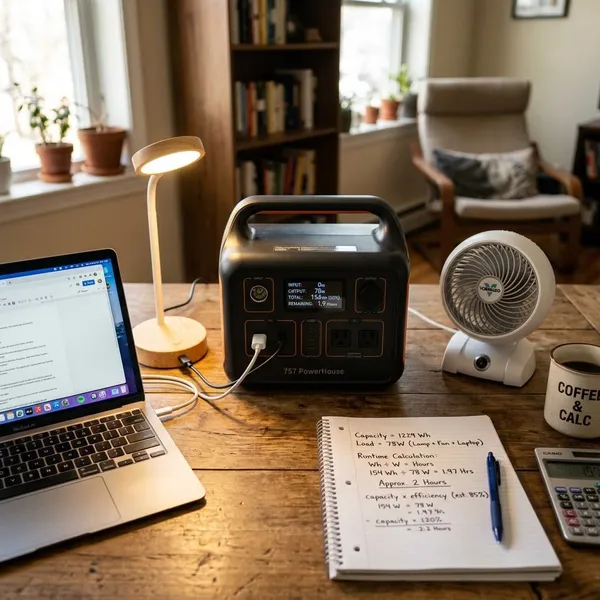
How do you calculate portable power station runtime?
The fastest estimate is simple: divide watt-hours by total watts, then reduce the result for real-world losses. This gives you a working number before you buy, pack, or rely on the station during an outage.
Start with the devices that matter most, not every device you might possibly plug in. For a blackout, that may be internet, lights, a fan, a CPAP, or refrigeration. For camping, it may be phones, a camera, a laptop, and a small cooler. The calculation becomes much clearer when the use case is specific.
Use watt-hours and watts for calculation
Watt-hours tell you how much energy the battery stores. Watts tell you how quickly a device uses that energy. The rough formula is:
Runtime in hours = battery capacity in Wh ÷ device wattage
For example, a 1000Wh power station running a 100W load gives a rough estimate of 10 hours before losses. A 500Wh station running a 25W router-and-light setup could look like 20 hours on paper, while the same 500Wh station running a 500W appliance may last less than an hour in practice.
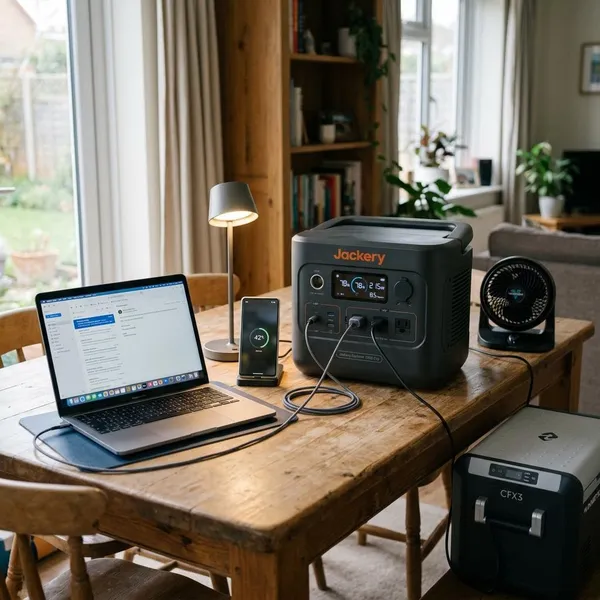
How long can a portable power station run common devices?
Small electronics can run for many hours, middle-range essentials may run for several hours or overnight, and large appliances can drain a battery quickly. The difference is not just device type; it is wattage, settings, temperature, and whether the device runs steadily or cycles on and off.
The numbers below should be treated as planning examples, not guaranteed runtimes. Your best estimate comes from the rated battery capacity, the device's real power draw, and the output port you use.
Small devices run for many hours
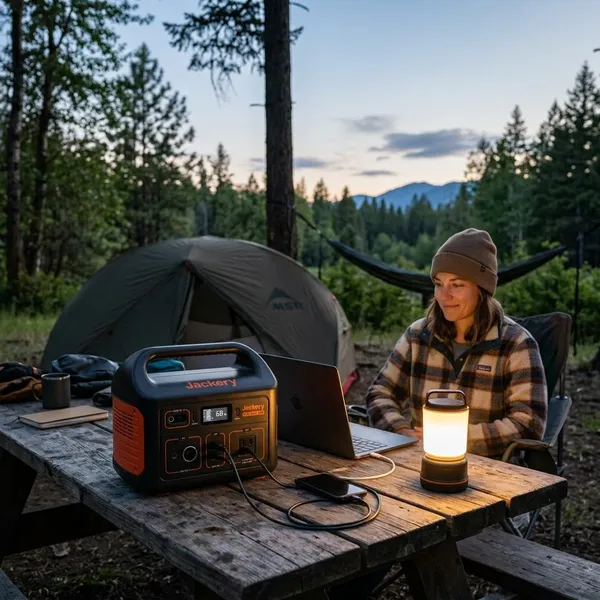
Phones, tablets, cameras, LED lights, routers, earbuds, and many laptops are the easiest loads for a portable power station. A 300Wh to 500Wh unit can be enough for a light-use scenario such as keeping phones charged, running a lamp, and keeping internet active during a short outage.
For a camping weekend, this is often the most practical category. You get useful backup without carrying a very heavy unit. The main decision is whether you only need charging and lighting, or whether you also need cooling, cooking, or medical support.
Large appliances run for shorter periods
Mini fridges, full-size refrigerators, microwaves, coffee makers, kettles, hair dryers, induction cookers, and power tools are much harder on a battery. Heating appliances are especially poor matches because they turn stored electricity into heat very quickly.
Refrigeration needs a more careful check than phone charging. A mini fridge may average far less power than its startup surge, while a hot room or frequent door opening can raise energy use. If food storage or medication cooling matters, check both the running watts and surge requirement, then leave a safety margin instead of sizing the station to the exact number.
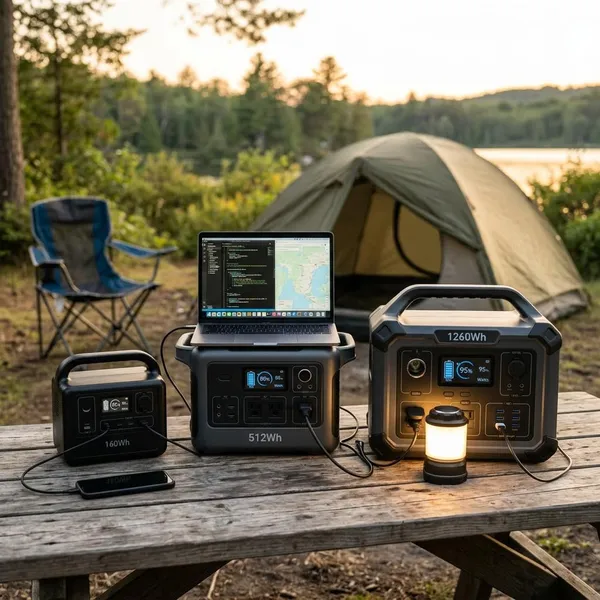
How long do different battery sizes last?
Battery size sets the ceiling for runtime, but it does not tell the whole story. A 500Wh unit and a 2000Wh unit are not just "small" and "large"; they fit different expectations, budgets, weights, and backup plans.
A quick size match is useful before doing detailed math: 300Wh to 500Wh for small electronics, around 1000Wh for longer essentials, and around 2000Wh for heavier backup. After that, confirm the inverter rating and the actual wattage of your devices.
300Wh to 500Wh models fit small devices
A 300Wh to 500Wh power station is best for light, portable use: phones, tablets, laptops, lights, a router, camera batteries, and small travel gear. If your real goal is staying connected during a short outage, this size can be enough.
Where it becomes frustrating is with appliances. A 500Wh station may run a 50W device for roughly 8 to 9 hours after typical losses, but a high-draw kitchen device can empty it fast or exceed the inverter rating. This size is sensible for temporary use, not for trying to act like a small whole-home backup system.
1000Wh models fit longer backup needs
A 1000Wh model is often the practical middle ground. It is much better for overnight essentials, remote work, a CPAP, a fan, lights, internet gear, or a small fridge setup that has been checked properly.
This is also the point where planning mistakes become more expensive. Before buying, decide whether you need a quiet overnight setup, a daytime work backup, or refrigeration support. Those three scenarios can need very different margins even if the battery capacity looks the same.
2000Wh models fit high-power use
A 2000Wh station gives more room for multiple devices and longer outages. It is a better fit when you want to run refrigeration, medical equipment, a work setup, and household essentials in a more controlled way.
It still should not be treated as unlimited power. A heater, kettle, air conditioner, or cooking appliance can drain even a large portable unit quickly. The smarter use is selective: keep the important loads running, avoid energy-hungry conveniences, and recharge from solar, a vehicle, or the grid when available and safe.
How can you make a portable power station last longer?
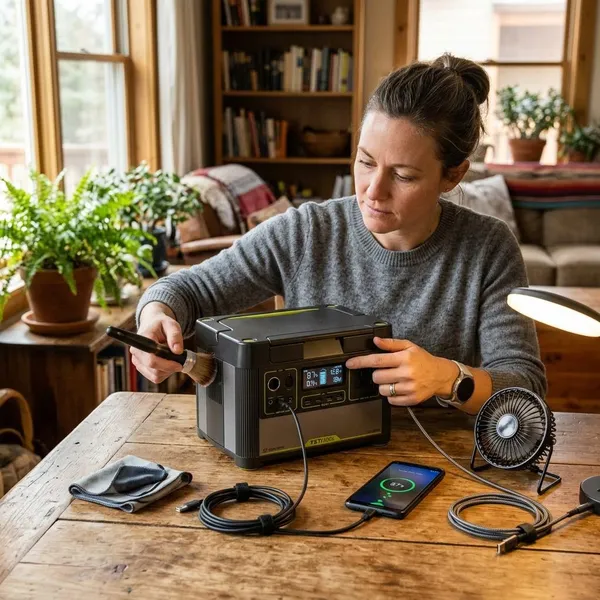
You can extend runtime by wasting less energy during each charge, and you can extend battery life by reducing stress over months and years. Those are different goals, but the best habits often help both.
The first priority is to avoid unnecessary AC use and high-draw appliances. The second is battery care: moderate temperatures, sensible charging, and storage that does not leave the battery completely empty for long periods.
Use the right charging habits
Do not store the station empty after a heavy discharge. Recharge it soon, especially if it will sit unused for a while. Many batteries age better with moderate use than with repeated deep drains followed by long storage at very low charge.
Fast charging is useful when you need the station ready quickly, but it can create more heat. If you use the unit frequently and are not in a hurry, a slower or more moderate charge setting may be gentler when your model offers that option.
Store the battery in proper conditions
Heat is one of the easiest ways to shorten battery life. Long-term storage in a hot car, garage, shed, or direct sun is a bad tradeoff, even if the station is turned off. A cool, dry indoor spot is usually the safer choice.
- Emergency-only use: check the charge every few months so the unit is ready when needed.
- Seasonal camping use: store it partly charged between trips instead of leaving it empty all winter.
- Frequent work use: watch for rising fan noise, unusual heat, or noticeably shorter runtime.
Conclusion
The best estimate starts with a simple order: check battery watt-hours, add your must-run device watts, allow for inverter losses, then ask whether the inverter can handle startup surge. A small unit is perfectly reasonable for lights, phones, internet, and travel gear, while fridge backup, CPAP use, or longer outages deserve more capacity and more margin. If the station is for comfort, you can size it more casually; if it is for sleep, food, medical needs, or emergency reliability, plan with conservative numbers and avoid wasting power on nonessential loads.