
The safest way to charge a portable power station is to match the charging method to your situation: use a wall outlet when you want the fastest refill, a car outlet while driving, and solar panels when you are away from grid power. Before plugging anything in, check the input port, voltage range, connector type, and maximum input wattage for your specific model.
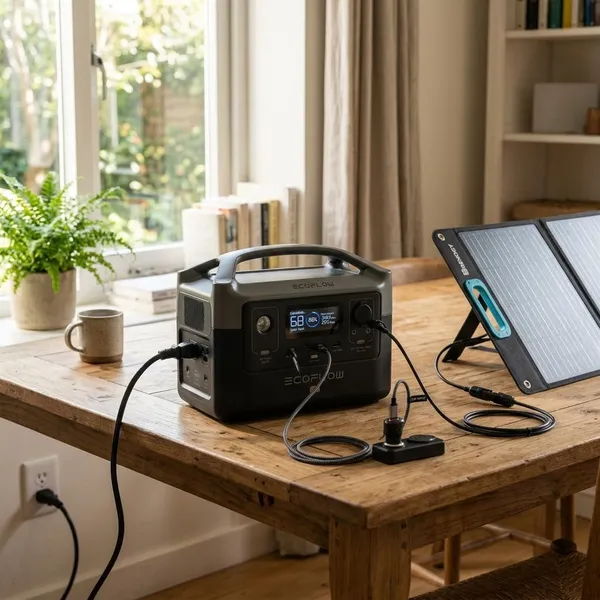
What are the main ways to charge a portable power station?
Most portable power stations charge through three practical methods: AC wall power, a 12V vehicle outlet, or compatible solar panels. Some smaller or newer models also accept USB-C input, but that is usually a secondary option unless the manual clearly lists it as a supported charging source.
Wall outlet for fast charging
A wall outlet is usually the best choice at home because it gives the most predictable charging speed. If you are preparing for a power outage, leaving for a weekend trip, or want the battery ready the same day, start with AC charging before considering slower options.
Car outlet for travel
Car charging is useful for topping up during a drive, not for quickly filling a large battery from empty. It makes sense on road trips, camping travel days, or van use where the power station can gain charge while the vehicle is already running.
For a small unit, a few hours of driving may make a noticeable difference. For a larger power station, treat the car outlet as a backup or maintenance source rather than your main charging plan.
Solar panels for off-grid charging
Solar is the most independent option, but it is also the most condition-dependent. It works well for camping, RV use, cabins, and emergency setups if your panels match the power station's solar input limits.
- Best use: longer outdoor stays with good sun exposure.
- Weak point: shade, clouds, poor angle, and winter light can slow charging heavily.
- Main mistake: buying panels before checking voltage, connector, and input wattage limits.
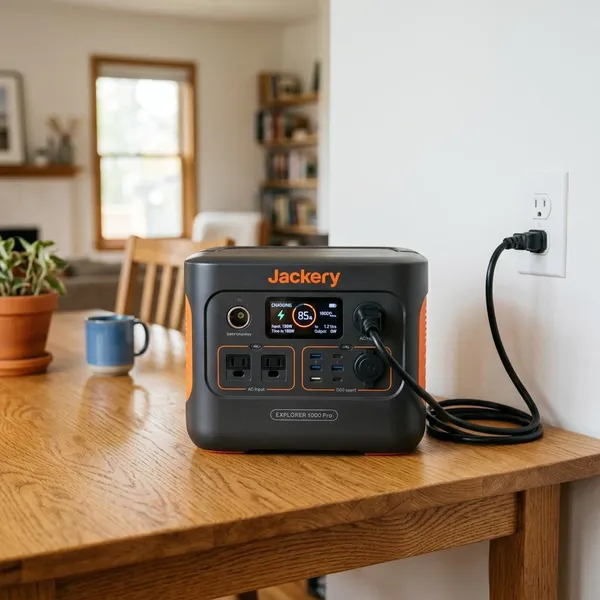
How do you charge a portable power station from a wall outlet?
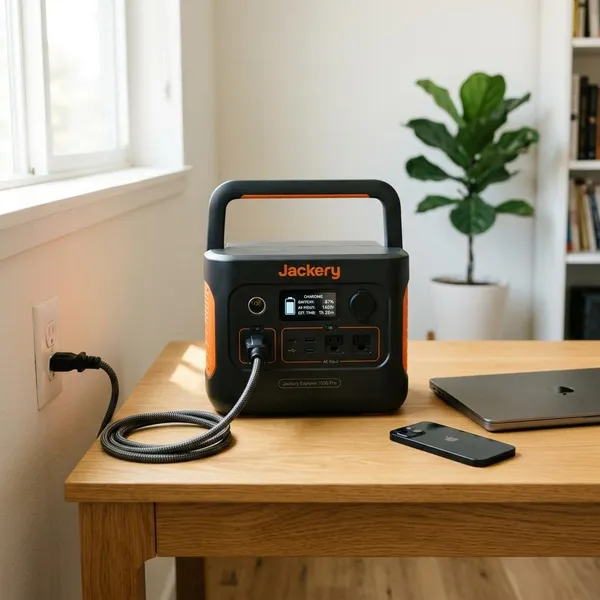
To charge from a wall outlet, use the supplied AC charger or approved cable, connect it to the correct input on the power station, then plug it into a working household outlet. The display should show charging status, input watts, or a battery icon once power is flowing.
Check the charger and input port
Start with the charger because this is where many charging problems begin. The safest option is the original charger that came with the unit; if you are using a replacement, compare the output rating, connector size, and supported input type before using it.
- Confirm the charger is made for your model or approved by the brand.
- Inspect the cable, brick, and plug for damage or unusual heat marks.
- Check that the input port is clean and not loose.
- Use the AC input, not an output socket on the power station.
Connect the power station to AC power
Place the unit on a hard, dry surface with clear airflow, then connect the charger to the power station before plugging it into the wall. If the screen does not show incoming power after a few seconds, try a different outlet and check whether the charger connection is fully seated.
Avoid charging under blankets, inside a closed storage box, or in direct heat. Overnight charging may be fine for many modern models, but a ventilated spot is still the better habit.
How do you charge a portable power station in a car?
You can charge a portable power station in a car if your model supports vehicle input and you have the correct 12V charging cable. This method is most useful while driving, because long charging sessions with the engine off can drain the vehicle's starter battery.
Use the correct car charging cable
Do not treat car charging cables as universal. Many look similar, but the connector, polarity, current rating, and fit can vary between power stations.
If the plug feels loose, gets unusually warm, or repeatedly cuts in and out, stop using it. A poor connection can turn a simple top-up into a reliability problem, especially on bumpy roads.
Connect to the vehicle outlet
Plug the car adapter firmly into the vehicle's 12V outlet, then connect the other end to the power station's charging input. The input wattage will usually be much lower than wall charging, so do not assume something is wrong just because the number looks modest.
- Try another outlet if charging does not start.
- Check whether the outlet only works when the ignition is on.
- Avoid using loose splitters for high-current charging.
Charge while the engine is running
For short top-ups, some vehicles may power the outlet while parked, but it is still safer to charge while the engine is running or while you are actively driving. This matters most with larger power stations, cold weather, or an older car battery.
A practical rule: if you would be annoyed by a flat car battery, do not leave the power station charging from the vehicle while you walk away for a long stop.
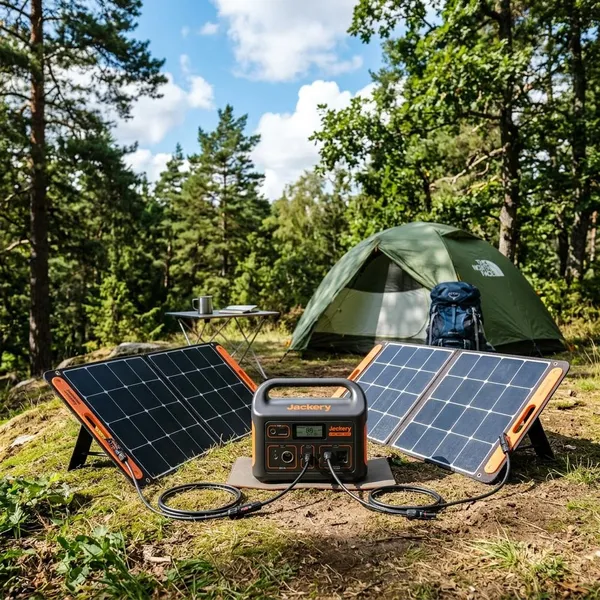
How do you charge a portable power station with solar panels?
Solar charging starts with compatibility, not sunlight. The panels must stay within the power station's accepted voltage, current, connector, and wattage limits before you connect them.
Check the solar input limits
Look for the solar or DC input range on the power station label or in the manual. The most important number to respect is the maximum input voltage; exceeding it can damage the unit, while too little voltage may prevent charging from starting.
If you are buying panels separately, check the panel's open-circuit voltage and total wattage before you buy, not after the box arrives.
Match the panel voltage and connectors
Your solar setup needs both electrical and physical compatibility. Common connectors include MC4, XT60, and barrel-style plugs, but the connector alone does not prove the panel is safe for the unit.
- Voltage: keep it inside the station's accepted solar input range.
- Connector: use the correct plug or a proper adapter.
- Polarity: make sure positive and negative match the unit's requirements.
- Panel wiring: series raises voltage; parallel raises current.
Place the panels in direct sunlight
Set the panels where they have clear, direct sun with no branch, roof edge, chair, or backpack casting shade across them. Even partial shade can reduce output far more than expected.
For a weekend campsite, it may be worth moving the panels away from the tent or vehicle once the sun shifts. For a more permanent shed or cabin setup, choose the sunniest location first, then think about cable length second.
Adjust the panels for better input
Solar panels perform better when they face the sun more directly. If your power station display shows input watts, use that number as feedback: adjust the panel angle, wait a moment, and keep the position that produces better input.
Midday sun usually gives the strongest charging. Early morning, late afternoon, cloudy weather, and winter conditions can still work, but they are not good times to judge the full potential of your panel setup.
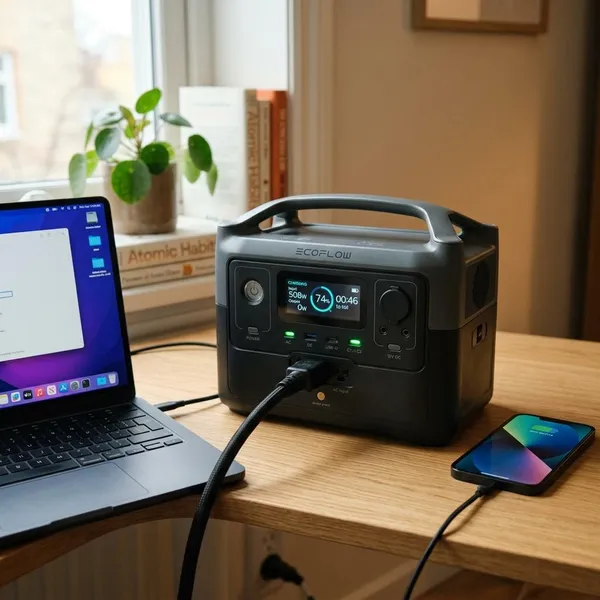
How long does a portable power station take to charge?
Charging time depends mainly on battery capacity and real input power. A small unit on a strong wall charger may refill in a few hours, while a large unit on a car outlet or weak solar setup can take much longer.
Battery capacity affects charging time
Battery capacity is usually shown in watt-hours, such as 300Wh, 500Wh, or 1,000Wh. A larger number means more stored energy, so it normally takes longer to fill if the charging input is the same.
This is why a compact power station can feel quick and easy to manage, while a high-capacity unit for refrigerators, tools, or backup power needs more planning before a trip or storm.
Input power affects charging speed
Input wattage is the other half of the charging-time question. A power station that accepts high AC input will generally charge much faster from the wall than one limited to a low-watt charger.
The last part of charging may slow down as the battery gets close to full. That slowdown is normal on many battery systems and does not always mean the charger is failing.
Charging method affects charging time
Use the charging method as a rough planning guide rather than a fixed promise:
| Charging source | What to expect | Best for |
|---|---|---|
| Wall outlet | Most predictable and usually fastest | Home prep, outages, quick refills |
| Car outlet | Slow but useful while driving | Travel top-ups and road trips |
| Solar panels | Depends heavily on sun and panel size | Camping, RVs, off-grid use |
| USB-C, if supported | Useful on some smaller models | Light-duty charging or backup input |
Sunlight affects solar charging time
Solar charging time can change dramatically from one day to the next. A clear summer day with well-angled panels may add useful energy quickly, while cloud cover, shade, or low winter sun can stretch the same charge over much longer.
If you rely on solar every day, watch the input watts on the display for a few real sessions. That gives you a better estimate than the panel's advertised wattage alone.
Conclusion
Choose the charging method by priority: wall outlet for speed, car outlet for travel top-ups, and solar when grid power is not available. The most important habit is checking the input limits before using a new charger, cable, or panel, because the wrong accessory can be slower at best and unsafe at worst.