
The safe way to connect a backup generator to a house is to keep generator power separated from utility power and feed the home only through approved equipment. For most homes, that means a transfer switch, a panel-compatible interlock kit, or extension cords used only for individual appliances. The first thing to decide is not "how much can I power?" but "which connection method keeps people, wiring, and appliances safe?"
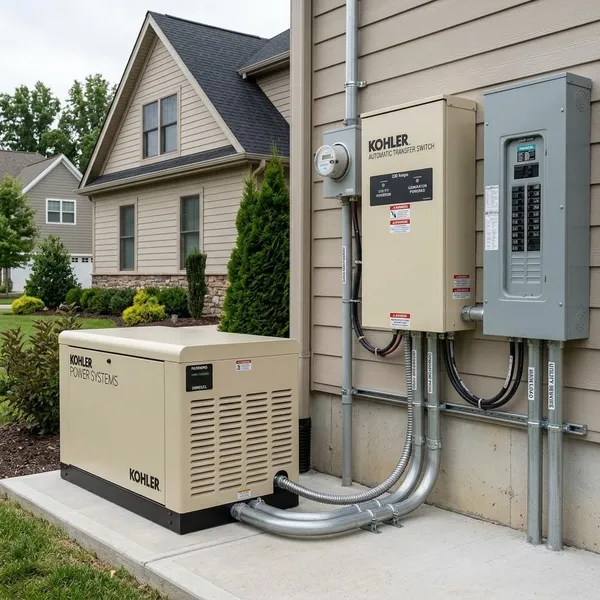
How does a backup generator power a house?
A backup generator produces temporary electricity, but it should not be allowed to mix with utility power. A safe home setup gives the generator one controlled entry point, one approved switching method, and a clear list of circuits or appliances it can support.
That matters during a real outage because generator power is limited. A small portable unit may be enough for a refrigerator, a few lights, internet equipment, and a furnace blower, but it may struggle if a pump, microwave, and electric heater all start at the same time.
A transfer switch controls power between the generator and home
A transfer switch is designed to choose one power source at a time: utility power or generator power. That separation helps prevent backfeeding, which can send electricity out onto utility lines and create a serious hazard for lineworkers.
For a household that wants a predictable outage routine, this is often the easiest setup to live with. The important circuits are selected ahead of time, so no one has to run cords through the house or guess which breaker to use when the lights are already out.
An inlet box creates a proper generator connection point
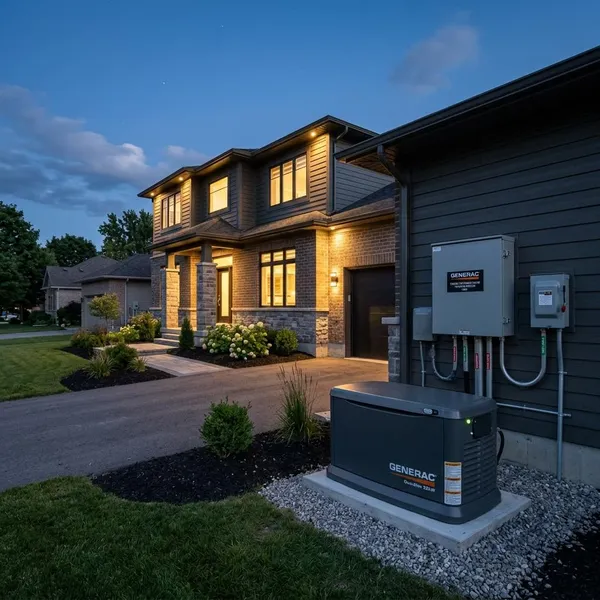
The inlet box is the outdoor connection point for the generator cord. Instead of feeding power through a dryer outlet or another unsafe shortcut, the generator connects to a dedicated inlet that is wired to the transfer switch or approved interlock setup.
- Match the ratings: the inlet, breaker, cord, and generator outlet need compatible amperage and voltage.
- Place it sensibly: it should be reachable during bad weather but not exposed to damage.
- Keep the generator outside: the inlet does not make an attached garage or porch a safe generator location.
Circuit selection determines which appliances get backup power
Circuit selection is where the backup plan becomes practical. Start with the loads that protect health, food, heat, drainage, or communication before thinking about convenience appliances.
A winter outage and a summer outage may call for different priorities. In winter, furnace controls and a blower may matter most; in storm season, a sump pump or well pump may be the circuit that prevents the biggest problem. If someone in the home relies on powered medical equipment, that load should be treated as a high-priority planning item rather than an afterthought.
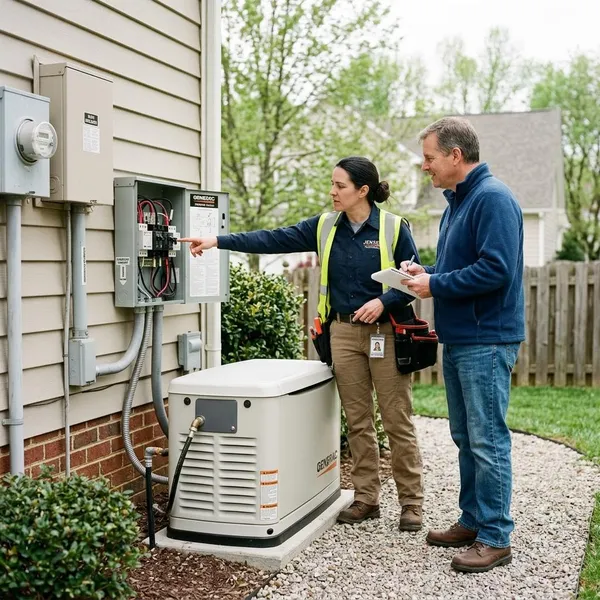
Which generator connection method is right for your home?
The right method depends on how often you lose power, what you need to run, and whether your electrical panel can accept approved generator equipment. A temporary "keep the fridge cold" plan is different from a long-term setup for repeated outages.
| Connection method | Best fit | Main caution |
|---|---|---|
| Transfer switch | Essential circuits with simple operation | Circuits are usually chosen in advance |
| Interlock kit | Compatible panels and users comfortable managing breakers | Load control is more hands-on |
| Extension cords | Short outages and individual appliances | Do not connect to house wiring |
Transfer switches work best for essential circuit backup
A transfer switch is a strong choice if you want a repeatable, low-confusion setup. It works especially well for essentials such as refrigeration, selected lights, furnace controls, a sump pump, or a few receptacles.
This method is less flexible than powering many panel circuits on demand, but that can be a benefit. If the generator is modest in size or several people may need to operate it, a preselected circuit plan reduces the chance of overloading the generator by accident.
Interlock kits work best for compatible electrical panels
An interlock kit can be safe only when it is listed for the exact panel and installed correctly. Its purpose is to mechanically prevent the main breaker and generator breaker from being on at the same time.
The appeal is flexibility: you can choose different branch circuits depending on the outage. The trade-off is responsibility. If you turn on too many loads, or if the kit is not approved for the panel, the setup can become unsafe or unreliable.
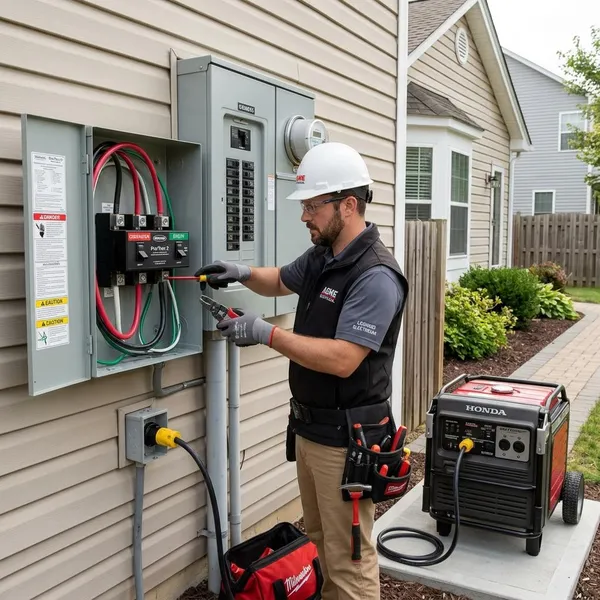
How do you connect a portable generator with a transfer switch?
With a transfer switch setup, the permanent electrical work is normally handled before the outage. During the outage, the homeowner's job is to place the generator safely, connect the correct cord, start the unit, and switch on the selected circuits in a controlled order.
That division is important. Installing the switch and inlet involves panel work; operating the generator is a routine you can practice ahead of time.
Install the transfer switch and inlet correctly
The transfer switch, inlet box, breaker protection, and wiring need to match the generator and the circuits being backed up. In many areas, this work requires a permit, inspection, or a licensed electrician.
Before buying parts, decide what you actually need to run. A homeowner who only wants refrigeration and lights may not need the same setup as someone with a well pump, sump pump, furnace blower, and work-from-home equipment.
Connect the generator with the proper cable
Use a listed generator cord that matches the generator outlet and the inlet box. The plug style, amperage rating, and wire size all matter.
Do not use homemade adapters, double-male cords, or improvised cables. If the cable does not fit without a questionable workaround, the setup is not ready to use.
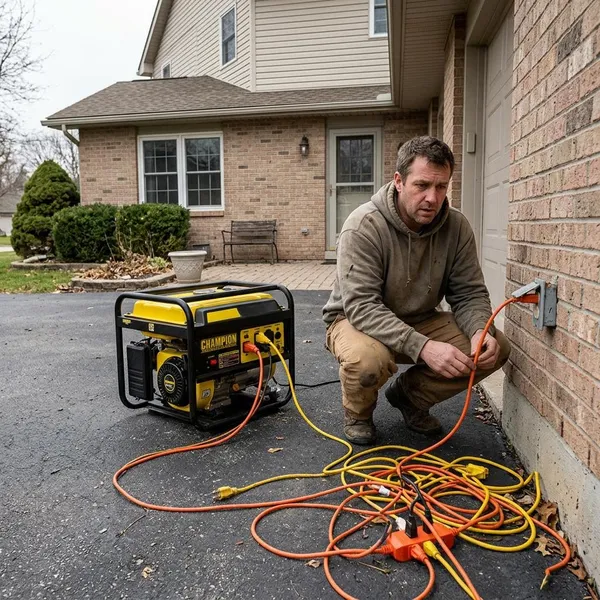
What mistakes should you avoid when connecting a generator?
The biggest mistakes are usually shortcuts that seem convenient during an outage: feeding a panel through a receptacle, using the wrong cord, overloading the generator, or running the unit too close to the house. A setup that makes the lights turn on is not automatically safe.
Never plug a generator into a wall outlet
Do not plug a generator into a wall outlet, dryer outlet, or any regular household receptacle to power the home. That can backfeed the wiring and utility lines, creating a shock hazard and possible equipment damage when utility power returns.
If your plan depends on a double-male cord or a "quick" connection through an existing outlet, stop. Use a proper inlet with a transfer switch or approved interlock instead.
Avoid overloaded circuits and undersized cords
Generators have running limits and short surge limits, and motor-driven appliances often need extra power to start. Refrigerators, pumps, furnace blowers, and some power tools can briefly draw more than their normal running load.
A simple check helps: list the appliances you want to run, note which ones have motors or heating elements, and avoid starting several of them together. If a cord feels warm, breakers trip, or the generator sounds strained, reduce the load rather than trying again with the same setup.
Keep generators away from unsafe areas and poor ventilation
Run the generator outdoors only, away from doors, windows, vents, attached garages, crawlspaces, and enclosed porches. Carbon monoxide can build up even when a garage door is open, so "partly outside" is not safe enough.
- Choose open air: follow the manufacturer's clearance guidance.
- Keep it dry and stable: avoid puddles and soft ground.
- Use CO alarms indoors: they are backup protection, not permission to place the generator closer.
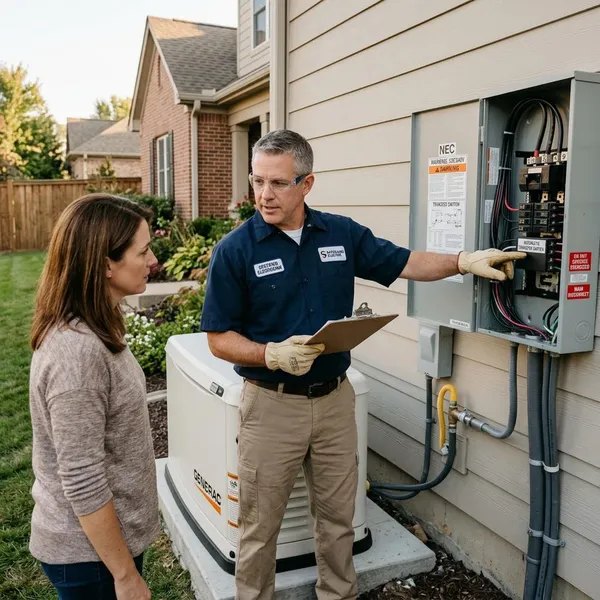
Do you need an electrician to connect a backup generator?
For panel-based generator connections, an electrician is usually the sensible choice and may be required by local rules. Using extension cords for individual appliances is one thing; adding an inlet, transfer switch, generator breaker, or interlock involves permanent electrical work.
This is an area where "it works" is not the standard. The setup needs to isolate utility power, use correctly sized components, and meet the rules where you live.
Electrical panel work usually needs professional help
Panel work can involve shock, fire, and code-compliance risks. A licensed electrician can confirm whether your panel supports a transfer switch or a listed interlock kit, and whether the generator connection matches the intended load.
Professional help is especially important for older panels, crowded panels, homes with well pumps or large motor loads, and any setup expected to serve the home repeatedly rather than once in an emergency.
Local rules determine permits and inspections
Permit and inspection requirements vary by location. Transfer switches, inlet boxes, interlock kits, and standby generator systems are commonly subject to local electrical rules.
Before installing equipment, ask the local building department or an electrician who regularly works in your area. An inspected installation can also make future service, insurance questions, or home resale easier to handle.
DIY options are limited for electrical connections
DIY work is safest when it stays away from permanent house wiring. You can still do useful preparation without opening the electrical panel.
- Make a priority list: decide which appliances matter first during an outage.
- Check appliance labels: note running watts and which loads have motors or heating elements.
- Practice the routine: start, connect, load, unload, cool down, and refuel safely.
- Label essentials: make the outage process clear for anyone in the household.
If the goal is to power house circuits instead of one or two appliances, treat the electrical connection as a professional installation and the daily operation as your part of the plan.
Conclusion
A safe generator setup starts with the connection method, not the generator size. Use extension cords only for individual appliances, choose a transfer switch for a simple essential-circuit plan, and consider an interlock only when the panel is compatible and the user can manage loads carefully. If the setup touches the electrical panel, getting it installed and checked properly is usually cheaper than discovering a mistake during the outage you were trying to prepare for.