Connecting a solar generator to house power must be done in a way that protects your home, utility workers, and the generator itself. For simple backup power, the safest option is to plug essential appliances directly into the solar generator. If you want to power selected household circuits through the breaker panel, use a properly rated transfer switch or interlock installed according to local electrical code. Never connect a solar generator to a wall outlet, as backfeeding can create a serious shock and fire hazard.
Can You Connect a Solar Generator to a House?
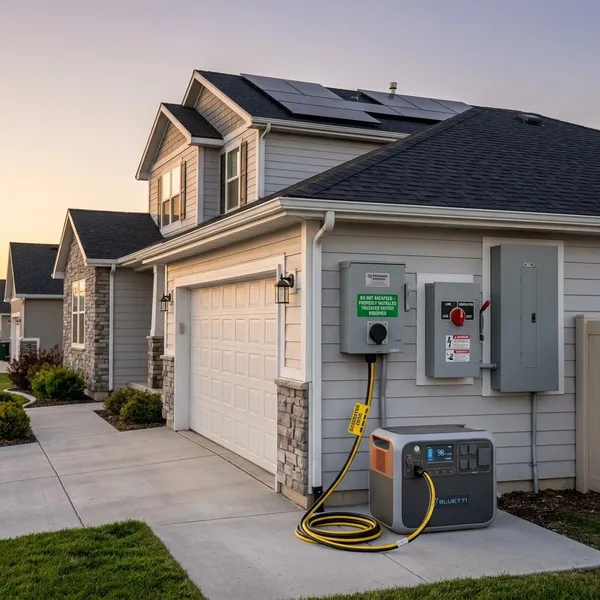
Yes, but "connect" can mean two very different things. A simple setup powers appliances from the generator's own outlets. A more permanent setup powers selected home circuits through a transfer switch, interlock kit, backup panel, or smart panel installed for that purpose.
The first thing to check is not the biggest advertised watt number. Check what you actually want to keep running: refrigerator, lights, internet, medical device, furnace controls, sump pump, or office equipment. Then compare those loads with the generator's running watts, surge rating, and battery capacity.
You can power selected home devices safely
The lowest-risk option is to plug selected devices directly into the solar generator. This works well for a refrigerator, modem, phone chargers, LED lamps, a CPAP machine, a fan, or a small appliance used briefly.
For a short outage in an apartment or rental, this may be all you need. Put the generator where the manufacturer says it can be used safely, use properly rated cords, and avoid trying to make the home's wall outlets work.
You need proper equipment for circuit backup
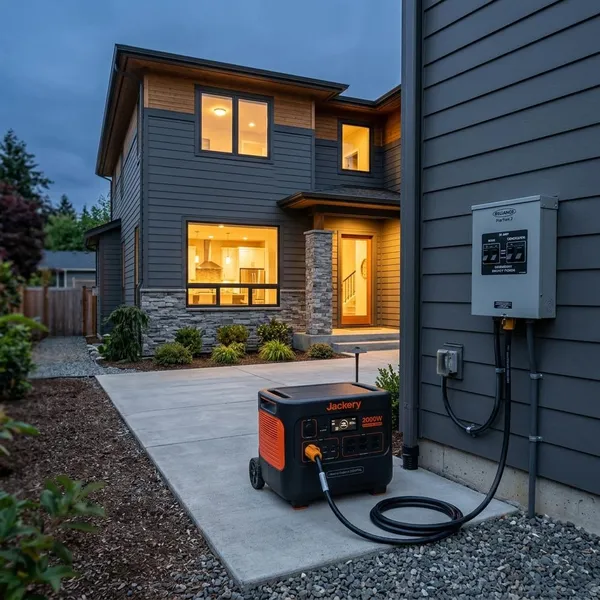
If you want built-in lights, kitchen outlets, a furnace blower, or a sump pump circuit to run from the generator, you need equipment that isolates your house from utility power. That usually means a transfer switch, an approved interlock setup with an inlet, a backup panel, or a smart load panel.
- Use cords when only a few plug-in devices matter.
- Use transfer equipment when you want selected circuits to work normally.
- Use professional design when the setup includes pumps, heating equipment, or panel work.
How Does a Solar Generator Power a House?
A solar generator stores energy in a battery and sends usable AC power through an inverter. The connection method decides where that power goes: directly to appliances, or into selected home circuits through approved backup equipment.
Think of it in two parts. The inverter decides what can run at the same time. The battery decides how long it can run. A generator might start a refrigerator easily but still run out of battery overnight if too many extra loads stay on.
Direct connections power individual appliances
Direct connection is the simplest setup: appliance plug to generator outlet. It is practical for temporary outages because there is no panel work, no utility isolation issue, and fewer things to operate incorrectly when the power goes out.
The trade-off is convenience. Ceiling lights, fixed outlets, and hardwired equipment will not automatically work. If your goal is "keep food cold and phones charged until power returns," direct connection is often sensible. If your goal is "keep the house functioning normally," it will feel limited.
Backup systems power selected home circuits
A backup circuit system lets the generator feed chosen circuits instead of loose appliances. This can make outages much easier because the refrigerator outlet, a few lights, or a furnace control circuit may work from their normal switches and receptacles.
The important choice is which circuits deserve backup. A good list is usually short:
- Refrigerator or freezer
- A few LED lighting circuits
- Internet and phone charging outlets
- Heating controls or furnace blower, if compatible
- Sump pump or medical equipment, if truly necessary
Adding too many circuits does not make the system stronger. It often makes overloads and short runtime more likely.
What Are the Safe Ways to Connect a Solar Generator?
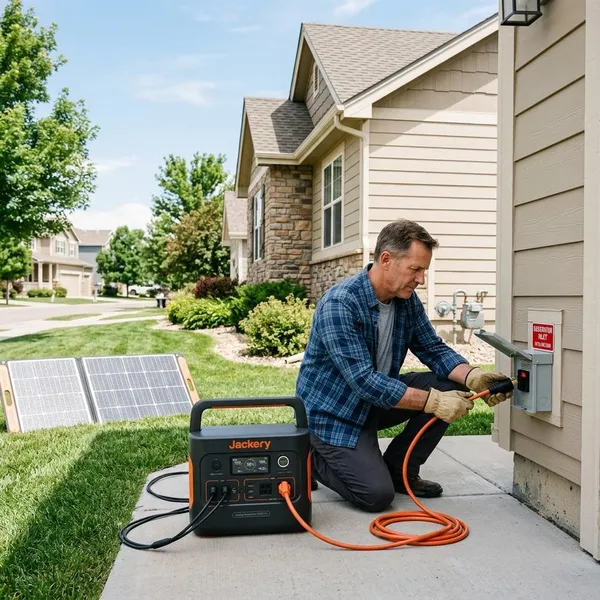
The safe method depends on how much of the house you want to support. For occasional use, extension cords may be the cleanest answer. For repeated outages or hard-to-reach appliances, a panel-based solution is usually more convenient, but it needs proper isolation and code-compliant installation.
| Connection method | Best fit | Main caution |
|---|---|---|
| Extension cords | Temporary power for a few plug-in devices | Use rated cords and avoid overloading strips |
| Transfer switch | Predictable backup for selected circuits | Circuits must match generator capacity |
| Interlock kit | Panel connection where allowed by code | Requires correct inlet, breaker setup, and load discipline |
| Smart panel | Automatic management of critical loads | Higher cost and more complex installation |
Extension cords power individual appliances
Extension cords are safe when they are used as appliance cords, not as a way to energize house wiring. Use heavy-duty cords rated for the load, keep runs as short as practical, and do not daisy-chain multiple cords or cheap power strips.
This setup suits a low-risk, short-term outage: refrigerator, lamp, router, and chargers. Labeling the cords ahead of time is a small detail that helps when the power fails at night and you do not want to think through every connection from scratch.
Transfer switches connect backup circuits
A transfer switch is one of the clearest ways to power selected circuits safely. It switches chosen circuits away from utility power and over to generator power, preventing backfeed while keeping the backup loads organized.
This is a strong choice for a homeowner who wants the same essential circuits every time: refrigerator, a few lights, furnace controls, or a sump pump. The downside is that you must choose circuits carefully before installation, because the generator still has a fixed output limit.
Why Should You Never Plug a Solar Generator Into a Wall Outlet?
Plugging a solar generator into a wall outlet to power the house is unsafe. That kind of improvised backfeed can energize wiring in ways the home electrical system was not designed to handle.
The dangerous shortcut is often described with homemade cords or adapters. Do not use them. A wall receptacle is meant to supply power to a device, not receive generator power and push it backward through the house.
Backfeeding can create electrical hazards
Backfeeding through an outlet can expose live prongs, overload wiring, energize unexpected circuits, and create shock or fire risks. The fact that something "works" for a few minutes does not mean it is safe under real load.
Utility workers can face dangerous power flow
Generator power can travel beyond your house if the system is not isolated from the grid. That can put utility crews and emergency workers at risk during an outage, especially after storms when damaged lines may already be hazardous.
Proper connections prevent unsafe operation
Approved transfer equipment gives generator power one controlled path. It also makes the system repeatable: connect the generator, switch the approved equipment, manage the intended loads, and avoid guessing which outlets or circuits are live.
If you want a panel-connected setup, treat the transfer device, inlet, labeling, and load plan as part of the system—not optional accessories.
What Safety Rules Apply to Home Connections?
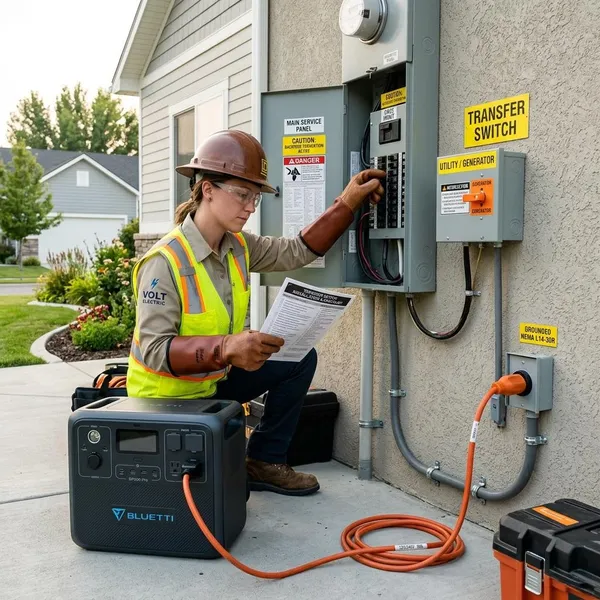
Home connections are not only about watts. Grounding, neutral bonding, listed equipment, local code, permits, and utility rules can all affect what is safe and allowed. Solar generators also differ internally, so the correct setup for one model may not be correct for another.
For direct appliance use, the manufacturer's instructions and properly rated cords may be enough. For anything tied to household circuits, the safest path is to involve a qualified electrician before equipment is installed.
Grounding protects the electrical system
Grounding and neutral bonding should follow the solar generator manual and the requirements of the connection equipment. Some units use a floating neutral, while others may behave differently when connected to transfer equipment.
If a setup trips unexpectedly, causes fault warnings, or requires panel integration, do not solve it by experimenting with adapters. That is the point where an electrician should check the generator, transfer equipment, and grounding arrangement together.
Local codes control installation requirements
Local rules may decide whether an interlock is allowed, what inlet is required, whether permits are needed, and how equipment must be labeled. A product being sold online does not automatically mean it is acceptable for your panel or jurisdiction.
Code compliance also matters later. A clean, inspected installation is easier to service, easier to explain during home resale, and less likely to create insurance or safety problems after an electrical incident.
What Problems Can Happen After Connection?
Even a safe installation can disappoint if the load plan is wrong. The most common problems are overload shutdowns, batteries draining faster than expected, and motor-driven appliances needing more startup power than the generator can supply.
Before relying on the system, do a practical test: run the actual devices you plan to use, one at a time and then together. Note what starts smoothly, what causes warnings, and how quickly the battery falls under normal use.
Overloads can shut down the system
An overload happens when the connected devices ask for more power than the inverter can provide. This may occur when a microwave, refrigerator compressor, coffee maker, or pump overlaps with other loads.
- Stagger heavy loads: run one high-demand appliance at a time.
- Leave margin: do not plan around using the full rating constantly.
- Watch startup loads: motors and compressors are often the surprise.
Low battery can stop backup power
Battery runtime depends on total load, temperature, inverter losses, and whether you can recharge during the outage. A setup that works for a two-hour outage may not last through the night.
For longer outages, treat power like a budget. Keep the refrigerator cold, charge devices during daylight if solar input is available, and turn off convenience loads early instead of waiting until the battery is nearly empty.
Conclusion
The safest setup is the one that matches your real outage needs without bypassing electrical protections. Use direct cords for a few essentials, use approved transfer equipment for home circuits, and do not try to power the house through a wall outlet. If panel wiring, hardwired equipment, or whole-home backup is involved, have the system planned and checked before the outage—not during it.