To use a solar panel for the first time, first match it to what you want to power: a battery, a small DC device, or a standard household appliance. A solar panel produces DC electricity only when there is enough light, so a practical setup usually needs the right supporting equipment—such as a charge controller to protect a battery, a battery to store energy, and an inverter if you want to run AC plug-in devices.
What Can You Use a Solar Panel For?
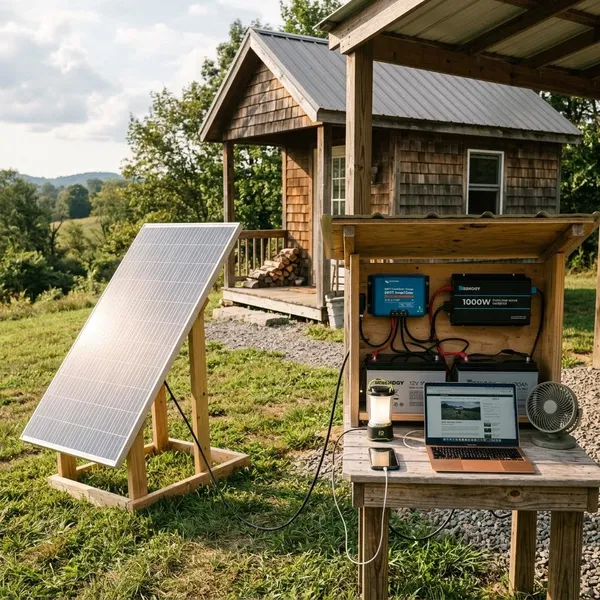
A solar panel is most useful when the power demand is realistic. Charging a phone, topping up a battery, or running LED lights is very different from trying to run a heater, kettle, or full home circuit.
Before buying parts, check two things: how many watts your device uses and how many hours you want to run it. That simple watt-hours estimate tells you whether a small panel is enough or whether you need battery storage and a larger system.
- Best beginner use: charging batteries, phones, lights, fans, and small electronics.
- Good mobile use: camping, RV travel, sheds, boats, and short backup needs.
- Needs more planning: AC appliances, long overnight use, or anything with a high startup surge.
- Usually not a small-panel job: space heaters, large refrigerators, ovens, and whole-home power.
Charge batteries for stored energy
Charging a battery is usually the most practical first use for a solar panel. The panel collects energy during the day, while the battery lets you use that energy later when the sun is weak or gone.
This matters most for evening use. If you want lights at a campsite after sunset or backup phone charging during an outage, a battery-backed setup is much more dependable than connecting devices only while the sun is bright.
Power small devices directly
Some devices can run directly from solar, but only when the voltage and output are suitable. USB solar chargers, regulated DC outputs, and portable power stations are safer choices than connecting a random device straight to a bare panel.
Direct use is fine for low-risk daytime charging, such as topping up a power bank outside. It is not ideal for devices that shut off, reset, or get damaged when power drops suddenly under clouds.
Run AC devices with an inverter
To run standard wall-plug devices, you need an inverter. Solar panels and batteries provide DC power, while most household appliances use AC power.
The common beginner mistake is choosing an inverter based only on the appliance's normal wattage. Motors, pumps, compressors, and some tools can need extra startup power, so the inverter and battery both have to handle that brief surge.
Support camping, RV, and backup power
Solar works especially well for quiet, low-maintenance power away from outlets. A folding panel and battery can cover a weekend of phones, lights, and a small fan; an RV setup may be designed for longer stays with a fridge, water pump, and onboard electronics.
For home backup, keep the goal narrow. A small solar setup is useful for communication, lighting, and charging, but it should not be treated like a whole-house generator unless the system is professionally sized for that job.
What Do You Need to Use a Solar Panel?
The parts you need depend on how you plan to use the energy. A simple daytime charger may need very little, while a battery-based setup needs more protection and better matching between components.
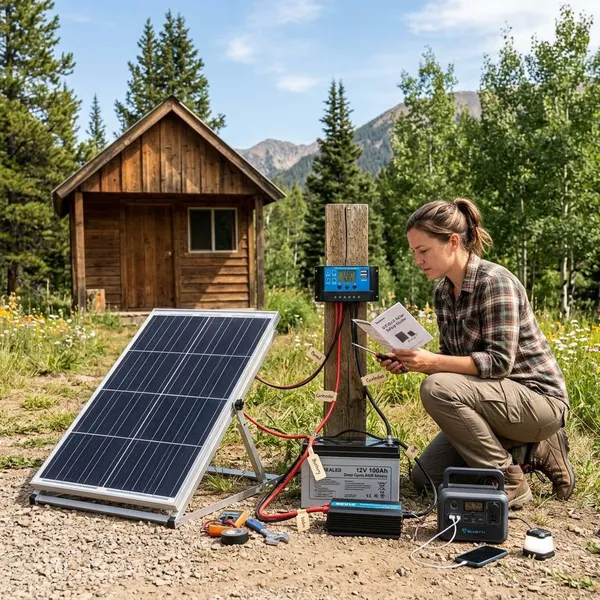
Think of the system as a power path: panel, controller, battery, inverter, then the device. You may not need every part, but each one has a job that should not be guessed.
Use a charge controller for safe charging
Use a charge controller when a solar panel charges a battery. It regulates the power going into the battery and helps prevent overcharging or unstable charging.
For a simple 12V beginner setup, a basic PWM controller may be enough if the panel and battery are matched. MPPT controllers cost more but can be more efficient, especially when panel voltage is higher or sunlight conditions vary. The key check is not the label alone: confirm the controller supports your panel input, battery voltage, and battery type.
Add a battery for stored power
Add a battery if you want power at night, during cloudy spells, or when the device needs steadier output than the panel can provide directly.
- Occasional use: a small portable power station may be easier than building a full battery system.
- Regular off-grid use: a dedicated battery, controller, fuses, and proper wiring are worth planning carefully.
- Long-term storage: choose a battery type and charger settings that match the manufacturer's guidance.
Use an inverter for AC appliances
An inverter is only needed for AC appliances that plug into a normal wall outlet. If your devices can charge by USB or run from DC, skipping the inverter can save energy and reduce complexity.
When you do need one, check continuous wattage, surge wattage, and whether a pure sine wave inverter is recommended for your device. Sensitive electronics and some motor-driven appliances may not behave well on cheaper modified sine wave inverters.
How Do You Set Up a Solar Panel?
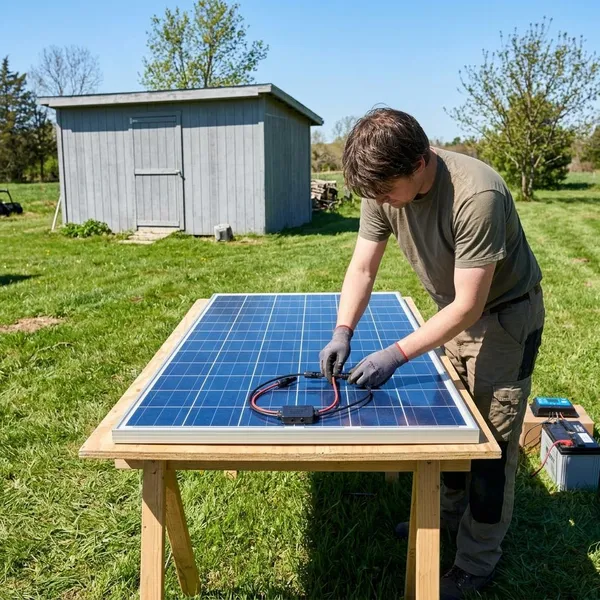
Set up the panel by choosing a sunny spot, pointing it well, connecting the matched components in the right order, and testing the output before relying on it. For beginners, one panel, one controller, one battery, and one small load is a better learning setup than trying to power everything at once.
- List your loads. Write down each device's watts and expected hours of use.
- Match the system voltage. Common small systems use 12V parts, but every component still needs to be compatible.
- Connect slowly. Confirm polarity and ratings before plugging in the next component.
- Test with a small load first. Do not start with your most expensive device.
Choose a location with good sunlight
Put the panel where it gets the longest clear stretch of sun. Shade from a branch, roof edge, pole, or chimney can reduce output much more than it appears by eye.
For a portable camping panel, this may mean moving it once or twice during the day. For a fixed shed or RV panel, watch the site at different times before deciding that it is "sunny enough."
Position the panel correctly
Angle and direction affect how much energy the panel collects. The simple goal is to face the panel toward the strongest available sun and tilt it so the sunlight hits the surface more directly.
A flat panel may be convenient on an RV roof, but it often gives up some output compared with a tilted panel. If you only use solar in summer, the loss may be acceptable; if you need year-round charging, winter sun angle becomes more important.
Connect the main components
For many small battery systems, the usual order is battery to charge controller first, solar panel to controller second, and inverter to battery last if AC power is needed. Some products have their own required order, so the manual should override any general rule.
Pause before each connection and check positive-to-positive and negative-to-negative. Reverse polarity is one of the easiest ways to damage a controller or connected device.
How Can You Get More Power From a Solar Panel?
If a solar panel feels weaker than expected, the first fix is usually placement, not buying more gear. Rated wattage is measured in ideal conditions, while real panels deal with heat, clouds, dirt, shade, and cable losses.
Start with the easy checks: direct sun, clean glass, solid connections, and short enough cable runs. Adding another panel before fixing those basics can hide the real problem without solving it.
Place panels in direct sunlight
Direct sunlight is the biggest factor. A 100W panel in clear sun can be more useful than a larger panel sitting partly shaded for half the day.
For temporary use, adjust the panel when the shadow line moves. For fixed use, check morning, midday, and afternoon shade before mounting permanently.
Keep panels clean
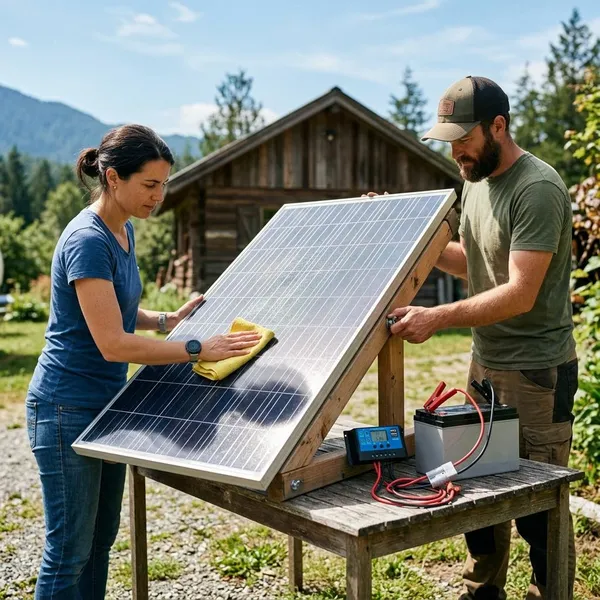
Dust, pollen, leaves, and bird droppings block light from reaching the cells. Clean the surface with water and a soft cloth or sponge, and avoid abrasive tools that could scratch the panel.
How Do You Use Solar Panels Safely?
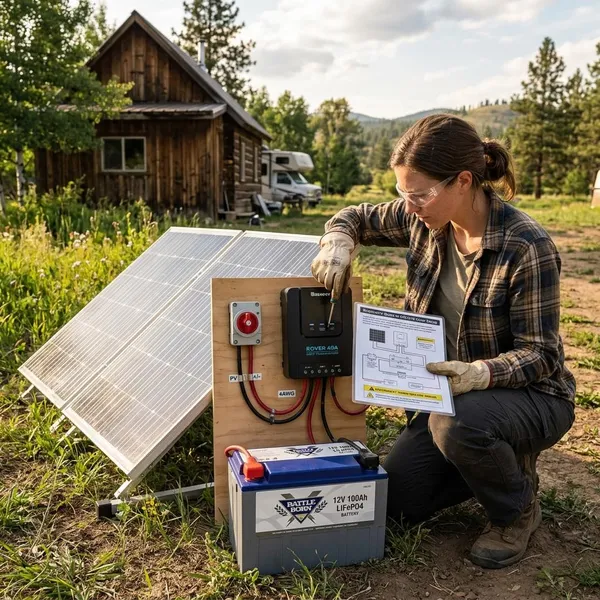
Small solar setups are manageable, but they are still electrical systems. Most beginner problems come from mismatched parts, wrong polarity, undersized wire, missing fuses, or trying to run loads that are too large.
For portable panels and small battery systems, careful setup is usually enough. For rooftop work, grid-connected systems, or anything tied into home wiring, use a qualified installer instead of treating it like a DIY extension cord project.
Connect components in the right order
Connection order matters because some controllers need to detect the battery before they receive solar input. A common sequence is battery first, panel second, then loads or inverter.
When disconnecting, many systems use the reverse order, but follow the product instructions. If the manual gives a different sequence, use that sequence.
Avoid incompatible equipment
Do not mix parts just because the plugs fit. Check the panel voltage, controller input limit, battery voltage, battery chemistry, inverter rating, and cable current rating as one system.
A common example is pairing an inverter with a battery that cannot safely supply the current it demands. Another is using a controller that does not support the battery's required charging profile. Those mistakes may not fail immediately, but they can shorten battery life or create unsafe heat.
Conclusion
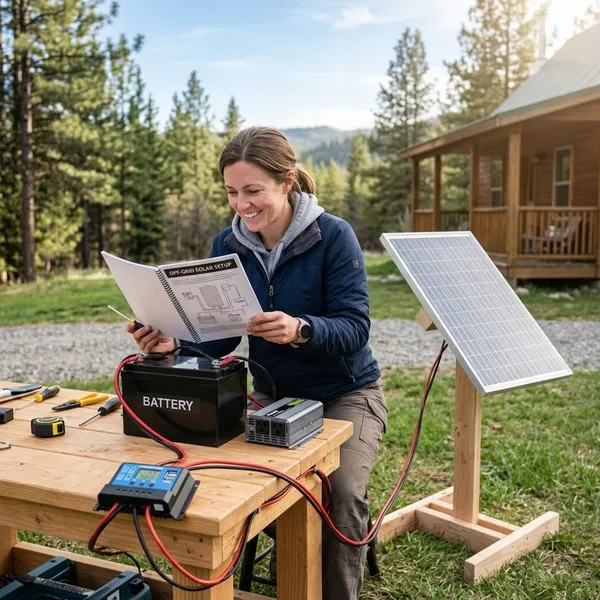
The easiest way to start is with a small, clear purpose: charge a battery, run a few DC devices, or support basic camping and outage needs. Once you know your load, choose matched parts, place the panel in strong sun, and test the system before depending on it; larger home or grid-connected projects are worth handing to a qualified installer.