
A solar generator is not just a battery. The battery stores energy, but a complete solar generator also includes the built-in electronics needed to charge safely, convert stored DC power into usable AC power, and run everyday devices through standard outlets and ports. When comparing models, the key things to look at are battery capacity, inverter output, charging options, and whether solar panels are included or sold separately.
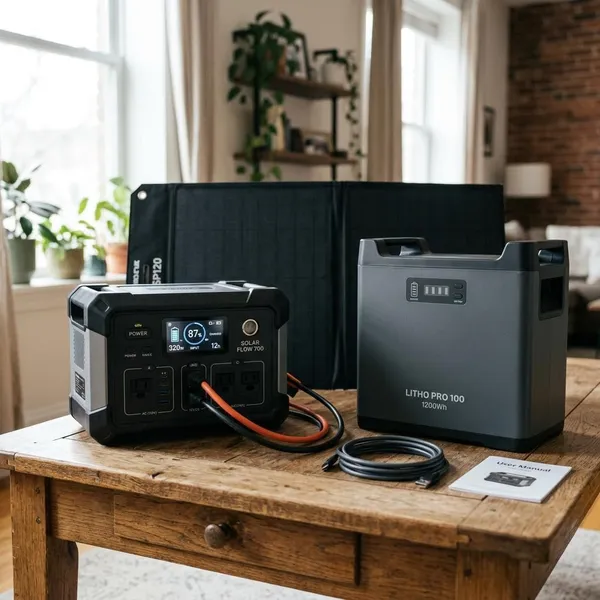
Is a Solar Generator Just a Battery?
A solar generator is better understood as a portable power system built around a battery. The battery stores energy, but the rest of the unit decides how that energy gets charged, protected, converted, and delivered to your devices.
It includes a battery and power control parts
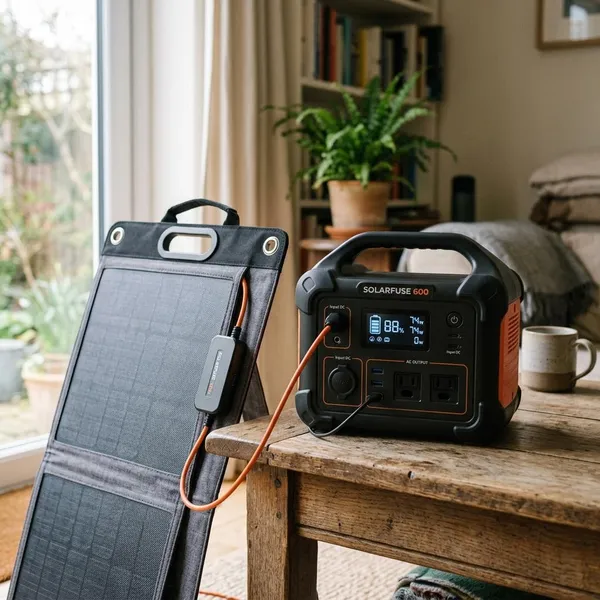
A standalone battery stores electricity, but it usually does not give you safe, simple plug-in power by itself. A solar generator normally combines the battery with a battery management system, charge controller, inverter, display, and output ports.
That matters if you want something you can use during a short outage or a camping trip without wiring separate parts together. For most buyers, the convenience is the main difference.
It stores and converts energy for devices
The stored energy inside the battery is DC power. Many household devices need AC power from a wall-style outlet, while phones and smaller electronics often need regulated USB power. The built-in electronics make those outputs usable without extra adapters or a separate inverter setup.
It does more than a standalone battery
A plain battery can be useful in a custom setup, but it is not usually the easiest choice for a beginner. A solar generator is designed to be charged from common sources, show remaining battery level, warn about overloads, and power devices through familiar ports.
What Parts Does a Solar Generator Include?
The useful parts are not just technical extras. Each one affects what you can plug in, how fast the unit can recharge, and whether it is suitable for a phone-and-light setup or something more demanding like a refrigerator during an outage.
The battery stores energy for later use
The battery is the storage part of the system, usually described in watt-hours. A higher watt-hour number generally means longer runtime, but it does not automatically mean the unit can run every appliance.
The inverter converts power for devices
The inverter turns battery DC power into AC power for devices with standard plugs. This is one of the most important specs to check because it sets the limit for what the generator can actually run.
- Continuous watts: the load it can support while running.
- Surge watts: the short burst some appliances need when starting.
- Pure sine wave output: often preferred for sensitive electronics, if the model offers it.
A common mistake is buying a unit with enough battery capacity but not enough inverter output. That can leave you with stored energy you cannot use for the device you care about.
The charge controller manages solar input
The charge controller regulates power coming from solar panels, where output changes with sunlight, shade, temperature, and panel angle. It helps keep charging within the range the battery can safely accept.
If solar charging is part of your plan, do not only look at battery size. A large battery with weak solar input may take too long to recover during cloudy weather or a multi-day outage.
The output ports connect different devices
Ports decide how convenient the unit feels in real use. AC outlets are useful for lamps, routers, and small appliances; USB-C can be better for phones, tablets, and some laptops; 12V outputs can help with camping gear or vehicle accessories.
| Port type | Best use | Practical note |
|---|---|---|
| AC outlet | Household plugs | Uses the inverter, so runtime may be shorter. |
| USB-A / USB-C | Phones, tablets, small electronics | Often more efficient for low-power devices. |
| 12V socket | Car-style gear and portable coolers | Useful for camping or road trips. |
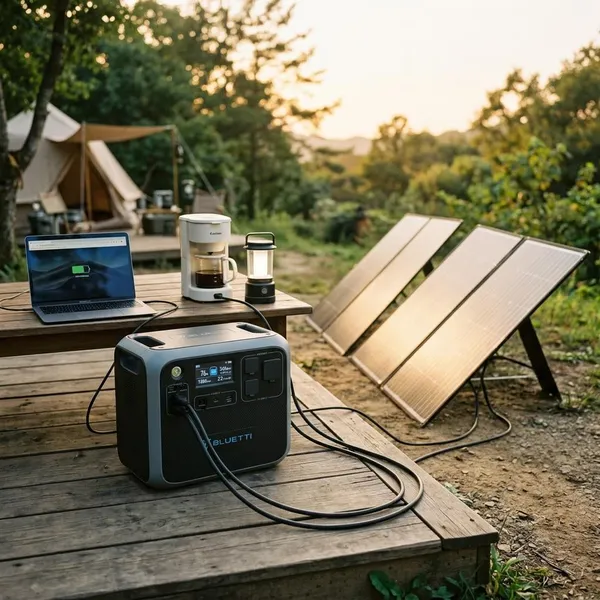
How Does a Solar Generator Work?
The basic process is simple: power goes in, the battery stores it, and the unit sends it back out through the right type of port. The important details are charging speed, conversion loss, and whether your device stays within the unit's limits.
It stores energy inside the battery
You can charge the battery before you need it, then use that stored power later. For a storm scenario, that may mean fully charging it from a wall outlet in advance. For a weekend camping setup, it may mean topping it up with solar during the day and using it for lights and phones at night.
It converts DC power into usable AC power
When you plug a household device into the AC outlet, the inverter converts stored DC power into AC power. Some energy is lost during that conversion, so real-world runtime is usually lower than the clean math on the box.
This is why a little sizing margin helps. If a device is essential, such as a CPAP machine, router, or refrigerator, avoid choosing a generator that only barely meets the estimated requirement.
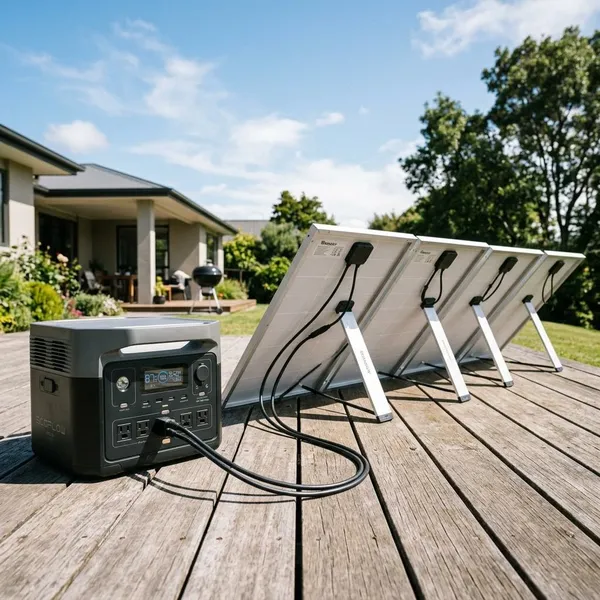
Do Solar Generators Include Solar Panels?
Not always. The name can make it sound as if solar panels come in the box, but many products are sold as the power station only. This is one of the easiest details to miss when comparing prices.
Some systems include panels and others do not
Brands often sell the same unit in different packages: the main power station alone, a bundle with one or more panels, or a larger kit with cables and accessories. A lower price may simply mean the panels are not included.
If you already own compatible panels, a unit-only package may be fine. If you are buying your first emergency setup and want solar charging from day one, a verified bundle is usually less confusing.
Product details show what comes in the package
Product photos are not enough. Look for the actual box contents or included accessories section, because marketing images may show panels beside the unit even when they are sold separately.
- "Power station only" means no panel is included.
- "Solar panel bundle" usually includes at least one compatible panel.
- "Panel sold separately" means you need to budget for it yourself.
- "Solar input range" tells you what panel voltage and wattage the unit can accept.
For a first-time buyer, the safest habit is to confirm three things before ordering: what is in the box, what cables are included, and whether the panel specs match the generator's solar input range.
Solar input determines charging options
Solar compatibility is not just about having a plug that fits. The generator has a supported voltage range, current limit, connector type, and maximum solar wattage. If those do not match your panels, charging may be slow, unreliable, or not work at all.
Solar charging is best treated as a way to stretch backup time, not as a guaranteed instant refill. In strong sun with suitable panels it can be very useful; in shade, winter conditions, or bad weather, wall charging before an outage is still the more dependable plan.
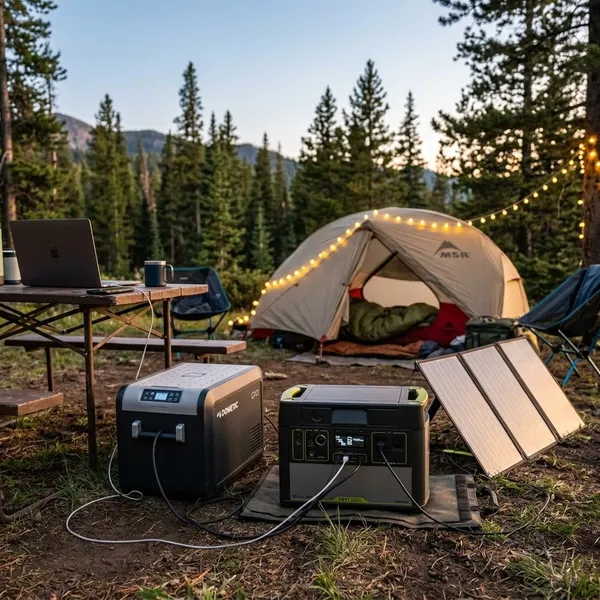
What Can a Solar Generator Power?
A solar generator can power many everyday essentials, but it is not a whole-house generator unless you buy a much larger system designed for that job. The real limit comes from three things: inverter output, battery capacity, and the device's startup surge.
It supports camping and emergency backup
For camping, it is usually strongest with low-to-moderate loads: phones, lights, cameras, laptops, small fans, and portable coolers. It is quiet, easy to store, and does not produce exhaust, which makes it more convenient than a gas generator for light use.
For emergency backup, it works best when you choose a short list of essentials instead of trying to run your normal home routine. A practical blackout setup might be a router, phone charging, LED lights, and one small appliance used carefully.
It runs devices within output limits
Before plugging in an appliance, check its running watts and whether it has a startup surge. Refrigerators, pumps, and compressors can need more power for a moment when they start than they use while running.
- Usually easy: phones, tablets, LED lights, routers, laptops.
- Depends on size: fans, TVs, CPAP machines, mini fridges.
- Often difficult: space heaters, hair dryers, large microwaves, air conditioners.
The biggest buying mistake is assuming that if a plug fits, the generator can run it. The outlet shape only tells you how to connect the device; the wattage rating tells you whether it is realistic.
When Is a Solar Generator the Right Choice?
A solar generator makes the most sense when you want quiet, portable backup for selected devices. It is less convincing when you expect it to replace a full home generator or run high-heat appliances for long periods.
It fits simple portable backup needs
For apartment living, road trips, balconies, campsites, or short blackouts, the all-in-one design is hard to beat. You charge it, store it, and bring it out when needed without fuel, oil changes, or engine noise.
This is a low-risk use case: if the unit mainly keeps communication, lighting, and small electronics going, even a modest model can be useful.
It works for small home backup tasks
For home backup, start with your must-run list rather than the largest model you can afford. Write down the devices you actually need during an outage, then check their wattage, expected runtime, and startup behavior.
| Home need | Solar generator fit | What to check first |
|---|---|---|
| Phones, lights, router | Usually a good fit | Battery capacity and USB/AC ports |
| CPAP or medical device | Possible, but choose carefully | Runtime, power mode, and manufacturer guidance |
| Refrigerator for outages | Depends on the model | Surge watts, average draw, and battery size |
| Heating or cooling | Often not ideal for small units | High wattage and long runtime demand |
Conclusion
A solar generator is not just a battery; it is a battery plus the charging, conversion, protection, and output hardware that makes stored power easy to use. If your goal is phones, lights, internet, camping gear, or limited emergency backup, it can be a very sensible choice. If your goal is heavy appliances or whole-home power, check the wattage and runtime carefully before assuming a portable unit can do the job.