
If you are comparing the leading technology in home energy storage, start with the job you need the battery to do: daily solar shifting, outage backup, lower peak-rate bills, or a mix of all three. For most homes today, lithium-based systems dominate, with LFP standing out when safety and long cycle life matter more than having the smallest possible battery cabinet. NMC can still make sense where space is tight, while newer chemistries are worth watching but are not usually the most practical first choice yet.
Why Does Home Energy Storage Technology Matter?
Battery technology affects more than the number printed on the front of the unit. It shapes how safely the system operates, how often it can cycle, how much useful energy you get back, and whether it still feels like a good purchase after several years.
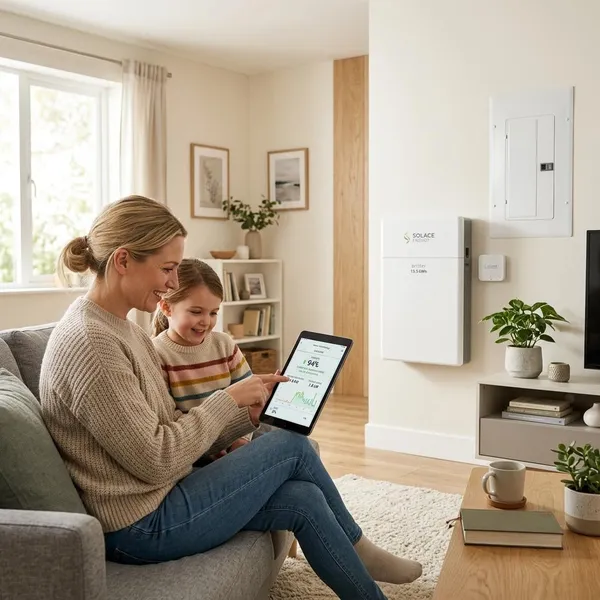
It stores renewable energy for later use
Home storage lets you keep more of the electricity your solar panels produce during the day and use it after sunset. This is especially useful when your household is quiet at noon but busy in the evening with cooking, cooling, laundry, and devices running at the same time.
If your utility pays little for exported solar, self-using stored energy may be more attractive than sending excess power back to the grid. The practical check is simple: compare when your solar produces power with when your home actually uses power.
It provides backup power during outages
A battery can keep selected circuits running when the grid fails, but "backup" does not mean the same thing in every system. Some setups support only essential loads, while larger systems may cover more of the home for a shorter time.
- Essential backup: fridge, lights, internet, garage door, medical device, or sump pump.
- Comfort backup: more outlets, some kitchen loads, or limited heating and cooling.
- Whole-home backup: possible in some designs, but it needs careful load planning and enough inverter power.
The mistake to avoid is sizing only by battery capacity. You also need enough output power to start and run the appliances you care about.
It helps homes manage energy more efficiently
Storage can charge when electricity is cheaper or solar production is high, then discharge when grid power is expensive. In homes with time-of-use rates, that timing can matter as much as the battery size.
Why Is LFP Popular for Home Energy Storage?
LFP has become a leading residential option because it matches the priorities many homeowners care about most: safer operation, long cycle life, and dependable daily use. It is not automatically the best choice for every installation, but it is often the first chemistry worth comparing when solar storage and backup are both on the wish list.
It provides strong safety for home use
Safety matters differently in a home than in a remote industrial site. A residential battery may sit near a garage wall, utility area, or outdoor walkway, so thermal stability and system protections are not minor details.
LFP is widely favored because it is generally more resistant to overheating than some other lithium chemistries. Still, do not judge safety by chemistry alone. Look for proper enclosure design, battery management, certified equipment, and an installer who follows local electrical and fire requirements.
It delivers long cycle life for daily operation
Cycle life is where LFP becomes especially practical. If your battery charges from solar most days and discharges most evenings, it may complete hundreds of cycles a year.
A backup-only battery in a low-outage area might cycle far less often, so lifespan may not be stressed in the same way. For a daily-use solar home, though, a longer cycle life can be more valuable than saving a small amount of space on the wall.
It supports solar storage and backup needs
LFP works well when a battery has two jobs: storing solar energy on normal days and staying ready for outages. That combination is common in homes where electricity rates are rising or grid interruptions are becoming more frequent.
- Daily solar shifting: LFP handles regular charge and discharge patterns well.
- Storm preparation: the system can keep a reserve if the software and settings support it.
- Future expansion: many LFP systems are sold in modular designs, though expansion rules vary by brand.
How Do Home Battery Technologies Compare?
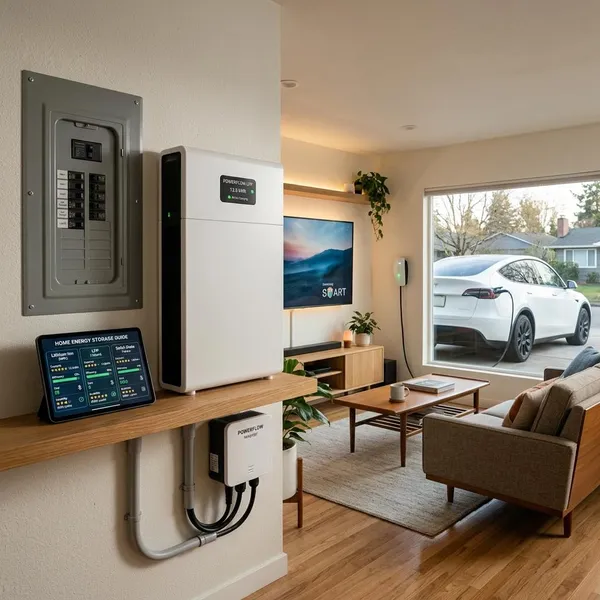
A useful home battery comparison should start with safety, lifespan, energy density, efficiency, and the full installed system. Capacity matters, but a 10 kWh battery with weak backup output or poor support may be less useful than a smaller system designed around your real loads.
| Comparison point | Why it matters at home | Practical buying check |
|---|---|---|
| Safety | Affects placement, confidence, and reliable operation under stress. | Ask about chemistry, certifications, enclosure, and installer requirements. |
| Lifespan | Shapes long-term value, especially with daily solar cycling. | Read the warranty for years, throughput, and remaining capacity. |
| Energy density | Determines how much space the system needs. | Measure the actual installation area before favoring compact designs. |
| Efficiency | Controls how much stored energy is actually returned for use. | Compare full-system efficiency, not only battery cell claims. |
Safety affects battery reliability
A battery that manages heat well is usually easier to operate consistently over time. Reliability is not only about avoiding rare safety events; it is also about whether the system can keep working during hot weather, heavy cycling, or an outage when you actually need it.
Lifespan affects long-term value
Lifespan decides how many useful years and cycles you get from the purchase. This is why a cheaper battery is not always the better deal if it loses usable capacity faster under your expected usage.
When comparing warranties, check three things together: the number of covered years, the guaranteed remaining capacity, and any lifetime energy-throughput limit. A warranty that sounds long may still have conditions that matter for daily cycling.
Energy density affects storage space
Energy density matters most when the installation area is constrained. NMC may be attractive in a small utility room or where a slimmer wall-mounted design is the only realistic option.
In a garage, basement, or outdoor equipment area with enough clearance, compactness may not deserve top priority. In that case, a slightly larger LFP system may be a better fit if it offers the safety and lifespan profile you want.
How to Choose a Home Energy Storage System?
The best way to choose a home battery is to define the job first, then compare technology. If you start with brand names or capacity alone, it is easy to buy a system that looks impressive but does not match your household.
- Pick the main goal: backup, solar self-consumption, peak-rate savings, or a blended setup.
- List essential loads: separate must-have circuits from nice-to-have appliances.
- Check space and placement: measure the real installation area and access clearances.
- Compare support: warranty, installer experience, service process, and expansion options.
Define your energy needs before choosing
Start with your loads, not the battery catalog. For backup, write down the appliances and circuits you want to keep running. For bill savings, look at when your home uses electricity and whether your utility charges more during peak hours.
Energy and power are different checks. Kilowatt-hours tell you how long a battery can support loads; kilowatts tell you what it can run at one time. A refrigerator over several hours is an energy question, while starting a large air conditioner is a power question.
Match battery technology with your usage
A home that cycles the battery almost every day for solar self-consumption should give extra weight to cycle life and thermal stability, which often points toward LFP. A compact apartment-style installation or very tight utility space may justify looking harder at higher-density options such as NMC.
If your use is light and mostly backup-only, do not overbuy just because a larger system sounds safer. It may be smarter to protect fewer essential circuits well than to chase whole-home backup that stretches the budget and still disappoints during a long outage.
Check inverter compatibility and system design
The inverter decides how energy moves between solar panels, the battery, the grid, and your home. Compatibility affects backup behavior, charging speed, monitoring, efficiency, and whether the battery can recharge from solar during an outage.
- Ask about backup type: essential-load panel or whole-home configuration.
- Confirm solar behavior: whether solar can keep charging the battery when the grid is down.
- Check expansion rules: some systems allow extra modules only within certain limits.
- Review app controls: reserve settings, outage mode, and time-of-use scheduling should be easy to understand.
What Is the Future of Home Energy Storage?
Home storage is likely to improve through smarter controls, better integration with solar and EV charging, and more battery chemistry options. The important point is that homeowners do not always need to wait for the next breakthrough. Current systems already solve many practical problems when they are sized and installed well.
Smart energy software improves system control
Software is becoming one of the most useful parts of a battery system. It can reserve energy before bad weather, shift discharge into expensive evening hours, and learn when your home typically needs power.
This is one area where two batteries with similar hardware can feel very different in daily use. Clear controls and sensible automation reduce the chance that the battery is full when it should be discharging, or empty when you wanted backup reserve.
New battery chemistry expands future options
New chemistries may eventually lower cost, improve safety, or reduce dependence on certain raw materials. Sodium-ion and solid-state designs are often discussed for these reasons.
Before treating a new chemistry as a better choice, look for real residential availability, certified products, installer familiarity, compatible electronics, and warranty support. Promising technology is not the same as a dependable home installation.
Current technologies already meet many home needs
For many households, current LFP and other lithium-ion systems are already capable enough for backup, solar storage, and time-of-use management. Waiting may make sense if you have no urgent need, but frequent outages or a solar installation happening now can make a proven current system the more practical decision.
Conclusion
The strongest home battery choice is usually the one that fits your real use, not the one with the most impressive headline number. LFP is often the safest starting point for daily solar storage and backup because it balances safety, lifespan, and practicality, while NMC is worth considering when compact size is the deciding factor. Check your loads, rates, installation space, inverter design, and service support before choosing, because those details decide whether the technology works well in your home.