
A lithium ion battery for solar panel systems can help you store excess solar energy during the day and use it at night, during peak-rate hours, or when the grid goes down. To choose the right battery, focus first on your daily power needs, the appliances or circuits you want to back up, usable battery capacity, inverter compatibility, and how safely the system can be installed in your home or business.
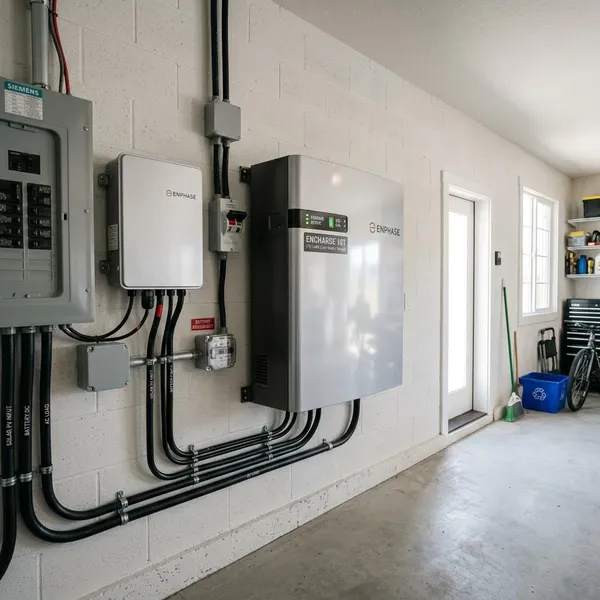
Lithium Ion vs Lead-Acid Batteries for Solar
The short version: lithium is usually better for frequent solar use, while lead-acid can still make sense for a low-budget or light-duty setup. The right choice depends on how often the battery will be cycled and how much inconvenience you are willing to accept.
Lithium batteries offer longer life and higher efficiency
Lithium batteries typically return more of the energy they store, so less solar production is lost during charging and discharging. They also tend to handle repeated cycling better, which is why they are often preferred for homes that store daytime solar power for nightly use.
| Best fit | Why lithium helps |
|---|---|
| Daily evening use | Better efficiency and stronger cycle life make regular use more practical. |
| Backup for key loads | Higher usable capacity helps keep essentials running longer. |
| Limited installation space | Lithium systems are often more compact for the same useful storage. |
Lead-acid batteries cost less upfront
Lead-acid batteries usually cost less to buy, which can be attractive for a small cabin, a temporary setup, or a system that will only be used occasionally. The trade-off is that they often provide less usable capacity, shorter service life, and more maintenance than lithium options.
A common mistake is comparing only the sticker price. If a cheaper battery must be replaced sooner or cannot be discharged as deeply, the savings may be smaller than they first appear.
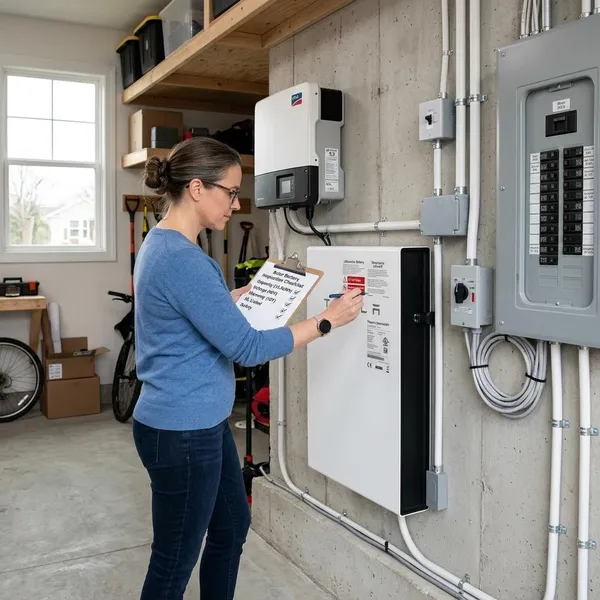
What Should You Check Before Buying a Solar Battery?
Before comparing models, separate your needs into two lists: what must stay on during an outage, and what would simply be nice to have. That one step makes capacity, power rating, and cost much easier to judge.
For most buyers, the priority order is compatibility first, then capacity, then power output, then long-term efficiency and cycle life. A high-quality battery is not a good purchase if it cannot communicate properly with your inverter or support the loads you care about.
Battery capacity shows available energy storage
Capacity is measured in kilowatt-hours and shows how much energy the battery can store. If your essential loads use about 5 kWh in an evening, you need enough usable storage to cover that demand with some buffer for losses and unexpected use.
Do not size the battery from guesswork alone. Look at utility data, appliance labels, or installer load calculations, then decide whether you are sizing for a few essentials or for a more comfortable backup experience.
Power rating shows device support
Power rating is different from capacity. Capacity tells you how long the battery may last; power rating tells you what it can run at the same time.
- Low-demand loads: lights, routers, laptops, and phone charging are usually easier to support.
- Moderate loads: refrigerators, sump pumps, and microwaves need closer checking.
- Heavy loads: air conditioning, well pumps, and electric heating may require a larger system or load limits.
Check both continuous output and surge capability, because some appliances need extra power at startup.
Efficiency and cycle life show long-term value
Efficiency tells you how much stored energy comes back as usable power. Cycle life gives a rough idea of how well the battery may hold up after repeated charging and discharging.
If you plan to use the battery every day, these two numbers carry more weight than they would for an emergency-only setup. A more expensive battery can still be the better value if it delivers more usable energy over its working life.
Where Can Lithium Solar Batteries Be Used?
Lithium solar batteries are useful anywhere stored power has to be compact, reliable, and used more than once in a while. The right setup changes a lot depending on whether the battery is supporting a house, an RV, an off-grid cabin, or a business.
They support home backup and energy savings
In a grid-connected home, a lithium battery can store excess daytime solar power for evening use. That can be useful if your utility charges more during peak hours or gives limited credit for exported solar energy.
For backup, it is usually smarter to start with essential circuits rather than trying to power everything. Refrigeration, internet, lighting, garage access, medical devices, and a few outlets may provide far more value than attempting whole-home backup on an undersized battery.
They power off-grid homes and RV systems
Off-grid homes and RVs use batteries differently from grid-connected houses. The battery is not just a backup; it may be the main source of power after sunset or during poor weather.
For a weekend RV, a smaller lithium setup may be enough for lights, fans, water pumps, and device charging. For a year-round off-grid cabin, sizing needs to be more cautious because winter sun, heating loads, and several cloudy days can quickly expose an undersized system.
They improve business backup reliability
For small businesses, battery storage is less about comfort and more about avoiding disruption. A shop may need payment terminals and lighting, while a clinic may care more about internet, security systems, and selected equipment.
How to Install a Lithium Solar Battery Safely
Solar battery installation is not a good place to improvise. Even when a battery looks simple from the outside, safe operation depends on correct wiring, equipment matching, clearances, temperature control, and commissioning.
A qualified installer is strongly recommended, especially for backup circuits, hybrid inverters, high-voltage batteries, or any work tied into the home electrical panel. Product manuals and local code requirements should guide the final installation details.
Choose a suitable installation location
Choose a clean, dry, stable location with enough room for access, wiring, disconnects, and service clearances. Garages, utility rooms, basements, and rated outdoor enclosures are common options, but the best choice depends on the specific battery and local conditions.
Avoid places with flood risk, repeated impact, direct rain, or strong heat buildup. A battery squeezed into a poor location may be harder to service and may age faster than one installed in a controlled space.
Keep the battery within safe temperatures
Temperature can affect charging, performance, and lifespan. Very hot areas may accelerate wear, while cold locations may limit charging unless the battery is designed for that environment.
A hot garage in summer and an unheated shed in winter are very different installation scenarios. If the battery will be outside or in a space with big temperature swings, choose a model and enclosure rated for those conditions rather than assuming all lithium batteries behave the same way.
Match the battery with solar equipment
The battery should be approved for the inverter or charge equipment it will use. Proper communication between devices helps control charging limits, backup behavior, monitoring, and safety protections.
Do not rely on "close enough" electrical ratings. Unsupported combinations can cause poor charging, missing monitoring data, nuisance shutdowns, or warranty problems.
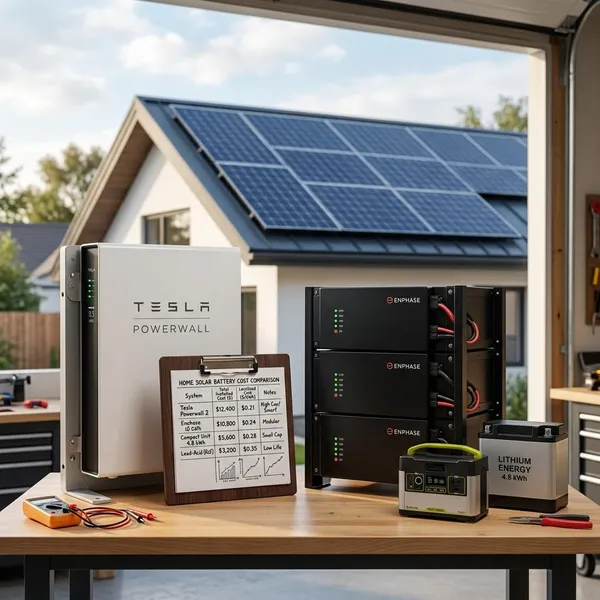
How Much Does a Lithium Solar Battery Cost?
The cost of a lithium solar battery depends on more than the battery unit itself. Size, power output, brand, installation labor, inverter requirements, backup wiring, permits, and electrical upgrades can all change the final project price.
Instead of hunting for the cheapest battery, compare what the system will actually do for you. A small essential-load setup and a larger system meant to support many circuits are not the same purchase.
Battery size affects the total price
Larger batteries usually cost more because they store more energy and may require additional equipment or installation work. A battery sized for lights, Wi-Fi, and refrigeration will usually be very different from one intended to support pumps, kitchen appliances, or partial home comfort loads.
The practical check is simple: list your essential loads first, then decide how many hours you want them to run. That keeps you from paying for storage you rarely use or buying a battery that disappoints during the first real outage.
Lifespan affects long-term value
A longer-lasting battery may be the better buy even if the upfront cost is higher. Cycle life, warranty coverage, usable capacity, and expected daily use all affect the real cost over time.
This matters most for households that cycle the battery often. If the battery is used every day for evening solar power, durability is not a bonus feature; it is part of the value calculation.
Usage needs affect whether it is worth buying
A lithium solar battery is easier to justify when you have frequent outages, time-of-use electricity rates, weak grid reliability, or a strong desire to use more of your own solar power. In those cases, the battery gives both practical and financial value.
If outages are rare and electricity is inexpensive at night, the payback may be weaker. It can still be worth buying for comfort or independence, but that is a personal resilience decision rather than a guaranteed money-saving upgrade.
Conclusion
The best lithium ion battery for solar panel use is the one that matches your real loads, works with your inverter, and fits how often you plan to use stored power. For daily evening use or dependable backup, lithium usually has the stronger long-term case; for rare light-duty backup, a smaller or cheaper setup may be enough if the limits are clear from the start.