
A solar generator for water well pump can be a practical backup or off-grid power option, but the pump's requirements determine whether it will actually work. Before choosing a unit, check the pump's voltage, running watts, and startup surge, since a generator that powers household appliances may still be unable to start a well pump. For short power outages, a properly sized portable power station may be enough; for daily water supply or remote use, a dedicated solar pumping system is usually the more reliable choice.
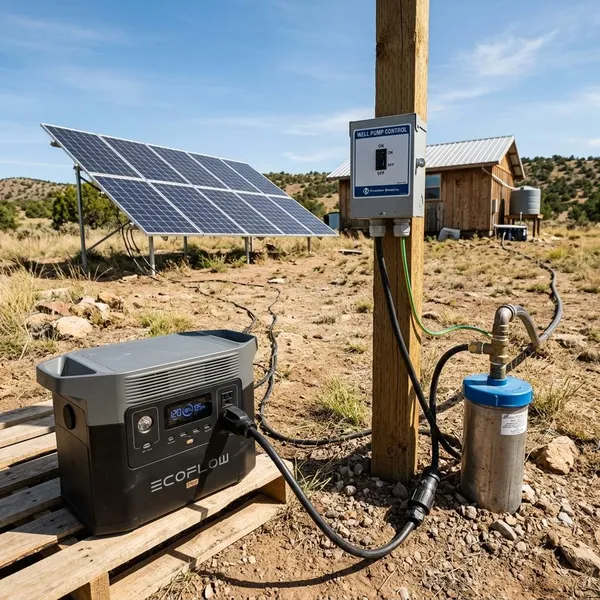
Can a solar generator run a water well pump?
Many well pumps can run from solar backup, but only when three things line up: output voltage, inverter surge capacity, and usable battery storage. The common mistake is looking only at battery size. A large battery is helpful, but it does not matter much if the inverter cannot start the motor.
A solar generator can run many well pumps with the right size
Smaller 120V pumps are usually the easiest match. A shallow well pump or modest jet pump used for occasional emergency water may be realistic with a properly sized portable power station. A deep 240V pump is a different job and usually needs a stronger split-phase system or a dedicated backup arrangement.
A good quick filter is this: if the pump has a normal wall plug and modest horsepower, a solar generator may be worth investigating. If it is hardwired, 240V, or tied to a control box, assume you need a more careful setup and possibly professional wiring.
A pump's power needs decide system compatibility
Start with the pump label, breaker, control box, or installer paperwork. You are looking for these details:
- Voltage: 120V and 240V systems are not interchangeable.
- Running load: volts × amps gives a rough watt estimate.
- Startup surge: motors often need much more power for a short moment.
- Wiring type: plug-in pumps are simpler than hardwired pumps.
- Control equipment: capacitors and pressure switches can affect startup behavior.
If the solar generator barely meets the running watts, it is probably too small. Motor loads need headroom.
A larger pump needs a stronger power system
A 1/2 HP pump may be manageable in some backup situations, while a 1 HP or 1.5 HP deep well pump often pushes beyond small portable units. The issue is not just runtime. Larger motors can pull a heavy startup surge, and some battery stations shut down before the pump ever gets moving.
For a cabin where you only need to fill a pressure tank once or twice a day, a borderline setup might be tolerable after real testing. For a full-time home where water is critical for family use, livestock, or winter reliability, sizing close to the minimum is a poor place to save money.
How does a solar generator power a well pump?
A solar generator does not usually send panel power straight to the pump. It stores energy in a battery, sends that energy through an inverter, and the inverter supplies AC power to the pump. Solar panels then recharge the battery between pump cycles.
The inverter converts power for the pump
The inverter is the first part to check because it has to provide the right AC voltage and enough surge power. For most well pumps, a pure sine wave inverter is the safer choice because pump motors do not like rough power. If your pump needs 240V, the system must provide proper 240V output; extra battery capacity cannot fix a 120V-only outlet.
The battery stores energy for pump operation
Battery capacity decides how many pump cycles you can support before recharge becomes urgent. A pump that runs for only five minutes at a time may not use much total energy, but repeated starts during a busy morning can drain a small battery faster than expected.
Think about how your household actually uses water during an outage. Drinking water, toilet flushing, and a few short sink uses are a light-duty plan. Showers, laundry, garden watering, or livestock tanks turn the same pump into a much heavier backup load.
The solar panels recharge the system
Solar panels mainly affect recovery speed. More panel input helps the battery refill after pumping, especially during multi-day outages, but it does not make an undersized inverter stronger. Shade, clouds, low winter sun, and panel angle can all reduce real output, so plan around ordinary conditions rather than perfect noon sunlight.
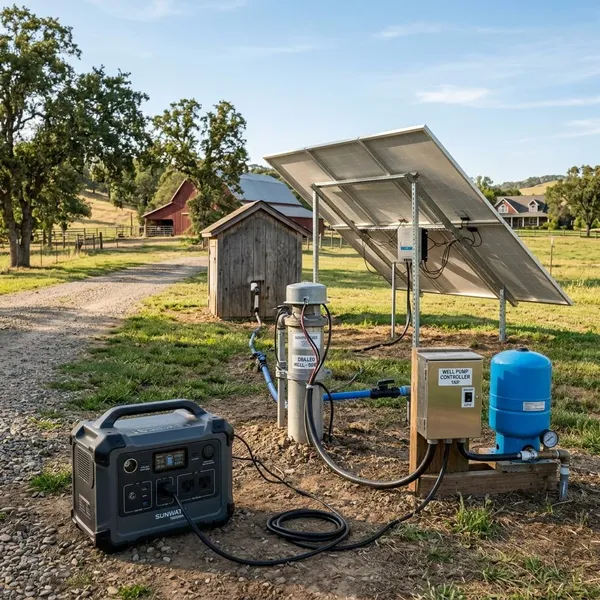
What well pumps can a solar generator run?
The pump type gives you a useful clue before you even look at exact numbers. Submersible pumps are often the hardest, jet pumps can be moderate, and booster pumps are usually the easiest. Still, the nameplate always matters more than the category.
Submersible pumps need higher startup power
Deep submersible pumps often need serious startup current because they are pushing water up from underground. Many residential models are also 240V, which rules out many small power stations immediately. If this is your setup, look for confirmed 240V support, a strong surge rating, and enough battery discharge capability—not just a big advertised watt-hour number.
Jet pumps work with smaller water systems
Jet pumps are often a better match for solar generator backup, especially in shallow well systems. A homeowner who only wants emergency water during a one-day outage may be able to use a mid-size system if the pump is 120V and the surge demand is within range.
Do not assume every jet pump is easy, though. Some are still large enough to overwhelm smaller units, and older motors can behave less predictably than the label suggests.
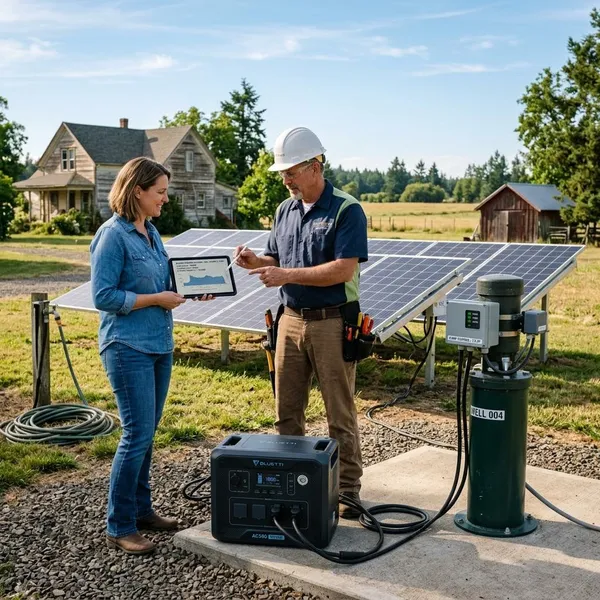
How do you size a solar generator for backup use?
Sizing works best in this order: first confirm the pump can start, then estimate how much water you need, then size the battery and solar charging. Reversing that order leads to expensive mistakes, such as buying a huge battery station that still cannot handle the motor surge.
Define your backup water needs
Decide whether you want emergency water or normal water. Emergency water might mean filling a pressure tank a few times a day for drinking, cooking, and toilets. Normal water means showers, laundry, outdoor use, and everyone behaving as if the grid were still on. Those two plans can require very different systems.
- Short outage: prioritize startup ability and enough battery for several pump cycles.
- Multi-day outage: add more battery reserve and realistic solar recharge.
- Off-grid living: consider a dedicated water system instead of a general power station.
- Seasonal cabin: occasional summer use is easier than year-round winter reliability.
Calculate daily pump energy use
Use running watts × runtime hours to estimate daily energy use. If a pump draws about 1,000 watts and runs for 30 minutes total, that is roughly 500 watt-hours before inverter and battery losses. Add a practical margin because pumps, batteries, and weather rarely behave like lab numbers.
A simple way to measure real demand is to note how long the pump runs after normal water use. If it runs for three minutes after several toilet flushes and ten minutes after filling a storage tank, those cycle times are more useful than guessing from horsepower alone.
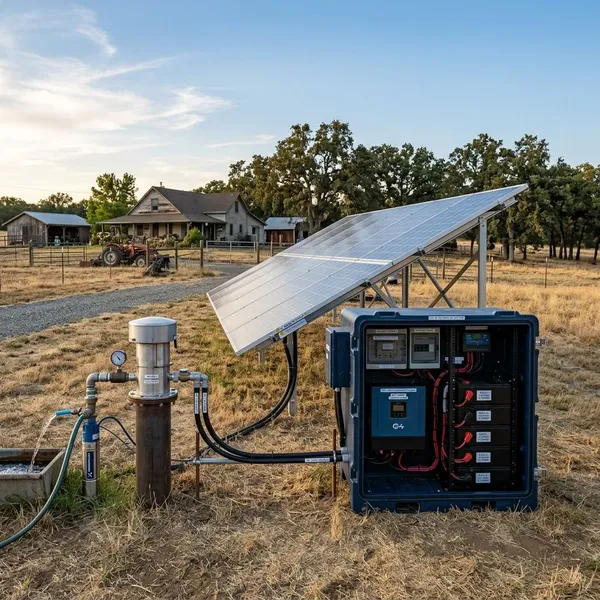
What solar generator setup works best for a well pump?
The best setup depends on how often you expect to use it and how serious the consequence is if it fails. Occasional outage backup is one category. A remote home that depends on the pump every day is another.
Portable units fit short outages
Portable units make sense when the pump is small enough, the outage is short, and you mainly need essential water. They are quiet, easy to store, and simpler than a fuel generator, but their limits show up quickly with 240V pumps, hardwired systems, or high startup surge.
Test the setup before you need it. If the pump trips the inverter, struggles to start, or requires unsafe adapters, it is not a backup plan—it is a failed test.
High-capacity units fit longer backup
High-capacity units are the better middle ground for homes that want quieter backup but need more than a small portable station can provide. Look for strong continuous output, high surge rating, 240V support if required, expandable batteries, and enough solar input to recover between uses.
This category often fits a homeowner who wants water through a storm outage without installing a full off-grid system. It is not automatically enough for every pump, but it gives you more realistic headroom.
Dedicated systems fit off-grid water needs
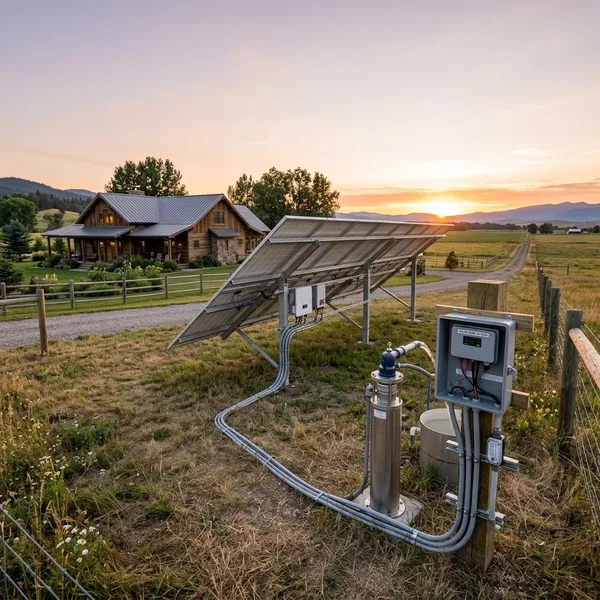
Dedicated systems are the better choice when water pumping is a daily critical load. Farms, remote homes, and year-round off-grid cabins may need fixed batteries, a larger solar array, transfer equipment, and wiring designed around the pump instead of adapted around a portable outlet.
A gas generator may still be useful where long runtime and strong surge power matter, as long as fuel, noise, and maintenance are acceptable. A solar-based setup is quieter and easier to live with day to day, but it has to be sized around battery reserve and weather, not wishful thinking.
Conclusion
A well pump backup is worth doing carefully because water is not a casual load. Match the system to voltage and startup surge first, then size the battery and panels around your real water use. If the pump is large, 240V, or hardwired, get qualified help before changing wiring; if the numbers line up and the setup is tested ahead of time, solar backup can keep essential water available without the noise and fuel worries of a gas generator.