
A solar generator turns sunlight into usable electricity by sending power from solar panels to a battery, then through an inverter so it can run everyday devices and appliances. The key details are simple: the battery determines how long it can supply power, the inverter determines which devices it can handle, and the solar input determines how quickly it can recharge from the sun.
How does a solar generator work?
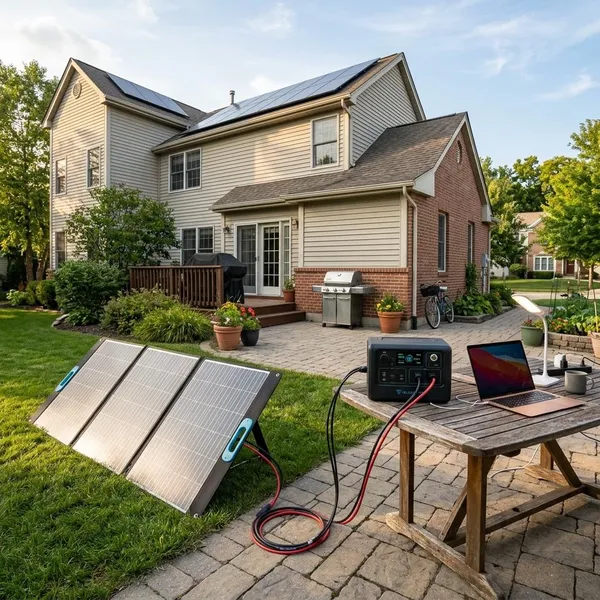
A solar generator is basically a rechargeable power station that can be filled by solar panels. The panels make electricity from sunlight, a charge controller keeps that electricity safe for the battery, the battery stores it, and the inverter turns it into the type of power used by normal household outlets.
The important difference from a gas generator is that it does not create power by burning fuel. It only gives you the energy that has already been stored, or the energy coming in from the panels while it is charging. That makes it quiet and indoor-friendly during use, but it also means you need to plan around battery capacity and recharge time.
Solar panels collect energy from sunlight
Solar panels are the starting point. Their photovoltaic cells produce DC electricity when light hits them, then send that power through a cable to the generator. Strong sun, a good panel angle, and no shade all help charging; a shaded corner of one panel can reduce output more than many people expect.
For occasional camping, a foldable panel may be enough to top up phones, lights, and a small power station. For regular home backup, a small panel paired with a large battery can feel frustrating because the battery may take too long to refill after an outage.
The charge controller manages solar power
The charge controller sits between the panels and the battery. Its job is to regulate incoming voltage and current so the battery charges safely instead of being overcharged or stressed by changing sunlight.
This part is easy to overlook because you usually do not touch it. Still, it affects real-world performance. A better controller can make charging steadier on mixed-sun days, which matters more during a long outage than during a short weekend trip.
The battery stores energy for later use
The battery is what makes the generator useful after sunset, indoors, or when the grid is down. Capacity is usually shown in watt-hours, and that number gives a rough idea of runtime.
A simple way to estimate runtime is to divide battery watt-hours by the device's watts, then allow some room for losses. A 1,000Wh battery running a 100W load might look like 10 hours on paper, but real use is usually lower because the inverter and the battery management system use some energy too.
What are the main parts of a solar generator?
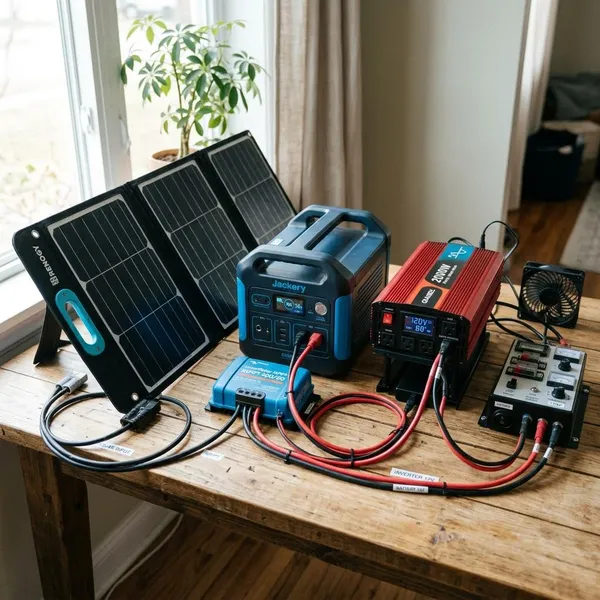
The main parts are solar panels, a charge controller, a battery, and an inverter. Some models also include displays, cooling fans, app controls, extra batteries, or faster charging features, but those extras do not change the basic power path.
When comparing models, avoid judging by one impressive number. A big battery is not very helpful if the inverter cannot start your appliance. A powerful inverter is not enough if the battery is too small to run the load for the time you need.
Solar panels collect energy
Panel wattage affects how fast the generator can recharge from the sun. A higher-watt solar setup usually refills the battery faster, as long as the generator can accept that much solar input and the weather cooperates.
Portability also matters. Foldable panels are easier to move around a campsite or balcony, while rigid panels make more sense for a shed, cabin, or more permanent backup setup.
The charge controller controls charging
This component protects the battery while it is being charged. Many good systems use MPPT charging, which can often make better use of changing sunlight than simpler controllers, although the exact benefit depends on the model and conditions.
The battery stores electricity
Battery chemistry affects weight, lifespan, and cost. Many newer systems use lithium-ion or LiFePO4 batteries. LiFePO4 models are often chosen for regular backup use because they tend to handle many charge cycles well, but the actual lifespan still depends on the product and how it is used.
For a low-risk setup, such as keeping phones and lights powered, a smaller battery can be enough. For higher-stakes use, such as overnight medical equipment or food storage during outages, choose based on measured energy needs rather than rough product examples.
How does energy move through a solar generator?
Energy moves through a solar generator in a chain. Sunlight becomes DC electricity at the panels, that electricity is regulated, the battery stores it, and the inverter changes it into AC power when a connected device needs it.
Solar panels create electricity during charging
During charging, the panels do not store power themselves. They create electricity and send it to the generator while usable light is available. If the panel is badly angled, dirty, partly shaded, or connected with the wrong cable, the generator may charge much more slowly than expected.
The battery stores power for later use
Once the incoming power is regulated, it fills the battery. Think of the battery as your energy budget: every device you plug in spends part of that budget, and every hour of charging adds some back.
For a short outage, you may only care about lights, phones, and a router. For an overnight plan, list the devices that must stay on and estimate their total watt-hours before deciding whether the battery is large enough.
The inverter changes stored power into usable electricity
When you use an AC outlet, the inverter converts stored DC power into AC electricity. That conversion is useful, but it is not free; a little energy is lost along the way.
For small devices, direct USB or DC charging can stretch runtime slightly. It will not turn a small generator into a whole-home backup system, but during a long blackout, small efficiency choices can help.
The system delivers power to connected devices
The generator sends power through the selected ports until the battery runs low, the load exceeds the output limit, or the unit shuts down to protect itself. A display showing input watts, output watts, battery percentage, and estimated time remaining is more than a convenience; it helps you decide what to unplug first.
- Collect sunlight through the solar panels.
- Regulate the incoming power through the charge controller.
- Store energy in the battery.
- Convert DC to AC when needed.
- Deliver power through the output ports.
What can a solar generator power?
A solar generator can power many small and medium devices, but it is not automatically a whole-house backup. What it can handle depends on three checks: the device's running watts, its startup surge, and how long you need it to run.
| Use case | Usually realistic | What to check first |
|---|---|---|
| Phones, laptops, lights, routers | Yes, even on many smaller units | Battery capacity and available ports |
| Fridge, CPAP, fan, TV | Often, with the right size generator | Running watts, surge watts, overnight runtime |
| Space heater, kettle, large AC unit | Usually not ideal for portable systems | Very high wattage and fast battery drain |
It powers small electronics and personal devices
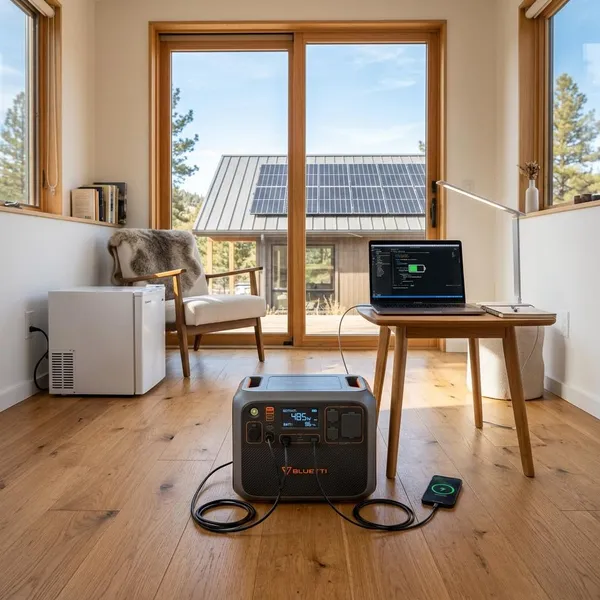
Small electronics are where solar generators are usually strongest. Phones, tablets, laptops, LED lights, cameras, radios, and Wi-Fi routers use relatively little power, so a modest unit can often keep them going for a useful amount of time.
During a temporary blackout, this may be enough to make the situation manageable: light in the room, a charged phone, and internet if the local service is still working. For camping, the same setup gives quiet power without fuel storage or engine noise.
It supports essential home appliances
Some essential appliances can run from a solar generator, but they need a closer check. Refrigerators, CPAP machines, fans, modems, lamps, and some TVs may be reasonable loads if the generator has enough battery capacity and inverter output.
A refrigerator is the classic example. Its normal running power may look manageable, but the compressor can need a higher surge when it starts. If you are buying for food storage during outages, do not rely on the average wattage alone.
It runs outdoor and off-grid equipment
Outdoor use is often a good fit because the power needs are limited and the panels can be set up in open sun. A solar generator may run a portable fridge, camp lights, a drone charger, a radio, a small fan, or some low-demand tools.
For a weekend trip, battery capacity may matter more than perfect recharge speed. For a cabin, RV, or repeated off-grid use, solar input becomes just as important because the system has to recover enough energy each day to be useful again at night.
Can a solar generator work without sunlight?
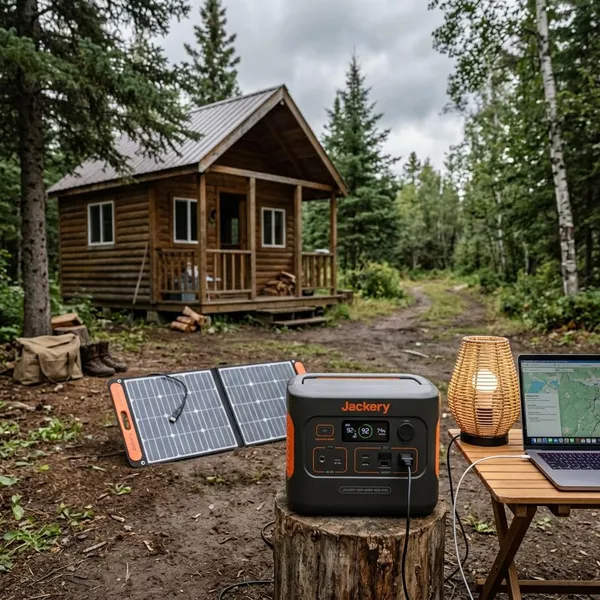
Yes, a solar generator can work without sunlight if the battery is already charged. It can run devices at night, indoors, or during a storm because the electricity is coming from stored energy, not directly from the panels at that moment.
The limit is simple: without new charging, the battery will eventually run down. That is why a good backup plan includes both enough storage for the night and a realistic way to recharge the next day.
The battery provides power at night
At night, the generator is not making new solar power. It is spending the energy collected earlier. This is fine for planned loads such as a phone, lamp, router, or CPAP machine, but the battery must be sized for the hours you actually need.
If the device is important for health or safety, be more conservative than the marketing runtime. Check the device's wattage, allow for conversion losses, and keep a reserve instead of planning to drain the battery completely.
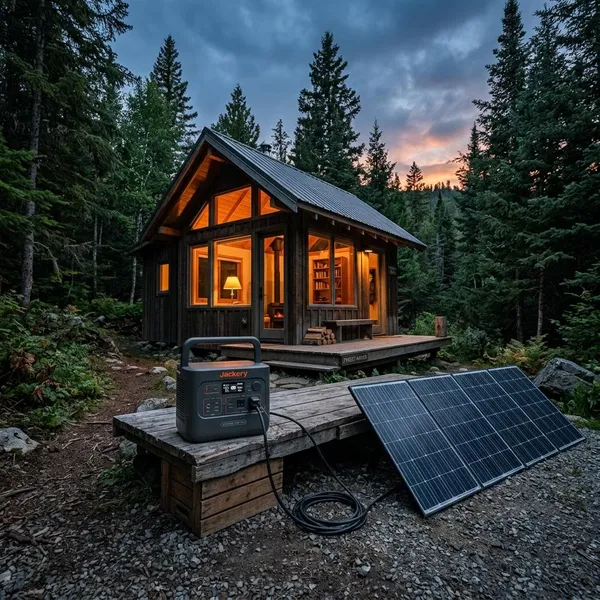
Conclusion
Solar generators work by storing solar energy and turning it into usable electricity
A solar generator is most useful when you match it to a real job: small electronics for comfort, essentials for short outages, or a larger planned setup for repeated backup use. Check inverter output first for what you want to run, battery capacity next for how long it must run, and solar input last for how quickly you can refill it; if those three numbers fit your situation, the system is far more likely to feel practical instead of disappointing.