
If your home already has reliable utility power and your main goal is to lower the electric bill, solar panel kits for home on grid are usually the simplest solar option to compare first. They let your house use solar electricity during the day while the grid covers nights, cloudy periods, and higher-demand moments. Before buying a kit, the three checks that matter most are your annual electricity use, roof sunlight, and local utility rules for grid connection and solar credits.
How Does an On-Grid Solar System Work?
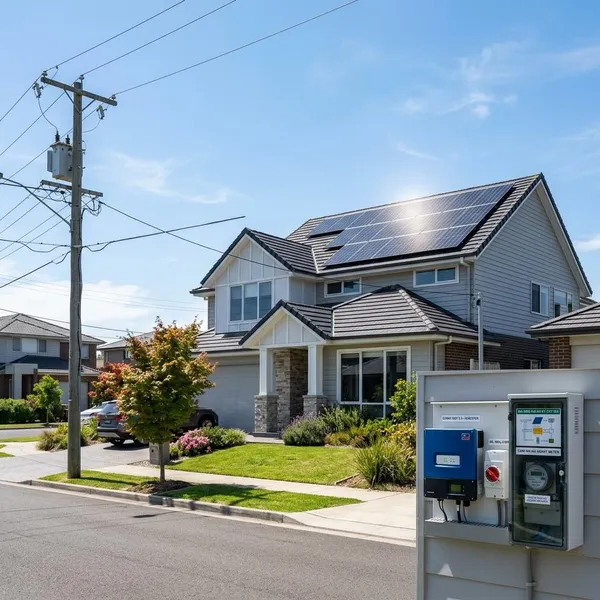
An on-grid solar system produces power at your home but stays connected to the utility. During sunny hours, your home uses available solar electricity first. If the panels are not producing enough, the grid automatically supplies the difference.
Solar panels generate electricity during the day
Solar panels produce direct current electricity when sunlight hits the cells. Output is strongest during clear midday conditions and weaker in the morning, late afternoon, heavy cloud, or shade.
Roof quality can matter as much as the number of panels. A smaller, mostly unshaded roof section may outperform a larger area broken up by trees, vents, dormers, or shadows from nearby buildings. For a household that uses more electricity during the day, such as laundry, air conditioning, or work-from-home equipment, more of that solar power can be used immediately.
The inverter converts solar power for home use
The inverter turns the panels' direct current into alternating current that your home circuits can use. It also helps coordinate the system with the utility grid and may handle monitoring and safety shutdown functions.
- String inverter: often suits a simple roof with one main sunny section.
- Microinverters: useful when panels face different directions or some panels get shade.
- Optimizers with a string inverter: a middle option for improving panel-level performance on mixed roof areas.
The grid provides extra power when needed
At night, during storms, or when your home is using more power than the panels are producing, the grid fills the gap. You do not have to size the solar array for every appliance running at once in the worst weather of the year.
What Comes in an On-Grid Solar Kit?
A good on-grid solar kit should include the major components needed to produce power, mount the array, connect the equipment safely, and support the permit or inspection process. The headline wattage is only part of the decision; missing electrical parts, poor documentation, or incompatible hardware can make a "cheap" kit expensive later.
Solar panels produce renewable electricity
Panels are the visible part of the system, but wattage alone does not tell the whole story. Efficiency affects how much power can fit on your roof, while durability and degradation affect production over many years.
If roof space is tight, higher-efficiency panels can be worth considering because each panel has to work harder for the available area. If you have a large, open roof with strong sun, standard panels may still give better value if the price difference is large.
Inverters convert and manage solar power
The inverter choice should match your roof, not just your budget. A simple, unshaded roof may do well with a string inverter, while a roof split across east, west, and south-facing sections may benefit from microinverters or optimizers.
Mounting, wiring, and safety parts complete the system
Mounting rails, roof attachments, flashing, grounding parts, breakers, disconnects, labels, conduit, and rapid shutdown equipment are not extras. They are what make the system secure, inspectable, and safe to connect.
- Confirm roof attachment type: shingle, tile, metal, and flat roofs usually need different mounting parts.
- Check electrical compatibility: panels, inverter limits, wire size, and connectors must work together.
- Look for permit documents: diagrams, spec sheets, and labeling plans can save time during approval.
- Review what is not included: service panel upgrades, extra conduit, structural engineering, or local permit fees may be separate.
On-Grid vs Off-Grid vs Hybrid Solar Systems
The right solar system depends on what problem you are trying to solve. Lower bills, complete independence, and backup power are different goals, and they usually require different equipment.
| System type | Best fit | Main trade-off |
|---|---|---|
| On-grid | Homes with reliable utility service and a savings goal | Usually shuts down during outages unless backup equipment is added |
| Off-grid | Remote properties without practical utility access | Needs careful battery, generator, and load planning |
| Hybrid | Homes that want solar savings plus backup flexibility | Higher cost and more system design decisions |
On-grid systems reduce grid electricity use
An on-grid setup is mainly a bill-reduction system. It makes power when the sun is available, lowers the amount you buy from the utility, and uses the grid as the backup source when solar production drops.
This is often the sensible choice for a home in a neighborhood with stable electric service. You avoid the cost and replacement planning of batteries while still offsetting a meaningful share of annual electricity use.
Off-grid systems operate without utility power
Off-grid solar has to stand on its own. That means batteries, charge control equipment, a carefully sized solar array, and often a generator for long cloudy periods or unusually high demand.
Why Choose an On-Grid Solar Kit for Your Home?
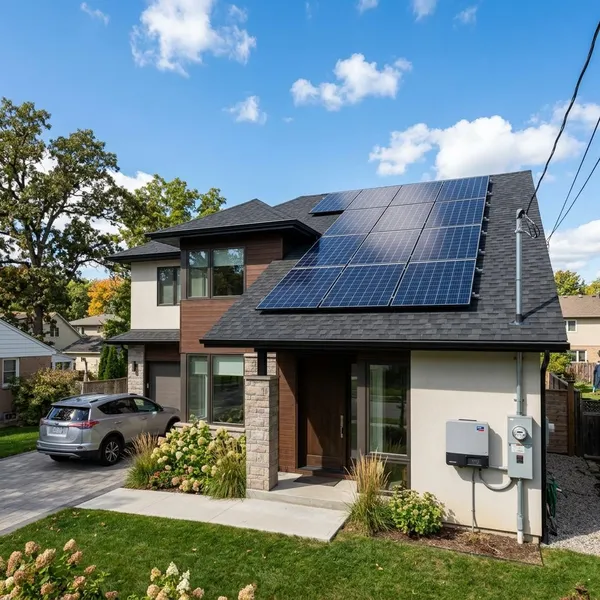
An on-grid kit makes the most sense when you want a practical solar project rather than a full energy-independence project. It uses the electrical service you already have, avoids large battery costs, and can be sized around real annual usage instead of worst-case backup needs.
It lowers electricity costs over time
Every kilowatt-hour your home uses from the solar array is one you do not buy from the utility at that moment. Over years, that can reduce bills enough to make the system worthwhile, especially in areas with high electricity rates or solid solar incentives.
It uses existing grid connections
The grid connection gives the system breathing room. Your solar array does not need to cover every night, every winter week, or every high-demand moment because the utility remains available.
What Equipment Choices Affect Solar Performance?
Performance comes from matching the equipment to the site. The best kit for a wide, sunny roof may not be the best kit for a smaller roof with shade, multiple roof faces, or strict utility requirements.
Panel quality affects energy production
Panel quality affects how much energy the system can produce now and how well it may hold output later. Efficiency, heat behavior, product warranty, and expected degradation all matter more than a single wattage label.
A hot climate is a good example of where this matters. Panels that look similar on paper may perform differently on very warm roofs, so it is worth comparing temperature ratings and warranty details instead of choosing only by price per panel.
Inverter type affects system efficiency
Inverter design can change how the system handles shade, mixed roof directions, and troubleshooting. A low-cost string inverter may be perfectly reasonable on one clean roof plane, but it can be less forgiving if one section of the array regularly underperforms.
Monitoring features affect system management
Monitoring helps you notice when the system is not behaving normally. At minimum, you want to see production trends clearly enough to catch a sudden drop instead of discovering the problem months later through higher utility bills.
- Basic monitoring: useful for checking daily and monthly production.
- Panel-level monitoring: helpful for complex roofs or faster troubleshooting.
- Alert features: valuable if you do not want to check the app regularly.
Can You Install an On-Grid Solar Kit Yourself?
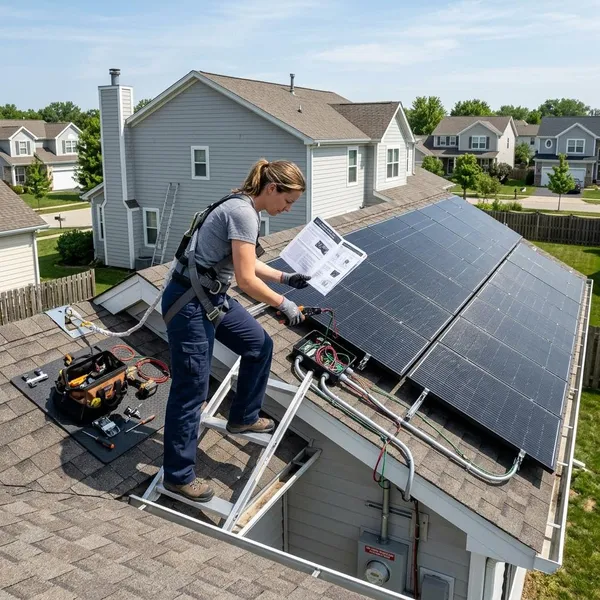
Some homeowners can take on parts of an on-grid solar installation, but grid-tied solar is not a casual plug-in project. It involves roof work, electrical code, permits, inspections, utility interconnection, and safety rules that vary by location.
The safer question is not "Can I install it myself?" but "Which parts can I handle without creating permit, warranty, roof, or electrical problems?" For many people, partial DIY is the realistic middle ground.
DIY options reduce installation costs
DIY can reduce labor costs if you have the right skills and your local rules allow it. Tasks such as planning the layout, sourcing equipment, or helping with non-electrical work may lower the total bill.
The risk is that one mistake can erase the savings. Poor roof flashing can cause leaks, incorrect wiring can fail inspection, and buying a kit before checking utility rules can leave you with equipment that cannot be approved. DIY makes more sense for a confident, code-aware homeowner than for someone trying solar mainly as a weekend experiment.
Professional installation simplifies compliance
A professional installer usually makes the approval process smoother because they know what local inspectors and utilities expect. They can also spot problems early, such as an overloaded service panel, roof setback issue, or inverter model that does not meet local interconnection requirements.
- Use a professional for steep roofs, complicated electrical panels, strict jurisdictions, or limited DIY experience.
- Consider partial DIY if you want to reduce cost but still need licensed help for electrical and utility-facing work.
- Ask about warranty impact before installing anything yourself, because some coverage may depend on approved installation practices.
Conclusion
An on-grid solar kit is a strong choice when your goal is lower electricity costs and your utility service is dependable, but it is not the right shortcut for backup power or full independence. Start with your yearly usage, roof conditions, export credit rules, and installation path; if those four pieces line up, a grid-tied kit can be a practical way to go solar without taking on battery-level complexity.