
A solar panel with built in battery is a practical way to use solar power without installing a full off-grid system. It works well for charging phones, running small lights, powering routers, laptops, camping equipment, or covering short emergency needs. For whole-home backup, however, most portable all-in-one units are too limited, and a larger solar battery system is usually the better fit.
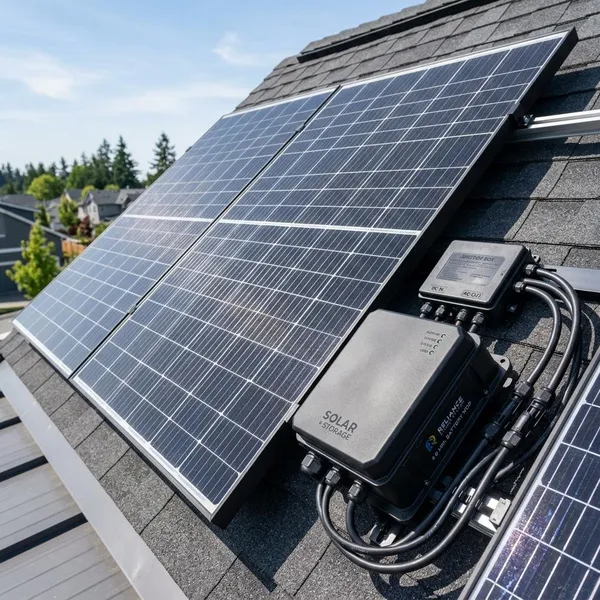
How Does a Solar Panel With Built-In Battery Work?
The process is straightforward: sunlight creates electricity, charging electronics send that power safely into the battery, and the system then supplies power through USB, DC, or AC outputs. The part that often surprises buyers is how much real-world performance changes with shade, weather, battery size, and device demand.
Generate electricity from sunlight
Solar cells produce direct current electricity when light hits them. Strong midday sun gives the best result, while clouds, winter sun, dirt, poor angle, and partial shade all reduce output. A panel rated at 100 watts will not usually deliver 100 watts all day in normal outdoor use.
- Best case: clear sun, good angle, no shade.
- Common case: mixed sun with lower average charging speed.
- Poor case: shade across part of the panel, which can cut output sharply.
Store power in the built-in battery
The built-in controller manages charging so the battery is not simply exposed to raw panel output. Better systems include protections against overcharging, overheating, and excessive discharge, although the exact protection depends on the product.
Battery chemistry also matters. Lithium iron phosphate batteries are often preferred in higher-quality portable power systems because they tend to offer better cycle life and stability than many older lithium or lead-acid options. If you plan to use the unit every week rather than only during the occasional outage, battery type becomes a much bigger buying factor.
Deliver electricity to connected devices
Stored power reaches your devices through the output ports. USB is usually efficient for phones and small electronics, DC can be useful for compatible camping gear, and AC outlets are convenient for standard plugs but lose some energy through the inverter.
Before assuming a device will run, check two things: whether the battery has enough watt-hours for the runtime you need, and whether the output can handle the device's running wattage and startup surge. A small fridge, pump, or power tool may need more startup power than its normal running number suggests.
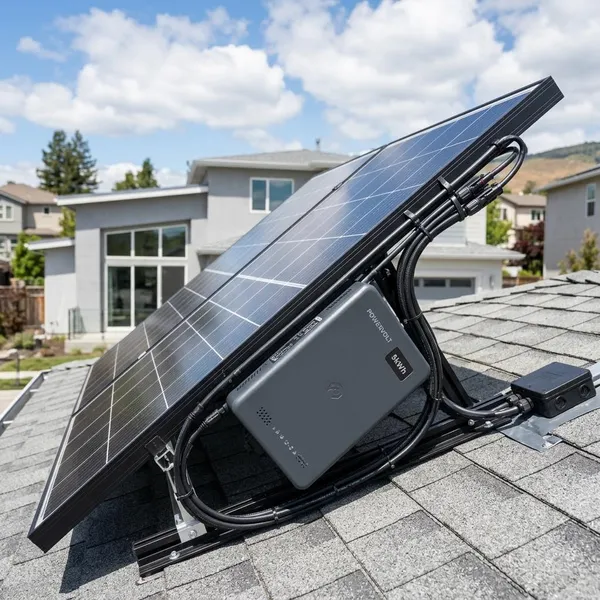
Why Choose a Solar Panel With Built-In Battery?
The main reason to choose an integrated system is not maximum power. It is simplicity. If you want something you can charge, move, store, and use without planning a custom solar setup, an all-in-one design can be the more practical option.
Set up solar power more easily
For a beginner, the biggest advantage is avoiding component matching. Separate systems require decisions about voltage, connectors, battery chemistry, charge controllers, fuses, and inverter size. With a matched unit, most of that work has already been handled.
This is especially useful in a low-risk, practical situation such as keeping lights and phones charged during a short outage. If you are building power for a cabin used every weekend, though, the simplicity may not outweigh the limits of a fixed integrated design.
Use stored power anywhere
A portable solar battery system can follow the need. You might use it for summer camping, then keep it indoors as backup for storm season, then move it to a shed for a weekend project. That flexibility is difficult to get from a fixed rooftop or wall-mounted setup.
Reduce extra equipment needs
An integrated unit can reduce clutter and buying mistakes because you need fewer separate parts. This matters in apartments, vans, small sheds, boats, and RVs where loose cables and extra boxes quickly become annoying.
- Less to match: fewer worries about incompatible controllers or connectors.
- Less to carry: easier storage and transport between locations.
- Less to monitor: many units show input, output, and battery level on one screen.
The downside is serviceability. If one internal part fails or the battery wears out, repair may be harder than replacing a separate component in a modular setup.
Where Can You Use a Solar Panel With Built-In Battery?
These systems make the most sense where the power need is modest and the value of portability is high. They are good for keeping essential devices alive, not for replacing a full household electrical system.
Power camping and RV trips
Camping is one of the clearest use cases. A smaller unit may be enough for phones, headlamps, camera batteries, and a small fan on a weekend trip. For RV travel, a larger unit can reduce generator use and help with laptops, portable fridges, lights, or a CPAP machine if the output and battery capacity are suitable.
The practical split is simple: occasional summer camping can usually tolerate slower charging and smaller storage, while year-round or multi-day travel needs more battery reserve because cloudy days and longer nights reduce solar recovery.
Support sheds and remote spaces
A detached shed, greenhouse, small workshop, or garden office often needs only light-duty electricity. If you mainly need LED lighting, tool-battery charging, a camera, or a phone charger, a built-in battery system may be easier than running a permanent power line.
It is less suitable if the space is becoming a daily work area with heating, large tools, or long computer use. In that case, a properly planned separate system or grid connection may be the better long-term choice.
Provide emergency backup power
For outages, think in priorities: communication first, then lighting, then refrigeration or medical needs if the unit is rated for them. A portable system can be very helpful for phones, LED lamps, a router, a laptop, or a small medical device, but you should test the setup before you actually need it.
A common mistake is buying after reading only the battery size and assuming every household appliance will work. Emergency backup depends on output rating, surge capacity, available charge, and how long the outage lasts.
Solar Panel With Built-In Battery vs Separate Systems
The choice comes down to convenience versus control. Built-in battery systems are easier to buy and move. Separate systems take more planning, but they usually give you more capacity, easier upgrades, and better repair options.
Compare setup and portability
If you want power for travel, temporary use, or light emergency backup, an integrated system is usually the easier option. You can charge it, carry it, and use it without designing a full electrical setup.
Separate systems make more sense when the installation will stay in one place. A cabin, workshop, or larger off-grid setup benefits from properly sized panels, batteries, controllers, and wiring, even though the setup takes more effort.
Compare capacity and expansion
Built-in systems are often limited by their internal battery, maximum solar input, and inverter rating. Some allow extra panels or battery expansion, but many do not. That is fine for predictable small loads and frustrating if your needs grow.
| Best fit | Built-in battery system | Separate system |
|---|---|---|
| Weekend camping | Usually ideal | Often more than needed |
| Occasional outages | Good for essentials | Better for longer backup |
| Remote cabin | Useful starter option | Stronger long-term choice |
| Growing power needs | Can become restrictive | Easier to expand |
Compare cost and long-term value
An integrated unit can feel cheaper because one purchase covers the main parts. For occasional use, that can be good value. You are paying for convenience, portability, and a lower chance of choosing mismatched components.
For heavy or frequent use, long-term value may favor a separate system. Replaceable batteries, upgradeable panels, and serviceable parts can matter more than the lower effort of an all-in-one product.
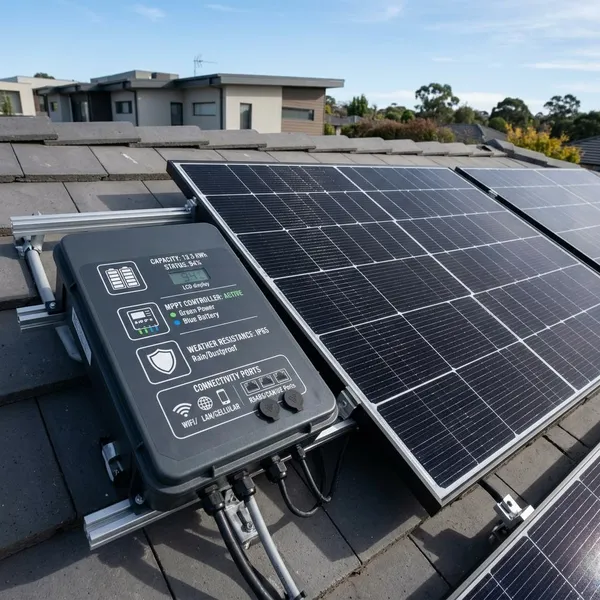
What Features Should You Check Before Buying?
Start with the devices you actually want to run. Write down their wattage and how many hours you need them, then compare that total with the battery capacity. After that, check output limits, charging speed, battery type, durability, and warranty.
The most common buying mistake is choosing by solar panel wattage alone. A larger panel helps with charging, but it does not fix a weak inverter, a small battery, poor weather, or a device that needs more surge power than the system can provide.
Check battery type and lifespan
Battery type affects how long the system remains useful. If the unit will be used only a few times a year, lifespan may be less critical. If it will be cycled often for camping, RV travel, or a remote workspace, look more carefully at the chemistry, cycle rating, operating temperature range, and whether the battery can be serviced.
Check charging speed and power output
Check charging and output separately. Charging speed tells you how quickly the battery can refill; output tells you what devices it can safely run.
- Solar input limit: shows the maximum charging the unit can accept from panels.
- AC charging: useful before storms or before leaving home.
- Continuous wattage: must cover the device while it runs.
- Surge rating: matters for fridges, pumps, and some tools.
- Ports: confirm you have the USB, DC, or AC connections you need.
Check durability and warranty
Durability matters more if the system will be moved often. Look for solid hinges on folding panels, protected ports, a tough case, and a water- or dust-resistance rating that matches how you plan to use it. Do not assume every portable unit is safe to leave in rain or extreme heat.
Warranty terms are worth reading before purchase, especially for higher-priced systems. Check whether the battery is covered, what counts as normal wear, and whether repair or replacement support is available in your region.
Conclusion
A solar panel with built-in battery is a smart choice when you need simple, portable power for realistic loads: lights, phones, routers, laptops, camping gear, or short emergency backup. Choose a separate or expandable system if you expect daily heavy use, whole-home backup, or future growth. The best first step is not comparing the biggest advertised wattage; it is listing what you need to run, for how long, and under what conditions.