
A 100 watt solar panel can run phones, LED lights, small fans, routers, and some laptop or TV use, but it is not a plug-and-play answer for heavy appliances. The first thing to check is not the panel size alone, but how many watt-hours your devices need in a day and whether you have a battery for times when the sun is weak or gone.
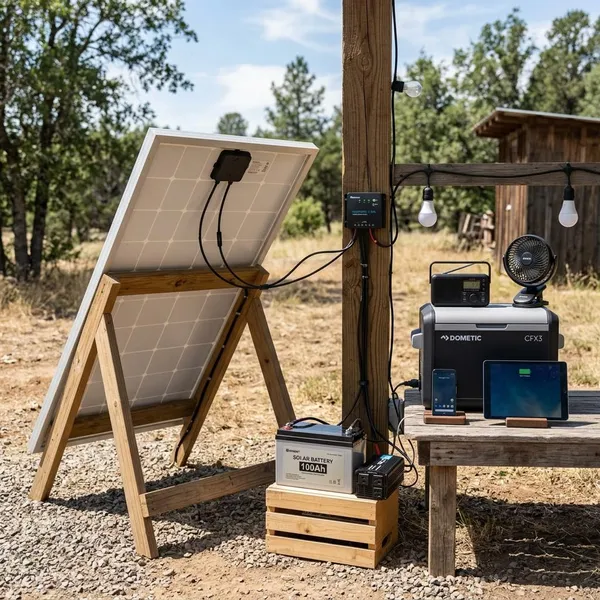
What Devices Can a 100 Watt Solar Setup Power?
A 100W setup is best for low-power devices that either charge slowly or run for short periods. It can be very useful for a weekend camping box, a small shed light setup, or keeping basic electronics alive during an outage. It becomes less suitable when you expect it to behave like a wall outlet all day.
| Device type | Realistic use with a 100W setup | What to watch first |
|---|---|---|
| Phones, tablets, USB gear | Easy daily charging | Use regulated USB output or a power station |
| LED lights and small fans | Good for evening or campsite use | Add up hours, not just wattage |
| Laptop and router | Possible for light work sessions | Battery size matters more than the panel rating |
| Small TV or electronics | Possible for short use | Check inverter losses and actual watts |
| Heaters, microwaves, large fridges | Usually not practical | High power draw or startup surge |
Phones, tablets, and USB devices
Phones, tablets, earbuds, cameras, and USB battery packs are the easiest match. A phone may need roughly 10 to 15Wh for a full charge, while many tablets need around 20 to 40Wh, so a sunny day can cover several small recharges without stressing the system.
For this type of use, a regulated USB output is worth having. Charging directly from unstable panel output can be unreliable, while a small battery or power station smooths out passing clouds.
Laptops and Wi-Fi routers
A laptop-and-router setup can work, but it is where a 100W panel starts to feel limited. A light laptop session for a few hours is very different from running a work-from-camp setup all day with video calls, a router, and screen brightness turned up.
- Occasional email or writing: often realistic with a battery.
- Full remote-work day: usually needs more panel capacity or a larger battery.
- Router overnight: possible only if the battery has enough usable storage.
LED lights and small fans
This is one of the strongest use cases for a 100W solar setup. A 10W LED light running for five hours uses 50Wh, and a 20W fan running for four hours uses 80Wh. Those numbers are small enough that you can plan around them instead of guessing.
For a shed, tent, or small RV, the common mistake is leaving several "small" devices on for too long. One light is easy; three lights, a fan, and phone charging all evening can quietly use most of a small battery.
Small TVs and other low-power electronics
Some small LED TVs, radios, portable speakers, and low-power entertainment devices can run from a 100W system for short sessions. The useful check is the watt rating on the device or power adapter, then multiplying that number by the hours you expect to use it.
A 40W TV for two hours is a reasonable 80Wh load. A bigger screen, game console, or anything that heats water, makes coffee, cooks food, or warms a room is in a completely different category.
How Much Energy Does a 100 Watt Solar Panel Produce?
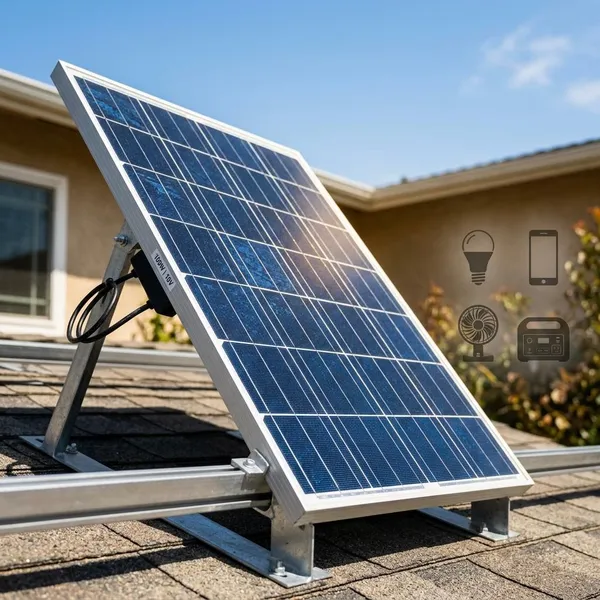
The 100W label tells you the panel's maximum rating under ideal test conditions, not what you will receive every hour of the day. For planning, think in daily watt-hours. That is the number that tells you whether your devices can actually run long enough.
Rated power versus actual output
A 100W panel may get close to 100 watts for a short time in strong, direct sun, but real output is often lower. Seeing something like 60 to 90 watts during good sun is common, and it can drop much further with poor angle, shade, heat, dirt, or thin cloud cover.
Daily watt-hours based on peak sun hours
A practical daily estimate for many locations is about 300 to 500Wh from a 100W panel, depending on season and sun exposure. A simple planning formula is:
- Panel wattage: 100W
- Peak sun hours: for example, 4 hours
- Before losses: 100 × 4 = 400Wh
- After losses: often around 300 to 340Wh usable
Use the lower end if the panel lies flat on an RV roof, you camp under trees, or you need reliable power outside summer. Use the higher end only when the panel gets clean, direct sun for much of the day.
Output losses from heat, shade, and panel placement
Shade is the big one to avoid. Even partial shading on a small panel can cut output sharply, so moving the panel a few feet away from a branch or roof shadow may matter more than buying another small accessory.
Heat also reduces efficiency, and placement changes the result. A tilted panel aimed toward the sun will usually outperform a flat panel left wherever it happens to fit. For temporary camping, adjusting the panel once or twice during the day can make a noticeable difference; for a fixed shed or RV install, choose the least shaded spot before worrying about fine details.
What Equipment Do You Need to Run Devices?
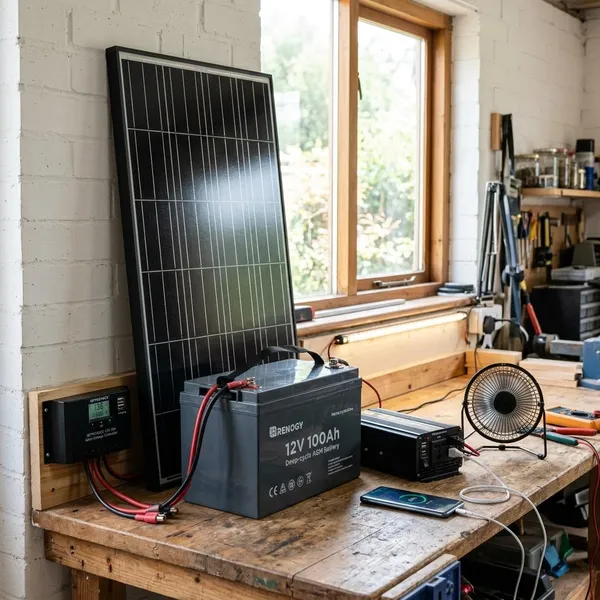
A panel by itself only produces electricity when light hits it. To make that power useful, you usually need a few supporting parts: something to control charging, something to store energy, and sometimes something to convert DC power into household AC power.
A charge controller for a compatible battery
If the panel charges a battery, use a charge controller. It regulates voltage and current so the battery charges safely and correctly. Basic PWM controllers are common in small kits, while MPPT controllers can make better use of the panel in some setups, especially when panel voltage and battery voltage do not match closely.
The controller also needs to match the battery type and system voltage. Do not assume every controller works with every lithium or lead-acid battery; check the supported battery settings before connecting everything.
Battery storage for use without sunlight
A battery is what turns a 100W panel from a daytime-only charger into something useful at night, during clouds, or while several devices are connected. Without storage, your device can lose power every time sunlight drops.
Battery type changes usable capacity. A 12V 50Ah battery is about 600Wh on paper, but a lead-acid battery usually should not be drained as deeply as a lithium battery. For a weekend light-and-phone setup, a modest battery may be enough. For daily cabin or RV use, battery capacity becomes the part you feel first when the weather turns bad.
An inverter for AC appliances
Use an inverter only when the device needs a standard wall-style AC outlet. It is convenient, but it also wastes energy, often around 10% to 15% or more depending on the inverter and load.
For laptops, TVs, and sensitive electronics, a pure sine wave inverter is usually the safer choice. Also check the inverter's continuous rating and surge rating, especially for anything with a motor or compressor.
Regulated outputs for USB and DC devices
USB-C, 12V DC, and other regulated DC outputs can stretch a small system further because they avoid unnecessary inverter losses. If your router, lights, fan, or laptop can run from an efficient DC adapter, that may be better than converting battery power to AC and then back down again through a wall charger.
How Do You Calculate Device Runtime?
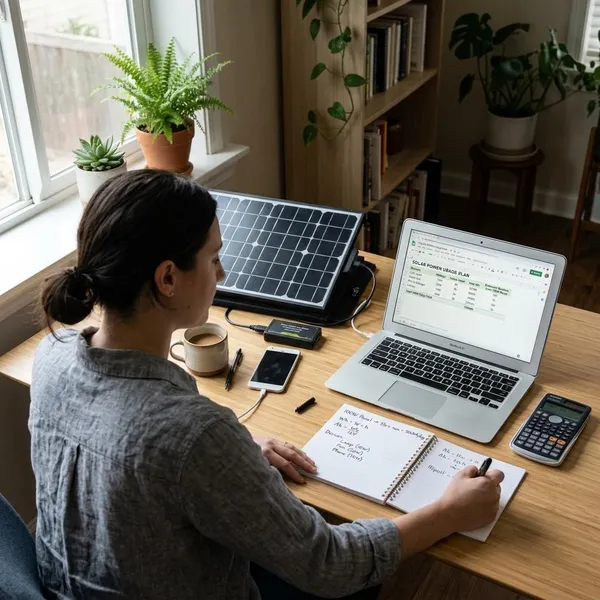
The cleanest way to decide if a 100W panel is enough is to make a small energy budget. Start with the devices you actually plan to use, not a best-case list of what solar panels can technically power.
Check running watts and startup power
Look for the running watts first. Then check whether the device has a startup surge. Motors and compressors can need several times their normal running power for a few seconds, which is why a device that looks possible on average may still fail to start.
This is the usual problem with refrigerators, pumps, microwaves, coffee makers, and heaters. A 100W panel is not the right starting point for those loads unless the full system has been sized around them with a suitable battery and inverter.
Multiply watts by hours of use
Use watt-hours for runtime planning:
- 10W light × 5 hours = 50Wh
- 20W fan × 4 hours = 80Wh
- 50W TV × 2 hours = 100Wh
- 60W laptop × 3 hours = 180Wh
If those devices run on the same day, the total is 410Wh before losses. That is already near or above what a single 100W panel may realistically produce in many conditions.
Add up daily demand and conversion losses
After adding device use, include a margin for losses. Inverter losses, battery charging losses, wiring, heat, and imperfect sun all reduce what reaches your device.
A useful habit is to add roughly 15% to 30% extra demand when AC power or battery charging is involved. If your devices need 300Wh, planning for 350 to 400Wh is more realistic than expecting the math to work perfectly.
Compare demand with daily solar output
Now compare your daily load with the panel's likely production. If your devices need 150 to 250Wh per day, a 100W panel can feel comfortable in good sun. If they need 350 to 500Wh every day, you are relying on strong conditions and a well-sized battery. If the total is higher than that, a larger panel setup is usually the more sensible choice.
Check usable battery capacity for overnight use
For night use, the battery decides runtime. If you have 400Wh of usable battery capacity and your devices draw 50W together, expect roughly eight hours before losses. If the same devices draw 100W, that drops to about four hours, and an inverter may shorten it further.
This is where temporary and long-term use split. For one weekend, you may accept careful rationing and sunny-day charging. For year-round backup or daily off-grid use, size the battery so one cloudy day does not immediately leave you choosing between lights, internet, and device charging.
Conclusion
A 100W panel is a good small-power tool, not a miniature home electrical system. It makes sense for charging, lighting, fans, routers, and careful laptop or TV use, especially with a battery and efficient DC outputs. If your plan includes long daily runtimes, bad-weather reliability, refrigeration, heating, or cooking, treat 100W as the starting point for your calculation rather than the final system size.