A solar generator can run everyday essentials such as phones, laptops, lights, Wi-Fi routers, CPAP machines, TVs, and, in some cases, refrigerators. It will not power every appliance simply because it has an AC outlet, though. To know what a solar generator can power, compare the device's wattage with the generator's battery capacity, continuous output, and surge rating. Those three numbers determine whether your generator can run the appliance safely—and for how long.
How long can a solar generator run devices?
Runtime can be less than an hour or more than a day, depending on the battery size and the device load. A low-watt router may run for many hours, while a microwave can drain a noticeable amount of battery in a short cooking session.
A useful rule is to separate "can it run?" from "is it worth running?" A solar generator may technically power a high-watt appliance, but that appliance may use so much energy that it weakens your backup plan.
Battery size determines runtime
The larger the battery, the longer the runtime for the same load. A 1,000Wh battery powering a steady 100-watt load gives about 10 hours before losses are considered, so a safer real-world estimate is usually a little lower.
For a short campsite setup, a small battery may be enough for lights, phones, and a laptop. For a storm outage where the fridge and CPAP both matter overnight, a larger battery gives you breathing room instead of forcing constant device swapping.
Device power use affects runtime
Runtime drops quickly as wattage rises. A 15-watt router is a very different load from a 1,200-watt kettle, even if both plug into the same AC outlet.
| Device type | Backup value | Battery impact |
|---|---|---|
| Phone, router, LED light | High during outages | Low |
| TV, laptop, small fan | Useful but optional | Moderate |
| Microwave, kettle, heater | Convenient, not efficient | High |
Refrigerators are a special case because they cycle on and off. Their active wattage may look high, but their average use over several hours can be much lower if the door stays closed.
Solar charging extends runtime
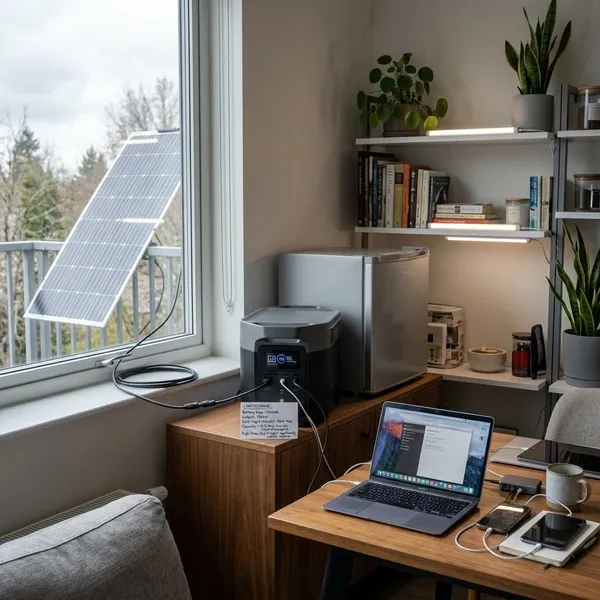
Solar panels can stretch runtime by replacing some of the energy you use during the day. This is especially helpful for multi-day outages, RV use, or cabins where you are not simply waiting for grid power to return.
Plan conservatively. Shade, clouds, winter sun, panel angle, cable losses, and charging limits can all reduce output. Treat solar charging as a way to recover energy during daylight, not as a guarantee that the battery will stay full.
Which common appliances can a solar generator run?
Most solar generators are strongest with essential and moderate loads. They are less practical for appliances that create heat or need heavy startup power.
The best question is not only whether the appliance turns on. Ask whether it can run long enough to solve the problem you bought the generator for.
Refrigerators and freezers for backup
A properly sized solar generator can often run a refrigerator or freezer for backup. The generator needs enough surge capacity to start the compressor and enough battery capacity to handle the appliance cycling through the day.
For many homes, refrigeration is the first priority because it protects food, medicine, and daily routines. A medium or large unit is usually more realistic than a compact one, especially if the outage lasts into a second day.
A simple habit helps: keep the door closed as much as possible. During an outage, every unnecessary door opening adds work for the compressor and uses more battery.
CPAP machines and medical devices overnight
CPAP machines are often a good match for solar generators because they can run for hours without the heavy draw of cooking or heating appliances. Heated humidifiers and heated tubing can raise power use, so check your exact setup rather than relying on a generic CPAP estimate.
If the device is medically important, do not size the system to the bare minimum. Choose extra battery margin, test the setup before an outage, and use the manufacturer-approved power method where required.
Lights, routers, TVs, and small appliances
Lights, routers, phones, laptops, tablets, and many TVs are usually easy loads. They give a lot of practical benefit for relatively little energy, which makes them ideal for short outages and everyday backup.
- Keep communication running: router, modem, phone charger, and laptop.
- Keep the room usable: LED lamps instead of high-watt lighting.
- Use comfort loads selectively: a small fan is usually more sensible than a heater.
Small kitchen appliances vary. A blender may be fine for brief use, while a toaster or electric kettle can pull a large amount of power very quickly.
How do you calculate what a solar generator can power?
Use two checks. First, compare the device's running and surge watts with the generator's output ratings. Then compare the energy you expect to use with the battery capacity.
This avoids the common mistake of buying a generator that can turn something on but cannot run it for the time you actually need.
Check device running watts
Find the running watts on the device label, power adapter, manual, or manufacturer page. If the label gives volts and amps instead of watts, multiply volts by amps for a basic estimate.
Add only the devices that will run at the same time. A fridge plus router plus lights is a different situation from a fridge plus microwave plus coffee maker.
Check startup surge watts
Startup surge matters for devices with compressors, motors, or pumps. If the surge rating is too low, the generator may shut down even though the running wattage looks acceptable.
When the surge number is not listed clearly, look for the appliance manual, manufacturer support, or a watt meter that can capture startup behavior. Guessing is risky with refrigerators, pumps, and air conditioners.
Estimate runtime with solar charging
With solar panels, compare daily energy use with realistic daily solar input. If your essentials use about 1,000Wh per day and your panels replace 700Wh on a decent day, the battery only has to cover the gap.
For year-round backup, use a cautious estimate rather than the best summer number. A system that works only on clear July afternoons may disappoint during cloudy winter outages.
What size solar generator do you need?
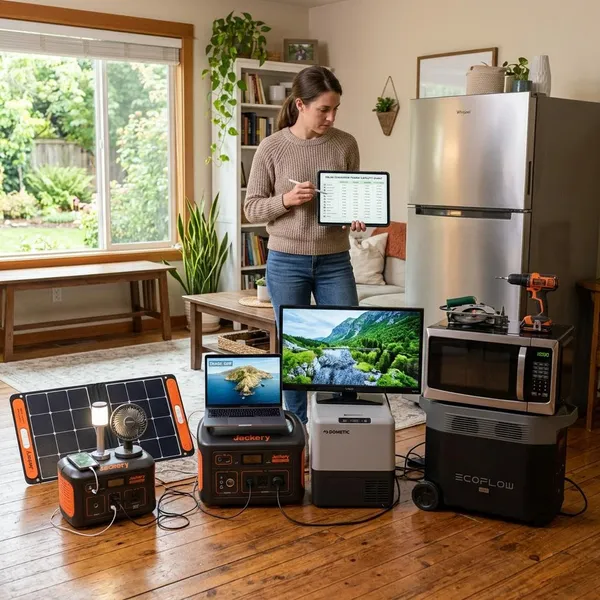
The right size depends on your must-run devices, desired runtime, and solar charging plan. Bigger is not automatically better if it is too heavy, too expensive, or more capacity than you will use.
Think in real situations. A weekend camper needs a different setup from a household preparing for refrigerator backup during storm season.
Small models power basic electronics
Small models are best for phones, tablets, laptops, cameras, LED lights, and maybe a router or small fan. They are easy to carry and useful for road trips, short blackouts, and low-risk backup.
They are not the right choice if your main goal is running a refrigerator through the night or supporting several essential devices at once. In that case, the battery and inverter are usually too limited.
Medium models power essential appliances
Medium models are often the practical middle ground for home backup. They can usually handle a mix such as a refrigerator, router, LED lights, phone charging, laptop use, and a CPAP machine if the load is managed carefully.
- Good fit: short to moderate outages where essentials matter most.
- Watch closely: fridge surge, overnight medical loads, and total simultaneous wattage.
- Avoid wasting energy: heaters, kettles, and long microwave use.
Large models power multiple devices
Large models are better for extended outages, RVs, cabins, and households that want more than the bare essentials. They often provide stronger inverters, larger batteries, faster solar charging, or expandable battery options.
Even then, a large solar generator is not the same as unlimited whole-house power. It may run several important loads, but high-draw appliances still need careful planning. Air conditioning, electric heating, ovens, and water heaters can overwhelm the system or drain it quickly.
Solar generator safety tips
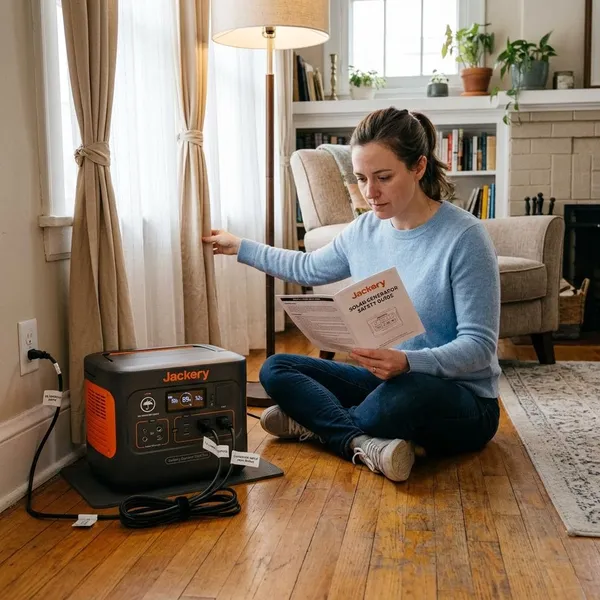
Solar generators are generally convenient and cleaner to use than fuel generators, but they still need sensible handling. The main safety goals are avoiding overload, protecting the battery, and using only compatible charging equipment.
Stay within output limits
Keep your normal load below the continuous output rating, not right at the edge. This gives the inverter room for small fluctuations and reduces overload shutdowns.
Be especially careful with appliances that cycle or start under load. A refrigerator, pump, or tool may behave differently from a phone charger, even if both appear to fit the wattage limit at first glance.
Store the battery in proper conditions
Store the unit in a dry, clean place away from extreme heat, direct sun, and severe cold. Long storage in poor conditions can reduce battery health and make runtime less predictable.
If the generator sits unused for months, follow the manufacturer's storage charge guidance. Leaving a battery completely full or completely empty for a long time is often not ideal, but the recommended level depends on the model and battery chemistry.
Charge and use it correctly
Use the supplied charger or compatible solar panels within the generator's input limits. Mismatched voltage, incorrect connectors, or blocked ventilation can cause poor charging or unnecessary stress on the unit.
- Test before you need it: run your fridge, CPAP, or router setup at home.
- Label your key cables: outage setups are easier when you are not searching in the dark.
- Watch the display: battery drop during a test tells you more than marketing estimates.
Conclusion
A solar generator works best when matched with the right devices and power needs
A solar generator is most useful when it is sized around essentials, not wishful thinking. Check running watts first, confirm surge needs for motorized appliances, then decide how many hours of battery you need before solar charging can help. If the setup keeps your fridge cold, medical equipment running, lights on, and communication available, it is doing the job that matters most.