
A solar generator turns sunlight into stored electricity you can use through standard outlets, USB ports, and other charging connections. In practical terms, what a solar generator does is provide quiet, portable backup power for essentials such as phones, laptops, lights, small appliances, medical devices, or camping gear when grid power is unavailable, unreliable, or simply out of reach. How much it can power depends on its battery capacity, inverter rating, solar input, and the energy demands of the devices you plug in.
How does a solar generator work?
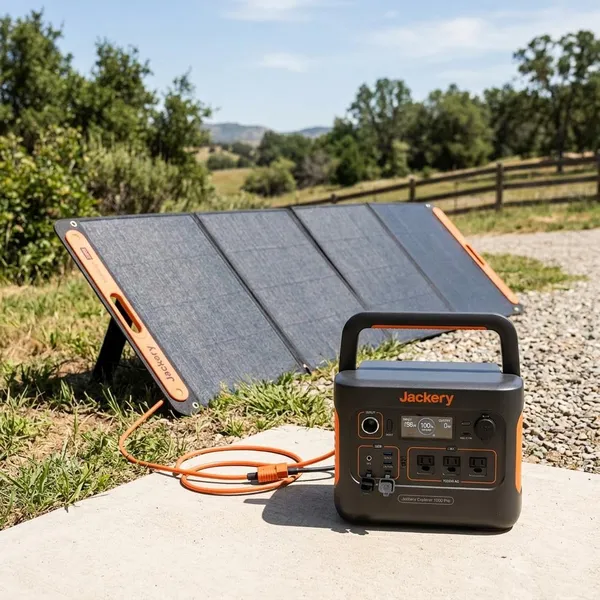
A solar generator works as a stored-power system. Solar panels collect energy during daylight, the battery holds that energy, and the inverter turns it into the kind of electricity many household devices can use.
The most important thing to understand is that it is not like a gas generator that keeps making power as long as fuel is available. Once the battery is low, you need to recharge it from solar panels, a wall outlet, a vehicle socket, or another supported charging source.
Solar panels collect energy from sunlight
Solar panels are the intake side of the system. They convert sunlight into direct current electricity and send it toward the generator for charging.
Real charging speed changes a lot with conditions. A panel in open summer sun may refill a battery much faster than the same panel in winter shade, under trees, or behind a window. If you plan to rely on solar charging during an outage or a multi-day trip, check the generator's maximum solar input and think about where the panels will actually sit during the day.
The battery stores energy for use later
The battery is what makes the system useful after sunset or during a blackout. Its size is usually listed in watt-hours, which gives you a rough idea of how much energy is available before recharging.
- Small battery: best for phones, lights, cameras, and short laptop use.
- Medium battery: better for routers, fans, CPAP machines, or a mini fridge, depending on wattage.
- Large battery: more suitable for longer outages, RV use, or keeping several essentials running.
Battery size affects runtime, not whether a demanding appliance can start. That second question depends heavily on the inverter.
The inverter converts stored power into electricity
The inverter changes the battery's direct current power into alternating current power for standard outlets. This is why you can plug in familiar items such as a lamp, laptop charger, router, fan, or small kitchen appliance.
For buying decisions, look at two inverter numbers: continuous output and surge output. Continuous output tells you what the unit can run steadily, while surge output matters for appliances with compressors or motors that need extra power when starting.
What are the main parts of a solar generator?
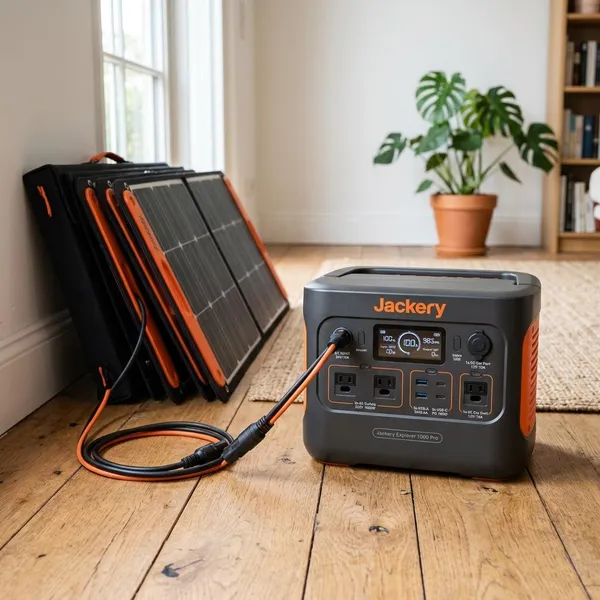
The main parts are the solar panels, battery, charge controller, inverter, and output ports. Some units include the battery, inverter, controller, and ports in one box, while the panels are sold separately or as part of a kit.
If you are comparing models, do not judge the system by one big number on the product page. A useful setup needs the battery, inverter, charging input, and ports to match the way you will actually use it.
Solar panels provide energy input
Solar panels decide how quickly the system can recover energy from the sun. A large battery paired with weak solar input may run devices for a while, but it can take frustratingly long to refill during a long outage or off-grid stay.
For occasional phone charging, a compact foldable panel may be enough. For RV travel or backup use where you expect to recharge daily, stronger panel input usually matters more than people expect.
The battery stores electrical energy
The battery is the reserve tank of the system. It determines how long you can run low-power essentials such as lights and routers, and how realistic it is to support heavier loads such as a fridge or medical device.
Many newer models use lithium-based batteries, and some use lithium iron phosphate chemistry, which is often chosen for longer cycle life. Exact lifespan still depends on the specific model, depth of discharge, heat, storage habits, and how often you use it.
What can a solar generator power?
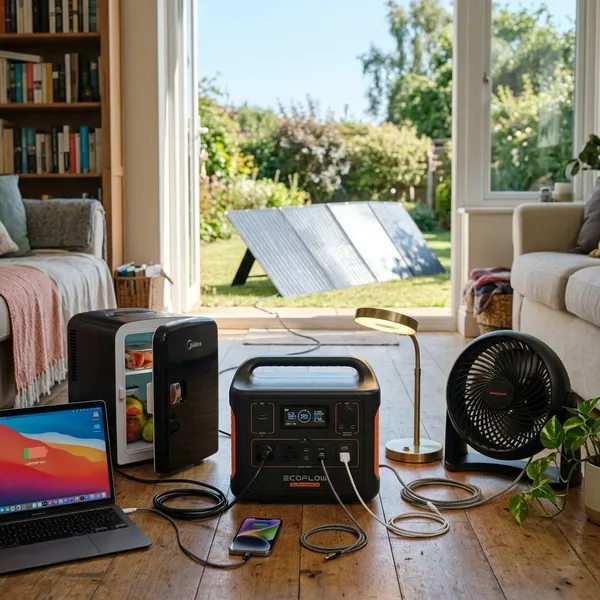
A solar generator can power small electronics, many essential devices, and some outdoor equipment, as long as the device load stays within the generator's limits. The first thing to check is not the marketing category of the appliance, but its wattage, startup surge, and how long you need it to run.
A practical rule is to separate comfort items from essentials. Keeping phones, lights, internet, and a refrigerator running during an outage is a very different job from powering air conditioning, electric heat, an oven, or a whole house.
It powers small electronics and personal devices
Small electronics are the easiest win. Phones, tablets, cameras, LED lights, e-readers, laptops, portable fans, and Wi-Fi routers usually draw modest power, so even compact solar generators can often handle them well.
This is the low-risk use case where solar generators feel most convenient. If your goal is to stay connected during a storm, work from a patio, or keep devices charged on a weekend trip, you may not need the largest model available.
It supports essential home appliances
Larger solar generators can support selected home essentials, including refrigerators, CPAP machines, modems, fans, lights, televisions, and sometimes small kitchen appliances for short use. Whether that works depends on the appliance's actual power draw and the generator's inverter capacity.
Be careful with appliances that heat, cool, pump, or compress. Electric heaters, central air conditioning, electric ovens, dryers, and large well pumps are usually poor matches for a typical portable solar generator. For outage planning, it is smarter to choose a few critical loads than to assume the unit can run the house normally.
Where are solar generators commonly used?
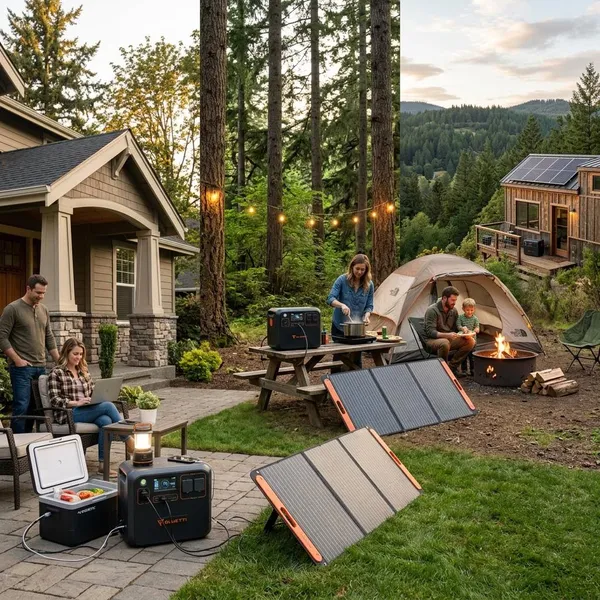
Solar generators are commonly used anywhere quiet portable power is more useful than high-output fuel power. They are popular for short outages, camping, RV travel, outdoor events, mobile work, and remote locations without easy access to outlets.
The best use case is usually moderate power over a limited period. If you need heavy loads for many hours every day, you may need a larger battery system, a fuel generator, or a professionally installed backup setup.
They provide backup power during outages
During an outage, a solar generator can keep the small things that matter most running: phones, lights, a router, a fan, and sometimes a refrigerator or CPAP machine. Because there is no engine exhaust from the battery unit, it avoids the indoor carbon monoxide risk associated with gas generators.
For a short outage, a fully charged unit may be all you need. For a multi-day outage, solar panels become more important because they can extend the usefulness of the battery when sunlight is available.
They support camping and outdoor activities
For camping, the main advantage is quiet convenience. You can charge phones, run lights, keep a portable fridge cold, and power small gear without engine noise or fuel handling.
There is still a planning step: match the generator to the trip length. A one-night campsite setup can be simple, while a week away from hookups needs more battery capacity, better solar input, or more careful power habits.
They provide power for RVs and remote work
RVs and remote work setups often need steady low-to-medium power rather than one huge burst. Laptops, hotspots, monitors, lights, fans, and chargers are a natural fit for many solar generators.
Daily use is less forgiving than occasional backup. If you work from the road, check whether the system can recharge fast enough between work sessions, not just whether it can run your laptop for a few hours once.
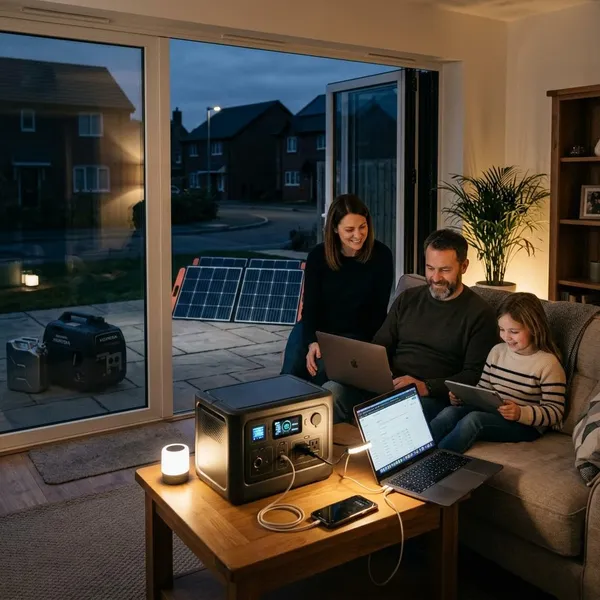
How is a solar generator different from other power options?
A solar generator is different because it stores electricity instead of burning fuel to produce power on demand. That changes where you can use it, how much noise it makes, how much maintenance it needs, and how carefully you must manage capacity.
Compared with a gas generator, it is quieter and easier to use around living spaces, but it usually cannot match the same continuous output for heavy loads. Compared with a plain portable power station, the difference is often solar charging: many "solar generators" are power stations paired with compatible panels.
It stores energy instead of burning fuel
A solar generator runs from stored battery energy. There is no gasoline tank, oil change, spark plug, or engine exhaust from the power station itself.
The tradeoff is simple: fuel generators can keep running if you have fuel, while solar generators must be recharged once the battery is low. That makes them cleaner and quieter, but also more dependent on battery size, charging speed, and sunlight.
It runs quieter than gas generators
Most solar generators produce little more than fan noise under load. That makes them much easier to live with in an apartment, bedroom, campsite, office, or shared outdoor space.
This quiet operation changes how people use them. A loud fuel generator may be saved for emergencies, while a battery-based unit can be useful for regular charging, remote work, camping, and nighttime backup without disturbing everyone nearby.
It offers portable power like battery stations
Many solar generators are essentially portable power stations with solar charging support. The label matters less than the specifications.
If you are choosing between products, compare battery capacity, inverter output, solar input limit, recharge time, weight, warranty terms, and port layout. A power station with strong solar compatibility may be a better solar generator than a bundle with weak panels and slow charging.
Conclusion
A solar generator provides simple backup power by storing and using solar energy
A solar generator is most useful when you want quiet, portable power for selected essentials rather than unlimited electricity for everything in a home. Check the devices you care about first, then match the battery size, inverter output, and solar charging speed to that real list. If your needs are phones, lights, internet, a fridge, camping gear, or remote work equipment, it can be a practical and low-maintenance backup option; if your goal is heavy heating, cooling, or whole-home power, plan for a larger system.