
A portable power station is a rechargeable battery box that stores electricity and sends it back out through AC outlets, USB ports, or DC ports when you need power away from a wall socket. The first thing to check is not the number of ports, but whether the unit has enough battery capacity and output wattage for the devices you actually want to run. It is best for phones, laptops, lights, routers, camping gear, and selected appliances—not for powering a whole home like a large fuel generator.
How Does a Portable Power Station Work?
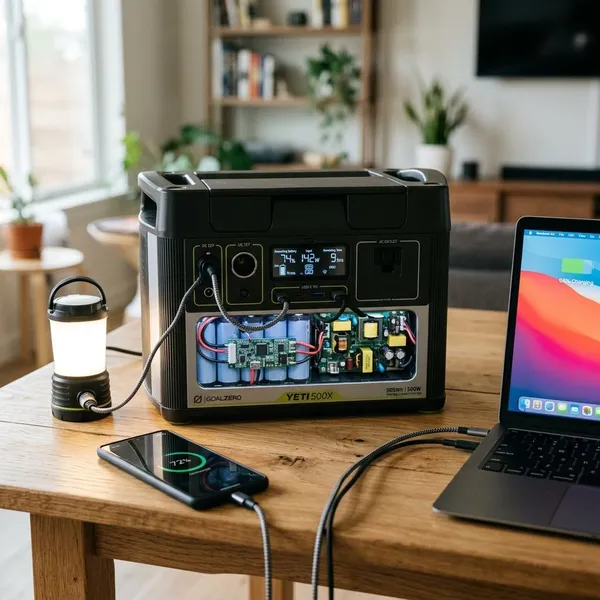
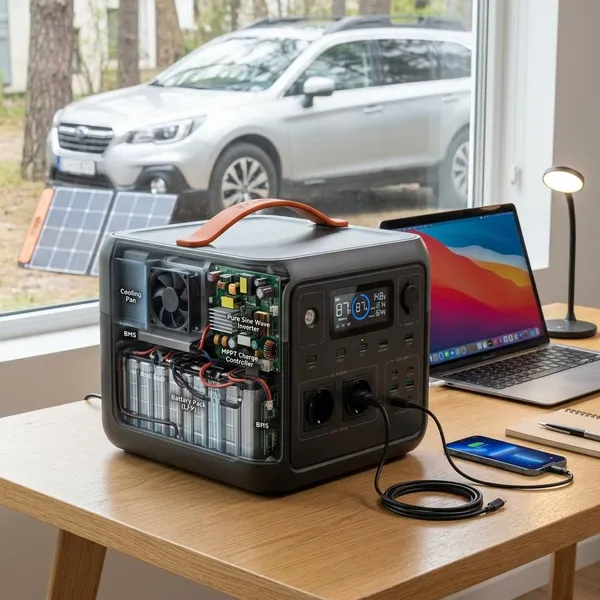
A portable power station works by storing electricity in an internal battery, controlling that energy with built-in electronics, and delivering it through different output ports. The battery holds the energy, the inverter handles household-style AC power, and the battery management system helps protect the unit while it charges and discharges.
Store energy in the battery
The battery is the part that decides how much usable energy you have. Capacity is usually shown in watt-hours, so a 500Wh model has far more runtime potential than a 200Wh model, even if both have similar-looking outlets.
A simple way to think about it: small devices stretch the battery, while heat-making or motor-driven appliances drain it quickly. A phone, LED light, or laptop is a low-stress load. A kettle, heater, or microwave is a very different demand.
Convert DC power into AC power
The battery stores DC power, but many household devices need AC power. The inverter converts battery power into AC so you can use standard plug-in devices such as laptop chargers, TVs, small fans, or some kitchen appliances.
- Continuous wattage tells you what the station can run steadily.
- Surge wattage matters for devices that need a short burst to start.
- Pure sine wave output is usually the safer choice for sensitive electronics and motor-based devices.
Deliver power to connected devices
Once the power is ready, the station sends it through AC outlets, USB-A ports, USB-C ports, or 12V DC outputs. USB-C is often the cleanest option for modern laptops and tablets because it avoids extra adapters, while AC outlets are useful for standard home plugs.
Do not assume every port can run at full power at the same time. If you plug in a laptop, router, fan, and light together, the combined load is what matters.
Recharge through different power sources
Most units can recharge from a wall outlet, and many also support car charging or solar panels. Wall charging is usually the simplest option before a trip or storm. Car charging is useful on the move, but it is often slower. Solar charging can help outdoors or during longer outages, but only if the panel voltage, connector, and input limit match the station.
What Can a Portable Power Station Power?
A portable power station can power low- and medium-demand devices very well, but high-power appliances need more caution. The practical order is simple: keep communication, lighting, cooling, and work devices first; use comfort appliances only if the station clearly supports them.
Small electronics and personal devices
Phones, tablets, cameras, earbuds, handheld game systems, laptops, hotspots, and small speakers are usually easy loads. If your main goal is staying connected during travel or a short outage, a compact unit may be enough.
For a remote worker, the useful check is not just "Can it charge my laptop?" but "Can it keep my laptop, phone, and hotspot going for the hours I normally lose power or work away from outlets?" That keeps you from buying a unit that looks powerful but does not match your actual day.
Camping and outdoor equipment
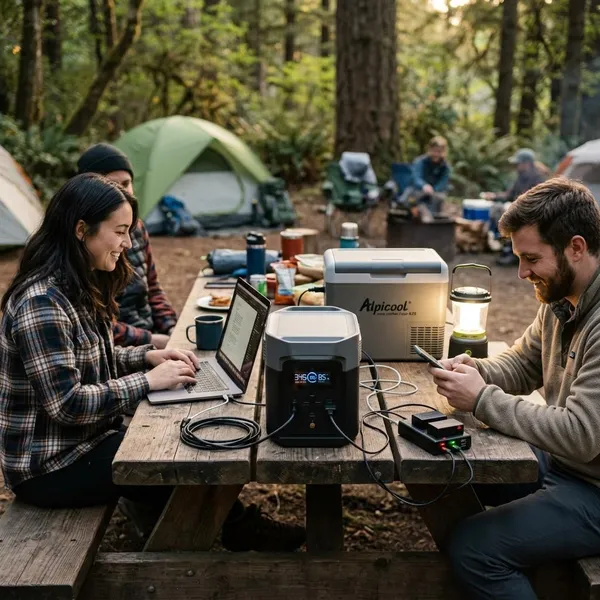
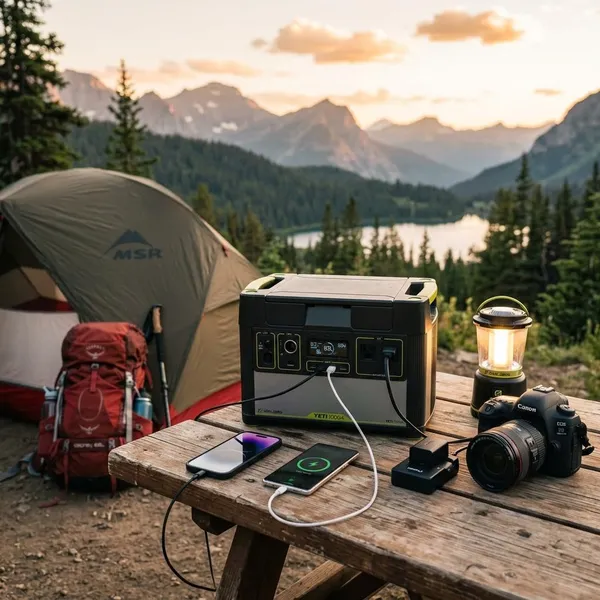
Camping use depends heavily on your style of trip. A summer car camper may care most about fans, lights, phones, and an electric cooler. Someone camping in colder weather may value lighting, camera charging, GPS devices, and keeping communication gear ready more than running comfort items.
- Good fit: LED lights, air pumps, camera batteries, phones, small fans, GPS units.
- Check carefully: electric coolers, portable fridges, projectors, heated blankets.
- Usually not ideal: high-heat cooking gear unless the station is rated for it.
Home appliances during outages
During a blackout, a power station is most useful when you treat it as targeted backup, not whole-home power. Routers, lamps, phones, CPAP machines, small fans, and some TVs are realistic loads for many units. Refrigerators may work on larger models, but startup surge and runtime must be checked before relying on one.
A good outage plan is to choose essentials before the power goes out. For example, keeping a router, phone, light, and medical device running is usually a better use of stored energy than trying to run several kitchen appliances at once.
High-power devices within limits
High-power devices are where buyers make the most mistakes. Microwaves, kettles, coffee makers, hair dryers, space heaters, and power tools can exceed the inverter limit or drain the battery very quickly. Even if one works, it may use so much energy that little is left for essentials.
Before plugging in a heavy appliance, check the device label for running watts, look for any startup surge requirement, and compare both numbers with the station's AC output rating. If the numbers are close, choose a larger station or avoid using that device.
How to Choose a Portable Power Station
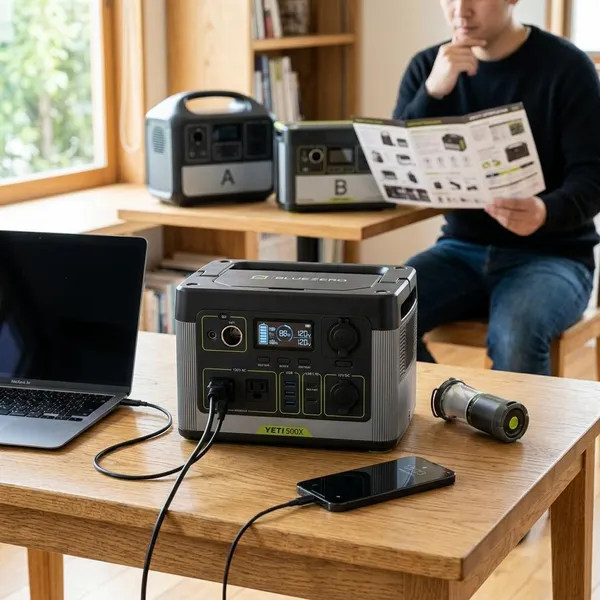
Choosing well starts with your devices, not the biggest advertised battery. Write down what you need to run, how many watts each item uses, and how long you want backup power. Then compare that with capacity, output rating, charging speed, weight, and battery type.
Battery capacity
Battery capacity decides runtime. A small station can be excellent for phones, laptops, and lights, while a larger one is more realistic for refrigerators, longer outages, or several devices at once.
| Use case | What to prioritize | What to avoid |
|---|---|---|
| Phones, tablets, laptop | USB-C output and modest capacity | Paying for a heavy unit you rarely need |
| Weekend camping | Enough battery for nights plus easy carrying | Choosing capacity without checking weight |
| Short home outage | Router, lights, medical or cooling essentials | Planning to run everything at once |
| Appliances | Higher capacity plus strong inverter output | Ignoring startup surge |
Output power
Output power tells you what the station can actually run. A large battery with a weak inverter may still fail with a high-watt appliance. Check continuous watts for normal operation and surge watts for anything with a motor or compressor.
Also check individual port ratings. Some USB-C ports can charge a laptop properly, while others are better suited to phones and tablets.
Charging options
Charging speed affects how convenient the station feels in real life. If you only use it a few times a year, overnight wall charging may be fine. If you use it for regular field work, frequent camping, or storm preparation, faster charging becomes much more valuable.
- Wall outlet: best for regular home charging.
- Car socket: useful during travel, usually slower.
- Solar panels: helpful off-grid, but performance depends on sun, panel size, and input limits.
Size and battery type
Size matters because a power station you hate moving will stay in storage. A compact model is easier for travel, apartment backup, or keeping under a desk. A larger model gives more runtime but may be awkward to lift, carry, or fit in a vehicle.
Battery type is worth checking if you plan to use the unit often. LiFePO4 batteries are commonly valued for longer cycle life and stability, while some lithium-ion models may be lighter for the same general size class. For daily or long-term backup use, lifespan may matter more than saving a little weight.
Who Needs a Portable Power Station?
A portable power station makes the most sense for people who need quiet, simple backup power for specific devices. It is not a direct replacement for every generator, but it is often easier to store, safer to use indoors while discharging, and more convenient for lighter power needs.
Outdoor users and campers
Campers, tailgaters, van travelers, anglers, and weekend outdoor users are a natural fit. The main appeal is quiet power without fuel, fumes, pull-starting, or much maintenance between trips.
For car camping, a heavier station may be acceptable because it only needs to move from the trunk to the campsite. For hiking-style trips or frequent carrying, weight can matter more than extra capacity.
Home backup users
Home backup users should think in terms of priority loads. If a power cut would interrupt your internet, phone charging, lighting, medical equipment, or refrigerated essentials, a portable station can be a practical safety net.
It is especially useful in apartments or condos where a gas generator is not realistic. Still, keep vents clear, follow the manual, and do not treat battery backup as a substitute for proper medical or emergency planning when the risk is serious.
Remote workers and travelers
Remote workers and travelers benefit when reliable outlets are not guaranteed. A compact station can keep a laptop, phone, hotspot, camera gear, or small monitor running in a car, rental, cabin, or temporary workspace.
This is a good example of buying for the situation rather than the biggest number. Someone taking video calls from different places needs dependable laptop and hotspot power. Someone preparing for multi-day outages needs more capacity and stronger output.
Conclusion
A portable power station is worth considering when you need quiet, rechargeable power for specific devices rather than unlimited power for everything in the house. Start by checking the wattage of your essential devices, then match that to battery capacity, output rating, charging method, and weight. If the unit can cover your real use case without being too heavy or underpowered, it is far more useful than simply buying the largest model you can afford.