
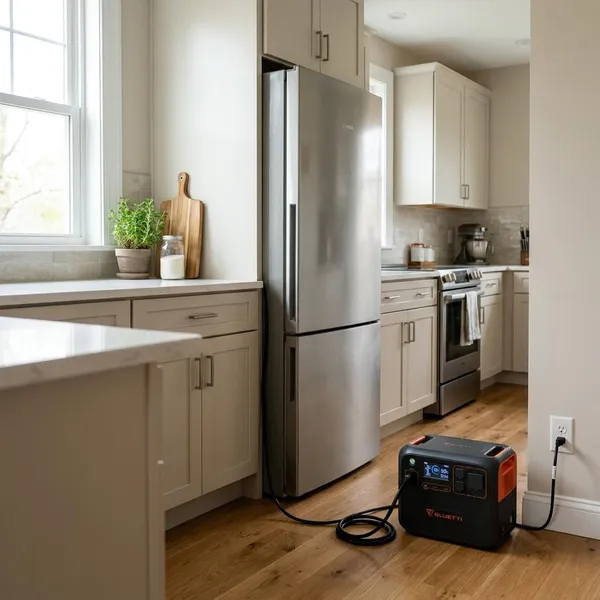
A full-size kitchen refrigerator usually needs a portable power station with 1000W to 1500W of continuous AC output and at least 1000Wh of battery capacity. For overnight backup, older refrigerators, or fridges running in a hot garage, a safer choice is 1500Wh to 3000Wh with strong surge support, because compressors draw a much higher burst of power when they start.
What Size Portable Power Station Does a Refrigerator Need?
A refrigerator needs two things from a portable power station: enough inverter power to start the compressor and enough stored energy to keep the fridge cycling for the outage length you care about. Do not size the system from battery capacity alone. A large battery with a weak inverter can still fail at startup.
| Refrigerator type | Practical power station range | Best fit |
|---|---|---|
| Mini fridge | 500W to 1000W output, 300Wh to 1000Wh capacity | Short outages, dorms, offices, bedrooms |
| Standard kitchen refrigerator | 1000W to 1500W output, 1000Wh to 2000Wh capacity | Household backup for several hours or overnight |
| Large or garage refrigerator | 1500W to 2200W output, 1500Wh to 3000Wh+ capacity | Warmer rooms, longer outages, heavier use |
Small fridges need lower power capacity
Mini fridges and compact refrigerators are usually the easiest to run because many draw roughly 50W to 100W while cooling. A 500Wh unit may cover a short interruption, while 700Wh to 1000Wh gives a more comfortable buffer for overnight use.
This is the low-risk scenario: a dorm fridge, office fridge, or drink fridge where losing cooling for a while is inconvenient but not a major food-safety problem. Even then, check startup surge, because some compact compressor fridges briefly pull more power than their size suggests.
What Determines Portable Power Station Size?
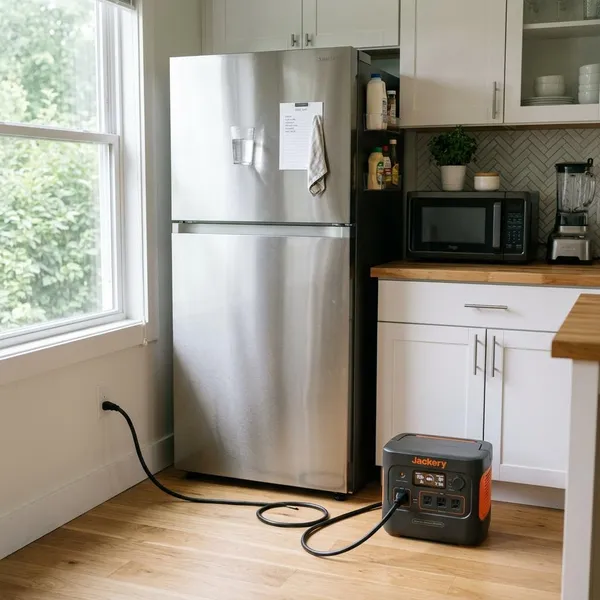
The right size comes down to four specs: running watts, surge watts, battery capacity, and inverter output. Check them in that order before comparing prices or extra features. Runtime matters, but the fridge has to start reliably first.
Running watts determine normal power needs
Running watts show what the refrigerator uses during active cooling. Many fridges land somewhere around 50W to 250W, though older, larger, or poorly ventilated models can use more.
This number helps you understand the load, but it does not tell the full-day energy use by itself. Because the compressor cycles on and off, a fridge drawing 150W while cooling does not necessarily use 150W every hour.
Surge watts determine compressor startup needs
Surge watts are the brief burst needed when the compressor starts. If the power station cannot handle that moment, the refrigerator may click, buzz, or shut the power station down even with a full battery.
- Check continuous output: it must cover normal running power.
- Check surge output: it must cover compressor startup.
- Leave headroom: a fridge can start harder in hot rooms or after frequent door openings.
Battery capacity determines backup time
Battery capacity is measured in watt-hours, but the advertised number is not the same as usable AC energy. Inverter losses and battery reserves mean a 1000Wh power station may deliver less than 1000Wh to the refrigerator.
A simple planning method is to estimate usable capacity at roughly 85% to 90% of the rated battery, then compare that with the refrigerator's expected energy use. If your fridge uses about 1 kWh per day, a 1000Wh power station is usually not a true 24-hour solution.
How Much Power Do Different Refrigerators Need?
Refrigerator type gives you a useful starting range, but age, insulation, room temperature, door habits, and compressor design can change the result. If you can, measure real use with a plug-in watt meter for 24 hours. That single test is often more useful than guessing from product claims.
Mini fridges use less backup power
Many mini fridges use roughly 200Wh to 400Wh per day, depending on size and thermostat setting. A 500Wh power station may be enough for several hours, while a 1000Wh unit gives more breathing room for overnight use.
This setup makes sense for a bedroom fridge, office fridge, small cabin, or drinks cooler. It is less suitable if the fridge stores medication or temperature-sensitive food and the outage risk is long or frequent.
Household refrigerators need balanced capacity
A household refrigerator usually needs a balance of inverter strength and battery size. Many modern models use around 1 to 2 kWh per day, but they still need enough surge output to start the compressor.
For most homes, a practical target is 1000W to 1500W continuous output with 1000Wh to 2000Wh capacity. Choose the lower end for short outages and efficient newer appliances; choose the higher end if overnight food protection is the goal.
Garage fridges need stronger systems
A garage fridge is a higher-stress case. In summer, the compressor may cycle more often because the surrounding air is hot. During family gatherings or weekend projects, repeated door openings can drain the battery faster than expected.
If the fridge holds bulk groceries, frozen meat, or extra food you cannot easily replace, size it more like a large refrigerator than a casual drinks cooler. More inverter headroom and more battery reserve are usually worth the extra weight.
RV fridges fit smaller portable setups
RV refrigerators vary a lot. Some are efficient 12V compressor fridges, some run on propane, and some use AC power. A 12V compressor fridge can often work with a smaller battery setup than a full-size home refrigerator because it avoids inverter losses.
For weekend RV use, regular solar or vehicle charging can make a modest power station feel much larger in practice. For stationary camping without reliable charging, battery capacity becomes the limiting factor again.
How Long Will a Portable Power Station Run a Refrigerator?
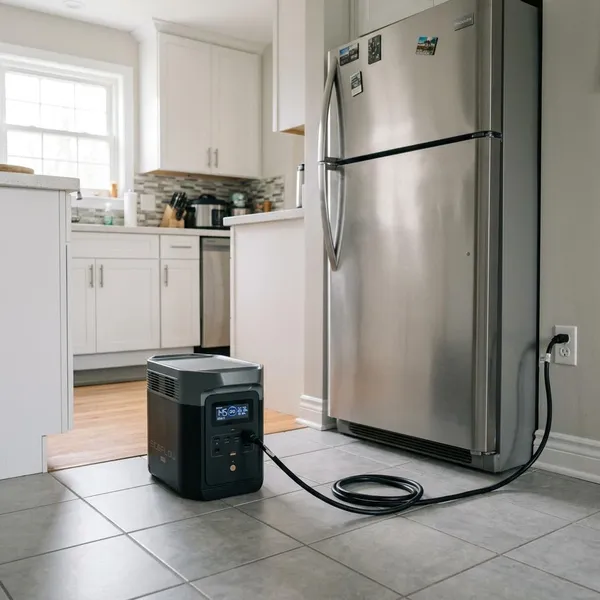
Runtime can range from a few hours to more than a day. The most useful estimate comes from the refrigerator's daily energy use, not only its running watts, because the compressor does not run continuously.
Battery size affects total runtime
Larger batteries run longer, but use a realistic number when estimating. If a 1000Wh power station provides about 850Wh to 900Wh of usable AC energy and your refrigerator uses 1000Wh per day, expect less than a full day before recharging.
Compressor cycles affect energy use
A refrigerator saves energy by cycling on and off. That is why a fridge with a 150W running draw may average much less than 150Wh per hour over a full day.
Cycling becomes less favorable when the door is opened often, warm groceries are added, or the fridge sits in a hot room. During a blackout, the easiest way to stretch runtime is simple: keep the door closed and make one planned opening instead of checking repeatedly.
Refrigerator efficiency affects backup time
An efficient newer refrigerator can run noticeably longer on the same battery than an older model with worn seals or poor insulation. The EnergyGuide label is a decent starting point because it estimates yearly electricity use.
- Lower yearly kWh: easier to back up with a smaller station.
- Older fridge: allow more battery margin.
- Weak door seal: fix it before relying on battery backup.
Real conditions change expected runtime
Planning from ideal numbers can lead to disappointment. Hot weather, poor airflow behind the fridge, frequent door openings, and a fully stocked warm refrigerator all shorten runtime.
For a better real-world estimate, measure the fridge for a normal day with a watt meter, then add margin for the outage scenario you actually expect. A mild two-hour outage in a cool kitchen is very different from a summer overnight outage with a garage refrigerator full of food.
Can Solar Panels Extend Refrigerator Backup?
Solar panels can extend refrigerator backup, but they work best as part of a correctly sized system. The battery still needs to cover startup and nighttime use, while solar helps replace energy during the day.
Solar charging supports longer operation
Solar charging can slow battery drain or refill the power station while the refrigerator keeps cycling. This matters most during outages that last longer than a few hours, especially when you want to save battery for lights, phones, a router, or a fan.
A practical example: if a fridge uses around 800Wh per day, solar that can reliably put meaningful energy back into the battery each afternoon may turn a one-night setup into a much more flexible backup plan.
Solar input must match power demand
A small panel may help, but it may not keep up. Panel wattage, real sun hours, charging losses, and the power station's maximum solar input all affect whether the battery gains energy or slowly drains.
Do not assume that adding any panel makes the system self-sustaining. If the power station can only accept limited solar input, extra panel capacity may not translate into faster charging.
Weather affects recharge performance
Clouds, shade, winter sun angles, dust, and high heat can all reduce solar output. A setup that barely covers the refrigerator on a perfect sunny day may fall short when the weather changes.
For long outages, treat solar as a strong extender rather than a promise of unlimited refrigeration. Keep enough battery reserve for cloudy hours and overnight operation.
How to Choose the Right Portable Power Station?
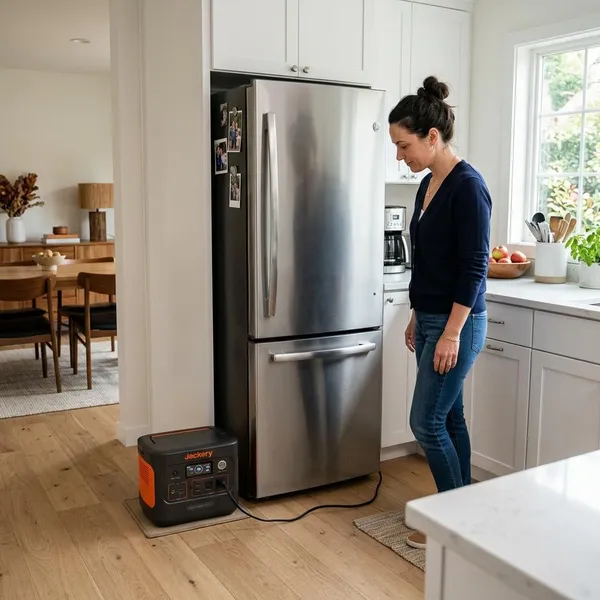
Choose from the refrigerator backward: first confirm startup demand, then estimate energy use, then decide how long you need backup. After that, compare weight, recharge options, and cost. This order prevents the common mistake of buying a unit that looks powerful but does not match the actual outage job.
Match capacity with outage needs
Start with the outage you are preparing for. A two-hour utility interruption does not need the same system as overnight food protection or a multi-day storm plan.
- Short interruption: 500Wh to 1000Wh may be enough for compact or efficient fridges.
- Overnight household backup: 1000Wh to 2000Wh is a more realistic range.
- Large fridge or garage use: 1500Wh to 3000Wh+ gives safer margin.
- Multi-day plan: add solar and choose a power station with enough solar input to matter.
Conclusion
A refrigerator backup system should be sized for the hard moment first: compressor startup. After that, battery capacity decides whether you get a few hours, a full night, or longer support with solar. For a standard kitchen fridge, 1000W to 1500W output and 1000Wh or more is a sensible starting point, but large, older, garage-based, or high-value food storage situations deserve more headroom.